5G Infrastructure Spending Soars: 18% Increase Across U.S. in 2025
The U.S. telecommunications sector is poised for an 18% surge in 5G infrastructure spending in 2025, reflecting a significant commitment to advanced connectivity and digital transformation nationwide.
The landscape of American telecommunications is on the cusp of a significant transformation, with a projected Telecommunications Upgrade: 18% Increase in 5G Infrastructure Spending Across the U.S. in 2025. This substantial investment signals a pivotal moment for connectivity, economic growth, and technological advancement. What does this surge mean for businesses, consumers, and the broader digital ecosystem?
Understanding the 5G Investment Landscape
The projected 18% increase in 5G infrastructure spending across the U.S. in 2025 isn’t just a number; it represents a strategic push to solidify America’s position as a global leader in advanced wireless technology. This investment extends beyond urban centers, aiming to bridge the digital divide and ensure robust connectivity for all Americans.
This financial commitment is driven by a confluence of factors, including escalating data consumption, the proliferation of connected devices, and the increasing demand for ultra-low latency applications. As industries undergo digital transformation, the need for a resilient and high-capacity network becomes paramount, making 5G an indispensable foundation for future innovation.
Key Drivers of Increased Spending
Several critical elements are fueling this substantial investment. Understanding these drivers provides insight into the strategic rationale behind the telecommunications upgrade.
- Consumer Demand: The insatiable appetite for faster downloads, seamless streaming, and reliable mobile experiences continues to grow, pushing carriers to expand and enhance their 5G networks.
- Enterprise Needs: Businesses are increasingly reliant on 5G for applications like IoT, AI, and edge computing, requiring robust, dedicated network slices and high-speed data transfer.
- Government Initiatives: Federal and state programs, often aimed at improving rural broadband access and fostering technological competitiveness, play a significant role in incentivizing infrastructure development.
- Technological Evolution: The continuous advancement of 5G technology itself, including millimeter-wave (mmWave) and massive MIMO, necessitates ongoing investment in new hardware and software.
Ultimately, the increase in 5G infrastructure spending is a testament to the recognition that a superior digital backbone is crucial for economic prosperity and societal progress in the 21st century. It’s an investment in the future capabilities of the nation.
Economic Impact of Enhanced 5G Infrastructure
The substantial investment in 5G infrastructure is expected to generate significant economic ripple effects across the United States. This isn’t merely about faster internet; it’s about job creation, new industry development, and increased productivity.
Studies suggest that robust 5G deployment can unlock billions in economic value by enabling new business models, improving operational efficiencies, and fostering innovation across various sectors. From manufacturing to healthcare, the enhanced connectivity acts as a catalyst for growth.
Job Creation and Workforce Development
The expansion of 5G networks inherently requires a skilled workforce. This includes engineers, technicians, construction workers, and IT professionals involved in planning, deploying, and maintaining the complex infrastructure.
- Direct Employment: Jobs directly related to the construction, installation, and maintenance of 5G towers, fiber optic cables, and network equipment.
- Indirect Employment: Roles created in supporting industries, such as equipment manufacturing, logistics, and professional services.
- Induced Employment: Jobs generated by increased economic activity and consumer spending resulting from the direct and indirect employment.
Furthermore, the demand for specialized skills will likely spur educational and training programs, contributing to workforce development and ensuring a pipeline of talent for the evolving telecommunications sector. This creates a virtuous cycle of investment and growth.
Technological Advancements Driving 5G Expansion
The 18% increase in 5G infrastructure spending is not just about building more of the same; it’s about integrating and deploying cutting-edge technological advancements. These innovations are crucial for realizing the full potential of 5G, offering capabilities far beyond those of previous generations.
From advanced antenna systems to sophisticated network slicing capabilities, the technological frontier of 5G is constantly expanding. This continuous evolution requires ongoing investment to keep pace and deliver superior performance.
Innovations in Network Architecture
Modern 5G networks are fundamentally different from their predecessors, relying on software-defined networking (SDN) and network function virtualization (NFV) to offer unprecedented flexibility and efficiency.
- Open RAN (Radio Access Network): A disaggregated approach that allows for greater vendor diversity and innovation in network components, reducing reliance on single suppliers.
- Edge Computing: Bringing computing resources closer to the data source, reducing latency and enabling real-time applications critical for IoT and autonomous systems.
- Network Slicing: The ability to create multiple virtual networks on a single physical infrastructure, each tailored to specific application requirements, ensuring optimized performance for diverse use cases.
These architectural shifts are not just technical improvements; they are foundational elements that allow 5G to support a vast array of new services and applications, from smart cities to advanced industrial automation. The investment reflects a commitment to these transformative technologies.
Regional Disparities and Targeted Investments
While the overall trend points to an 18% increase in 5G infrastructure spending across the U.S., it’s important to acknowledge that investment patterns may vary significantly by region. Bridging the digital divide remains a critical objective, often requiring targeted strategies.
Rural and underserved areas, which historically lagged in broadband deployment, are now receiving increased attention and funding. This ensures that the benefits of 5G are not concentrated solely in densely populated urban centers but are distributed more equitably.
Addressing the Rural-Urban Divide
Efforts to expand 5G into rural areas often face unique challenges, including lower population density, difficult terrain, and higher deployment costs. However, the strategic importance of universal connectivity is driving specific initiatives.
Government subsidies, public-private partnerships, and innovative deployment models are being leveraged to make 5G economically viable in these regions. This includes leveraging existing infrastructure and exploring new technologies suitable for expansive geographical coverage.
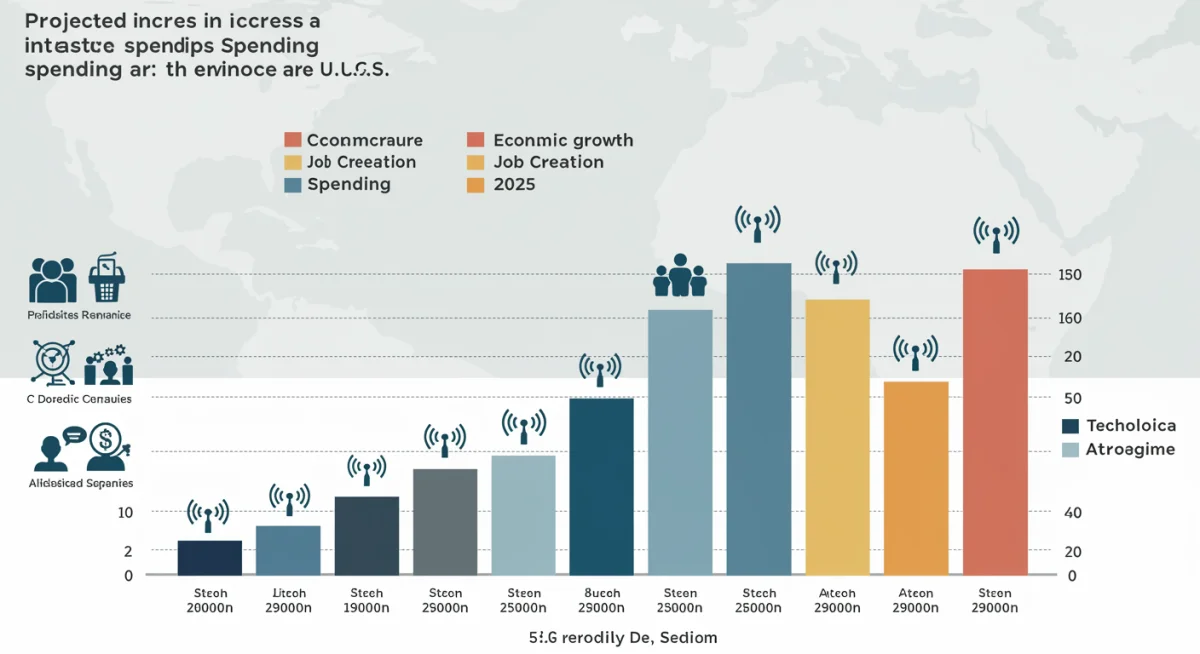
Ultimately, the goal is to ensure that all Americans, regardless of their location, have access to the high-speed, low-latency connectivity that 5G provides. This equitable access is vital for education, healthcare, economic opportunity, and social inclusion. The investment is a step towards a more connected nation.
Challenges and Opportunities in 5G Deployment
While the projected 18% increase in 5G infrastructure spending highlights a positive outlook, the path to full 5G deployment is not without its hurdles. Navigating these challenges effectively will be crucial for realizing the technology’s immense potential.
From regulatory complexities to supply chain issues and skilled labor shortages, operators and policymakers must work collaboratively. However, each challenge also presents an opportunity for innovation and strategic partnerships.
Overcoming Deployment Obstacles
Building out a ubiquitous 5G network is a monumental task, requiring coordination, capital, and expertise. Several factors can impede the pace of deployment.
- Permitting and Zoning: Navigating diverse local regulations for tower placement and small cell installations can be time-consuming and complex, potentially delaying deployment schedules.
- Supply Chain Resilience: Ensuring a stable and secure supply of specialized equipment, especially amidst global economic fluctuations, remains a critical concern for telecommunications providers.
- Skilled Labor Shortage: The demand for qualified engineers, technicians, and construction crews with specialized 5G expertise often outstrips supply, impacting project timelines.
Despite these challenges, the opportunities presented by 5G are too significant to ignore. The drive to overcome these obstacles is fueling innovation in deployment strategies, including modular infrastructure and streamlined regulatory processes. The continued investment underscores the commitment to addressing these issues head-on.
The Future Landscape: Beyond 2025
The 18% increase in 5G infrastructure spending in 2025 is a strong indicator of an accelerating trend, but it’s important to look beyond this immediate horizon. The evolution of telecommunications is continuous, with advancements already being planned for 6G and beyond.
The investments made in 2025 will lay the groundwork for future innovations, creating a resilient and adaptable network that can support unforeseen technological developments. This forward-looking approach is characteristic of the telecommunications industry.
Preparing for 6G and Next-Generation Connectivity
Even as 5G deployment continues, research and development for 6G are already underway. This next generation of wireless technology promises even higher speeds, lower latency, and integration with emerging fields like holographic communication and advanced AI.
- Research and Development: Continued investment in R&D is crucial for staying at the forefront of wireless technology, exploring new spectrum bands, and developing novel transmission techniques.
- Standardization Efforts: Active participation in global standardization bodies ensures interoperability and a unified vision for future connectivity, preventing fragmentation.
- Infrastructure Adaptability: Designing 5G networks with future upgrades in mind, using flexible and software-defined architectures, will ease the transition to 6G.
The spending in 2025 is thus not an endpoint but a significant milestone in a longer journey towards a fully connected, intelligent, and responsive digital world. It reflects a sustained commitment to innovation and progress in the U.S. telecommunications sector.
| Key Aspect | Brief Description |
|---|---|
| Spending Increase | U.S. to see an 18% rise in 5G infrastructure spending in 2025. |
| Key Drivers | Consumer demand, enterprise needs, government initiatives, and technological evolution. |
| Economic Impact | Expected job creation, new industry development, and increased productivity. |
| Future Outlook | Laying groundwork for 6G and next-generation connectivity beyond 2025. |
Frequently Asked Questions About 5G Investment
This increase signifies a robust commitment to enhancing national connectivity, fostering economic growth, and maintaining technological leadership. It reflects a strategic investment in the digital backbone necessary for future innovation and widespread societal benefits.
Sectors such as manufacturing, healthcare, smart cities, and transportation are poised to benefit significantly. Enhanced 5G connectivity will enable advanced IoT applications, real-time data processing, and automation, driving efficiency and new service creation across these industries.
Consumers can expect faster, more reliable mobile broadband, improved coverage, and access to new 5G-enabled services and applications. This translates to better streaming, gaming, remote work capabilities, and a richer digital experience in general.
While spending is widespread, there’s a strong focus on both urban densification and bridging the digital divide in rural and underserved areas. Government initiatives often target regions historically lacking adequate broadband, aiming for more equitable access.
Key challenges include navigating complex permitting and zoning regulations, ensuring a resilient supply chain for equipment, and addressing the ongoing shortage of skilled labor required for deployment and maintenance. Overcoming these requires concerted effort.
Conclusion
The projected Telecommunications Upgrade: 18% Increase in 5G Infrastructure Spending Across the U.S. in 2025 marks a critical juncture for the nation’s digital future. This significant investment underscores a collective commitment to advanced connectivity, promising not only faster networks but also substantial economic growth, job creation, and technological leadership. While challenges in deployment persist, the strategic importance of 5G as the foundation for future innovation ensures continued focus and resources. As the U.S. builds out its 5G capabilities, it solidifies its position at the forefront of the global digital economy, paving the way for a more connected and productive society well beyond 2025.