Supply Chain Outlook: Key Shifts & U.S. Economic Impact
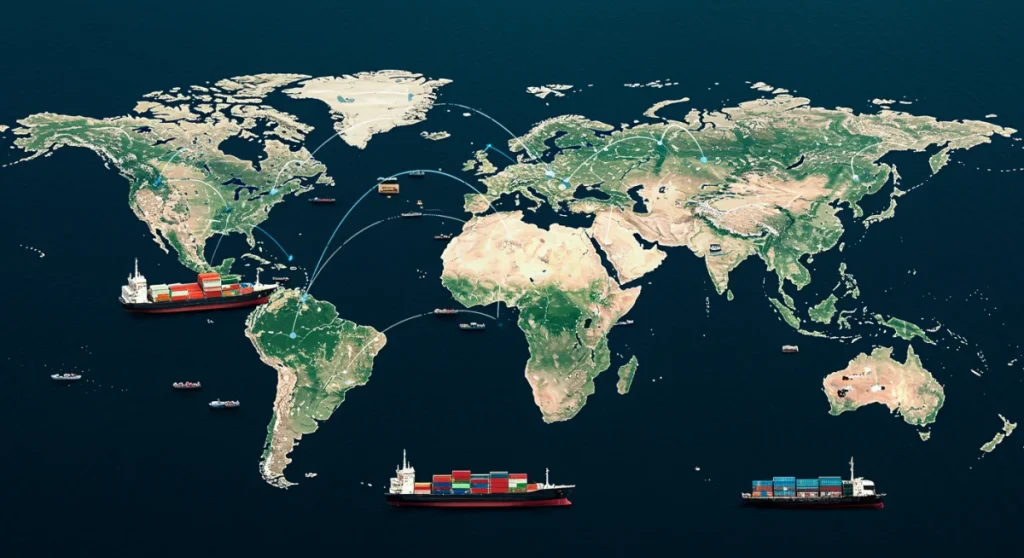
The next six months will see significant supply chain shifts in global logistics, directly influencing the U.S. economy through evolving trade policies, technological adoption, and sustainability pressures.
The global landscape of commerce is in a perpetual state of flux, and understanding the impending supply chain shifts is paramount for businesses and policymakers alike. Over the next six months, the intricate web of global logistics is poised for significant transformations, with profound implications for the U.S. economy. This article delves into these critical changes, offering insights into how they will reshape trade, production, and consumer markets across the United States.
Geopolitical Tensions and Trade Policy Realignment
Geopolitical forces continue to be a primary driver of instability and change within global supply chains. The U.S. economy, deeply integrated into international trade, is particularly sensitive to these shifts. Over the coming half-year, we anticipate a continued realignment of trade policies, driven by ongoing tensions and a renewed focus on national security and economic resilience.
The pursuit of supply chain resilience means many nations, including the U.S., are reconsidering their reliance on single-source suppliers or specific geographic regions. This strategic pivot aims to mitigate risks associated with geopolitical disputes, natural disasters, or pandemics. Businesses are increasingly pressured to diversify their sourcing and manufacturing locations, leading to a more distributed, albeit potentially more costly, global production network.
Nearshoring and Friend-shoring Initiatives
One prominent trend emerging from geopolitical considerations is the acceleration of nearshoring and friend-shoring. Nearshoring involves relocating production closer to the consumer market, often to neighboring countries. Friend-shoring, a newer concept, focuses on sourcing from countries deemed geopolitically aligned or trustworthy. Both strategies aim to reduce vulnerabilities and shorten lead times.
- Reduced Geopolitical Risk: Moving production away from volatile regions minimizes disruptions from political unrest or trade disputes.
- Enhanced Collaboration: Friend-shoring fosters stronger economic ties with allied nations, creating more stable trade corridors.
- Faster Response Times: Proximity to markets allows for quicker adaptation to changes in demand or unexpected events, benefiting U.S. consumers and businesses.
- Increased Domestic Production: Nearshoring can stimulate job growth and economic activity within the U.S. or its immediate vicinity.
These shifts, while promising greater stability, also present challenges. Companies face higher labor and operational costs in some nearshore locations, and the established infrastructure for globalized production is not easily replicated. The balancing act between efficiency and resilience will be a defining characteristic of supply chain management in the coming months.
Technological Advancement and Digital Transformation
The integration of advanced technologies continues to revolutionize global logistics, promising greater efficiency, visibility, and automation. Over the next six months, we expect to see an accelerated adoption of digital tools and platforms, fundamentally altering how goods are tracked, transported, and stored. This digital transformation is not merely an upgrade but a complete reimagining of operational processes.
From artificial intelligence (AI) and machine learning (ML) to blockchain and the Internet of Things (IoT), these technologies are converging to create smarter, more responsive supply chains. For the U.S. economy, this means improved inventory management, reduced waste, and enhanced predictive capabilities, all contributing to a more robust and competitive market.
AI and Machine Learning for Predictive Analytics
AI and ML are becoming indispensable for forecasting demand, optimizing routes, and identifying potential disruptions before they occur. These technologies can process vast amounts of data, learning from past patterns to make highly accurate predictions.
- Demand Forecasting: AI algorithms can analyze historical sales data, seasonal trends, and external factors to predict future demand with higher accuracy, preventing stockouts or overstocking.
- Route Optimization: ML can identify the most efficient shipping routes, considering factors like traffic, weather, and fuel costs, leading to significant savings and faster deliveries.
- Risk Mitigation: Predictive analytics can flag potential bottlenecks, supplier issues, or geopolitical risks, allowing businesses to proactively implement contingency plans.
The U.S. logistics sector is heavily investing in these areas, aiming to gain a competitive edge. The benefits extend beyond individual companies, contributing to overall economic stability by making supply chains less prone to unexpected shocks. The ability to anticipate and react quickly to market changes will be a critical differentiator for businesses operating in this evolving landscape.
Sustainability Initiatives and Green Logistics
Environmental concerns are increasingly shaping consumer behavior, regulatory frameworks, and corporate strategies. Over the next six months, sustainability initiatives will play an even more prominent role in global logistics, driving companies to adopt greener practices across their operations. This shift is not just about compliance but also about meeting stakeholder expectations and achieving long-term operational efficiency.
For the U.S. economy, this means a growing emphasis on reducing carbon footprints, optimizing resource usage, and embracing circular economy principles. Businesses that proactively integrate sustainable logistics into their models will likely gain a competitive advantage, attracting environmentally conscious consumers and investors.
Decarbonization of Transportation
The transportation sector is a major contributor to global emissions, and efforts to decarbonize it are intensifying. This includes investments in electric vehicles, alternative fuels, and more efficient shipping methods.
- Electric Fleets: Companies are transitioning to electric trucks and delivery vans, especially for last-mile delivery, reducing urban pollution and operational costs.
- Sustainable Aviation Fuel (SAF): The aviation industry is exploring and investing in SAFs to lower emissions, although widespread adoption still faces infrastructure and cost hurdles.
- Optimized Shipping: Advanced logistics software helps optimize cargo loads and routes, minimizing empty miles and fuel consumption across all modes of transport.
These green logistics initiatives require substantial upfront investment but promise long-term benefits, including reduced fuel costs, improved brand reputation, and compliance with evolving environmental regulations. The U.S. government and private sector are collaborating on incentives and infrastructure development to support this transition, recognizing its economic and ecological importance.
Labor Shortages and Workforce Development
One of the most persistent challenges facing the global supply chain, and particularly the U.S. logistics sector, is the ongoing labor shortage. This issue spans various roles, from truck drivers and warehouse workers to skilled technicians and data analysts. Over the next six months, addressing this deficit will remain a critical priority, influencing operational capacities and costs.
The impact on the U.S. economy is multifaceted, leading to increased wages, delayed shipments, and reduced overall efficiency. Companies are responding by investing in automation, improving working conditions, and enhancing training and recruitment programs to attract and retain talent.
Automation as a Partial Solution
While automation cannot entirely replace human labor, it can alleviate some pressure by handling repetitive or physically demanding tasks, allowing human workers to focus on more complex, value-added activities.
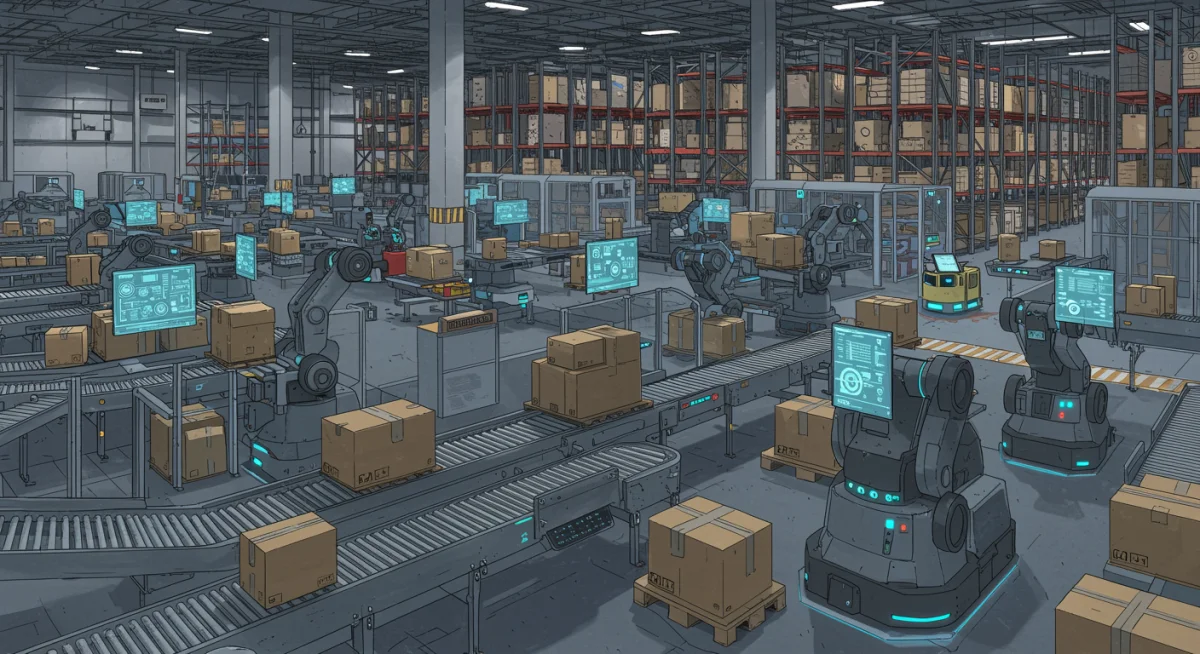
- Warehouse Robotics: Automated guided vehicles (AGVs) and robotic arms are increasingly used for picking, packing, and sorting in warehouses, improving speed and accuracy.
- Automated Data Entry: AI-powered systems can streamline administrative tasks, reducing the need for manual data input and minimizing errors.
- Drone Delivery: In specific niches, drones are being tested for last-mile delivery, potentially reducing the reliance on human drivers for certain routes.
Beyond automation, significant efforts are being made in workforce development. This includes partnerships with educational institutions to create specialized logistics programs, offering competitive benefits, and fostering a positive work environment. The long-term health of the U.S. supply chain hinges on effectively bridging this labor gap.
Consumer Behavior and E-commerce Evolution
The rapid evolution of consumer behavior, particularly the sustained growth of e-commerce, continues to exert immense pressure on global supply chains. Over the next six months, we can expect further adaptations in logistics to meet the demand for faster, more flexible, and transparent delivery options. The U.S. market, with its high e-commerce penetration, is at the forefront of these changes.
Consumers now expect immediate gratification, free shipping, and easy returns, forcing businesses to rethink their entire fulfillment strategies. This shift impacts everything from warehouse location and inventory management to last-mile delivery networks and reverse logistics. The ability to meet these heightened expectations is crucial for market competitiveness.
The Rise of Micro-Fulfillment Centers
To cater to the demand for rapid delivery, particularly in urban areas, businesses are investing in micro-fulfillment centers. These smaller, strategically located facilities bring inventory closer to the customer.
- Faster Delivery Times: Proximity to customers enables same-day or even hourly delivery options, a key differentiator in the e-commerce landscape.
- Reduced Transportation Costs: Shorter delivery distances lead to lower fuel consumption and operational costs for last-mile logistics.
- Optimized Inventory: Micro-fulfillment centers can hold a curated selection of fast-moving items, improving inventory turnover and reducing storage needs.
Additionally, the increasing prevalence of online returns (reverse logistics) is prompting companies to develop more efficient processes for handling returned goods. This often involves dedicated facilities for inspection, repackaging, and restocking, adding another layer of complexity to the supply chain. The U.S. economy benefits from these innovations through increased consumer satisfaction and business agility.
Resilience and Risk Management Strategies
The lessons learned from recent global disruptions have underscored the critical importance of supply chain resilience. Over the next six months, businesses will continue to strengthen their risk management strategies, moving beyond reactive measures to proactive planning and dynamic adaptation. This focus on building robust and adaptable supply chains is essential for navigating an increasingly unpredictable global environment.
For the U.S. economy, a resilient supply chain translates into greater stability, fewer disruptions to production and consumption, and enhanced national security. Companies are investing in diversified sourcing, redundant systems, and advanced analytics to identify and mitigate potential risks before they escalate.
Implementing Dual Sourcing and Diversification
Reliance on a single supplier or region can expose a company to significant risks. Dual sourcing and diversification strategies aim to spread these risks across multiple vendors and geographies.
- Reduced Supplier Dependency: Having multiple suppliers minimizes the impact if one source experiences disruption, ensuring continuity of supply.
- Geographic Diversification: Sourcing from different regions mitigates risks associated with localized events like natural disasters, political instability, or pandemics.
- Inventory Buffers: Maintaining strategic reserves of critical components or finished goods can act as a buffer against short-term supply interruptions.
Moreover, increased transparency across the supply chain, often facilitated by digital platforms, allows businesses to have a clearer view of their entire network. This visibility enables quicker identification of vulnerabilities and more effective collaboration with partners to address them. The emphasis on resilience will not only protect individual businesses but also contribute to the overall stability and competitiveness of the U.S. economy.
| Key Shift | U.S. Economic Impact |
|---|---|
| Geopolitical Realignment | Increased nearshoring, friend-shoring, diversifying sourcing, potentially higher costs but greater stability. |
| Technological Adoption | Enhanced efficiency, predictive analytics, automation, improved inventory management, and reduced waste. |
| Sustainability Focus | Decarbonization, green logistics, brand reputation benefits, and compliance with evolving regulations. |
| Labor Shortages & E-commerce | Increased automation, workforce development, micro-fulfillment centers, and faster delivery expectations. |
Frequently Asked Questions
Geopolitical tensions may lead to higher consumer prices in the U.S. as companies nearshore or friend-shore production, facing increased labor and operational costs. Trade tariffs or disruptions can also directly increase import costs, which are typically passed on to consumers. Diversification, however, aims to stabilize supply in the long run.
AI will be crucial in mitigating future disruptions by enabling advanced predictive analytics. It can forecast demand more accurately, optimize logistics routes dynamically, and identify potential bottlenecks or supplier failures before they escalate. This proactive approach helps businesses implement contingency plans swiftly, reducing downtime and financial losses.
While some initiatives might have a marketing component, many U.S. businesses demonstrate genuine commitment to sustainable logistics. This commitment is driven by consumer demand, regulatory pressures, and the long-term economic benefits of efficiency and resource optimization. Investments in electric fleets and green technologies reflect this deeper dedication beyond mere branding.
Labor shortages could potentially strain holiday shopping season deliveries, leading to delays and increased shipping costs. Companies are addressing this by accelerating automation, offering competitive wages, and implementing extensive seasonal hiring drives. Despite these efforts, consumers might experience longer delivery windows or higher surcharges for expedited shipping during peak times.
The primary benefit of micro-fulfillment centers for the U.S. economy is enabling ultra-fast, local delivery for e-commerce. This enhances consumer satisfaction, boosts local commerce, and reduces last-mile transportation costs and emissions. They support urban economic activity and help businesses compete effectively in a landscape dominated by rapid delivery expectations.
Conclusion
The next six months promise a dynamic and transformative period for global logistics, with significant supply chain shifts directly influencing the U.S. economy. From geopolitical realignments and technological breakthroughs to the imperative of sustainability and the persistent challenges of labor shortages, businesses must remain agile and adaptable. By strategically embracing diversification, digital transformation, and green practices, the U.S. can not only navigate these complexities but also emerge with a more resilient, efficient, and competitive supply chain network, fostering sustained economic growth and stability.