Manufacturing PMI: What the 51.7 Reading Suggests for US Industrial Output
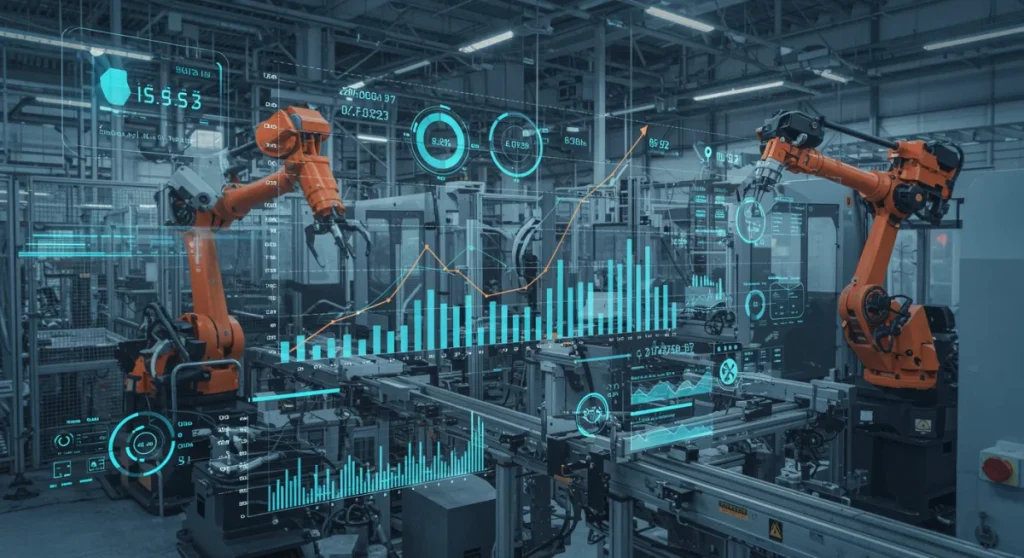
The latest 51.7 Manufacturing PMI reading signals modest expansion in the U.S. industrial sector, suggesting continued but potentially moderated growth in industrial output over the coming 12 months.
The latest Manufacturing PMI Outlook, with its reading of 51.7, has become a focal point for economists and business leaders alike. This critical indicator offers a glimpse into the health of the industrial sector, providing insights that can shape strategies and forecasts. What does this specific number truly suggest about the trajectory of industrial output in the United States over the next year? Let us delve into the nuances and implications.
Understanding the Manufacturing PMI: A Key Economic Barometer
The Purchasing Managers’ Index (PMI) for manufacturing is an indispensable economic indicator, offering a real-time snapshot of the health and direction of the manufacturing sector. It is derived from a survey of purchasing managers in various companies, asking them about new orders, production, employment, supplier deliveries, and inventories. A reading above 50 generally indicates expansion, while a reading below 50 suggests contraction.
What the 51.7 Reading Signifies
A 51.7 PMI reading is a positive signal, indicating that the manufacturing sector is expanding, albeit moderately. It suggests that new orders are coming in, production is increasing, and employment levels are holding steady or slightly rising. This isn’t a booming expansion, but it’s a steady, consistent growth that can be a hallmark of a resilient economy navigating various headwinds.
- Expansionary Territory: Any reading above 50 points to growth, reassuring market participants.
- Moderate Growth Pace: A 51.7 indicates expansion that is not overheated, suggesting sustainability.
- Confidence Indicator: Reflects purchasing managers’ optimism regarding future business conditions.
This moderate expansion is particularly noteworthy in the current economic climate, where inflation, interest rate adjustments, and global geopolitical shifts continue to influence market dynamics. The 51.7 figure suggests that despite these challenges, the manufacturing sector has found a way to maintain positive momentum, adapting to new realities and optimizing operations to meet demand. This resilience bodes well for the broader economic outlook.
Historical Context and Recent Trends in US Manufacturing
To fully appreciate the significance of a 51.7 PMI, it’s crucial to place it within a historical context. The U.S. manufacturing sector has experienced periods of robust growth, significant downturns, and steady recovery over the past few decades. Understanding these past cycles helps in interpreting current data and forecasting future trends.
In recent years, manufacturing has faced unprecedented challenges, including pandemic-induced supply chain disruptions, labor shortages, and rapid technological advancements. These factors have reshaped the operational landscape, forcing companies to innovate and adapt at an accelerated pace. The journey from initial lockdowns to the current state of recovery has been complex, marked by both setbacks and remarkable resilience.
Post-Pandemic Recovery and Supply Chain Adjustments
The immediate post-pandemic period saw a surge in demand coupled with severe supply chain bottlenecks, leading to unprecedented backlogs and inflationary pressures. Manufacturers struggled to keep up, often limited by component availability and workforce constraints. However, over time, companies have begun to rebuild and reconfigure their supply chains, seeking greater resilience and regionalization.
- Reshoring Initiatives: Many companies are exploring bringing production closer to home to mitigate future disruptions.
- Inventory Management: A shift from ‘just-in-time’ to ‘just-in-case’ inventory strategies.
- Technological Adoption: Increased investment in automation and digital transformation to enhance efficiency.
The 51.7 PMI reading reflects a sector that has largely moved past the most acute phases of these disruptions. It suggests that while challenges persist, manufacturers are now better equipped to manage them, with a renewed focus on strategic planning and operational efficiency. This adaptability is a key factor in maintaining positive momentum in industrial output.
Key Components of the PMI and Their Current Performance
The overall PMI score is a composite index derived from five equally weighted sub-indices: new orders, production, employment, supplier deliveries, and inventories. Analyzing each of these components individually provides a more granular understanding of the manufacturing sector’s health and the drivers behind the 51.7 reading.
Currently, the sub-indices paint a picture of cautious optimism. New orders, often a leading indicator, are showing signs of steady growth, suggesting sustained demand. Production levels are increasing in response, indicating that factories are busy and operating at a healthy capacity. Employment figures, while not booming, suggest stability and targeted hiring in specific areas.
New Orders and Production: Driving the Expansion
The consistent intake of new orders is arguably the most vital component of a healthy manufacturing sector. A positive trend here directly translates into increased production activity. The current data indicates that despite economic uncertainties, consumer and business demand remains robust enough to fuel manufacturing expansion.

Production, in turn, reflects the actual output of goods. When new orders are strong, factories ramp up their operations, leading to higher industrial output. The 51.7 PMI suggests a healthy balance where production is meeting demand without creating excessive backlogs or overstocking, which is crucial for sustainable growth.
Employment and Supplier Deliveries: Navigating Challenges
Employment within manufacturing has seen fluctuations, but the current PMI suggests a stable to slightly growing workforce. This indicates that companies are confident enough in future demand to maintain or cautiously expand their staffing levels. Supplier deliveries, while still facing occasional hiccups, have generally improved, reducing lead times and allowing for smoother production flows.
- Skilled Labor Demand: Continued need for specialized skills, driving targeted recruitment.
- Improved Logistics: Efforts to streamline transportation and inventory are yielding results.
- Inventory Levels: Companies are managing inventory more effectively, avoiding costly overstock.
The performance of these individual components collectively contributes to the overall PMI. The fact that most are in expansionary territory, even if modestly, confirms the positive sentiment reflected in the 51.7 reading. It also highlights the ongoing efforts by manufacturers to optimize their operations in a dynamic economic environment.
Factors Influencing Industrial Output in the Next 12 Months
Forecasting industrial output for the next year involves considering a multitude of factors, both domestic and international. The 51.7 PMI provides a solid foundation, but external forces and internal dynamics can significantly alter the trajectory. Understanding these influences is key to forming a comprehensive outlook.
Domestically, consumer spending and business investment will play a pivotal role. If consumer confidence remains high and businesses continue to invest in expansion and modernization, demand for manufactured goods will likely persist. Government policies, including infrastructure spending and trade regulations, also have a direct impact on industrial activity.
Global Economic Conditions and Geopolitical Risks
The global economic landscape is intrinsically linked to U.S. industrial output. Slowdowns in major trading partners can reduce export demand, while global supply chain disruptions can hamper production. Geopolitical events, such as trade disputes or regional conflicts, introduce uncertainty and can lead to volatility in commodity prices and supply availability.
- Interest Rate Environment: Higher rates can dampen investment and consumer borrowing, affecting demand.
- Inflationary Pressures: Persistent inflation can erode purchasing power and increase production costs.
- Technological Advancements: Automation and AI continue to reshape production processes and efficiency.
These factors create a complex web of influences that manufacturers must navigate. The 51.7 PMI suggests that the sector is currently managing these complexities effectively, but vigilance is required as conditions can change rapidly. The ability to adapt to evolving global and domestic scenarios will be crucial for sustained growth in industrial output.
Potential Scenarios for Industrial Output: Optimistic vs. Cautious
Based on the 51.7 Manufacturing PMI and the prevailing economic conditions, we can envision a couple of potential scenarios for U.S. industrial output over the next 12 months. Both optimistic and cautious outlooks have their merits, depending on how various influencing factors play out.
The optimistic scenario posits that the moderate expansion signaled by the PMI will continue, possibly even accelerating slightly. This would be driven by sustained consumer demand, easing inflationary pressures, and a stable global economic environment. In this scenario, manufacturers would see continued growth in new orders, leading to increased production and potentially more significant job creation.
Optimistic Outlook: Steady Growth and Innovation
Under an optimistic lens, the manufacturing sector leverages technological advancements and improved supply chain resilience to enhance efficiency and productivity. Businesses continue to invest in R&D, leading to new product development and market expansion. This sustained growth would contribute positively to overall GDP and employment.
- Strong Consumer Confidence: Drives demand for durable goods and other manufactured products.
- Stable Energy Prices: Reduces operational costs for manufacturers.
- Effective Fiscal Policy: Government initiatives supporting domestic manufacturing contribute to growth.
This scenario assumes that the current momentum, as reflected in the 51.7 PMI, is a baseline for further positive developments, rather than a peak. It relies on a relatively stable geopolitical situation and continued efforts by manufacturers to innovate and adapt to market demands.
Cautious Outlook: Headwinds and Moderated Expansion
Conversely, a cautious outlook suggests that while industrial output will remain in expansionary territory, the pace of growth might be more subdued. This could be due to persistent inflation, a potential slowdown in global demand, or unforeseen supply chain disruptions. In this scenario, manufacturers might focus more on maintaining current production levels and optimizing existing operations rather than aggressive expansion.
The 51.7 reading, while positive, is not overwhelmingly strong, leaving room for moderation if economic headwinds intensify. Companies might face pressure on profit margins due to rising input costs, and consumer spending could be impacted by higher interest rates. This would lead to a more conservative approach to investment and hiring.
Ultimately, the actual outcome will likely be a blend of both scenarios, with periods of stronger growth interspersed with phases of moderation. The 51.7 PMI serves as a valuable indicator that the sector is currently on a positive, albeit measured, trajectory, capable of navigating a dynamic economic landscape.
Strategic Implications for Businesses and Investors
The 51.7 Manufacturing PMI reading carries significant strategic implications for both businesses operating within the manufacturing sector and investors looking to capitalize on economic trends. Understanding these implications is crucial for informed decision-making and risk management.
For manufacturing businesses, the moderate expansion signaled by the PMI suggests a need for continued vigilance and strategic planning. While growth is present, it’s not a runaway boom, meaning companies should focus on efficiency, cost control, and targeted investments. This includes optimizing inventory levels, exploring automation to enhance productivity, and strengthening supplier relationships to ensure supply chain resilience.
For Manufacturers: Adapting and Innovating
Businesses should interpret the 51.7 PMI as an encouraging sign to maintain their growth strategies but with a keen eye on potential headwinds. This means investing in workforce training to address skilled labor shortages and adopting advanced manufacturing technologies to stay competitive. Diversification of supply chains and market reach can also mitigate risks associated with regional downturns or geopolitical events.
- Technology Adoption: Investing in AI, IoT, and automation for operational efficiency.
- Workforce Development: Training programs to upskill employees and attract new talent.
- Market Diversification: Exploring new markets to reduce dependence on a single region or customer base.
The emphasis should be on sustainable growth, building robust operational frameworks that can withstand economic fluctuations. This proactive approach ensures that businesses are not only prepared for continued expansion but also resilient in the face of unexpected challenges.
For Investors: Identifying Opportunities and Managing Risk
Investors can view the 51.7 PMI as an indicator of a stable, albeit not explosive, manufacturing sector. This suggests opportunities in companies with strong fundamentals, innovative products, and resilient supply chains. Sectors benefiting from infrastructure spending or technological advancements might present particularly attractive prospects.
However, prudence is still advised. Investors should monitor other economic indicators, such as inflation rates, interest rate decisions, and global trade data, to get a holistic view. Diversifying portfolios and considering long-term growth potential over short-term gains will be key to navigating the market effectively. The moderate PMI reading suggests a market that rewards strategic, well-researched investments rather than speculative ventures.
| Key Aspect | Implication of 51.7 PMI |
|---|---|
| Industrial Output | Moderate expansion expected, indicating continued growth over the next 12 months. |
| Economic Health | Reflects resilience in the face of ongoing economic challenges like inflation. |
| Business Strategy | Encourages continued investment in efficiency, technology, and supply chain resilience. |
| Market Confidence | Positive signal for investors, though cautious monitoring of broader economic factors is advised. |
Frequently Asked Questions About Manufacturing PMI
▼
A Manufacturing PMI reading of 51.7 indicates that the manufacturing sector is experiencing moderate expansion. Any reading above 50 suggests growth, while a reading below 50 signals contraction. This specific figure points to a healthy, but not overheated, growth environment.
▼
The PMI is a leading indicator. Its sub-indices, particularly new orders, provide early signals of future production trends. A sustained PMI above 50, like 51.7, generally forecasts continued expansion in industrial output over the subsequent months, reflecting business confidence.
▼
Several factors can influence the outlook, including global economic conditions, geopolitical events, inflation rates, interest rate changes, and consumer spending patterns. Unexpected shifts in these areas could either accelerate or moderate the growth trajectory suggested by the 51.7 PMI.
▼
Yes, a 51.7 PMI is a positive indicator of economic health, specifically within the manufacturing sector. It suggests resilience and adaptability, as businesses are managing to grow despite various market challenges. It contributes to overall economic stability and confidence.
▼
Businesses should interpret this as a signal for cautious optimism. It’s an opportune time to focus on operational efficiency, strategic investments in technology, and strengthening supply chains. Maintaining flexibility and adapting to evolving market demands will be crucial for sustained success.
Conclusion
The latest Manufacturing PMI reading of 51.7 offers a nuanced yet encouraging perspective on the trajectory of U.S. industrial output for the next 12 months. It signals a sector that is not only expanding but also demonstrating considerable resilience in navigating a complex economic landscape. While not indicative of a booming surge, this moderate growth suggests a sustainable path forward, driven by steady new orders and adaptable production strategies. For businesses and investors alike, the 51.7 PMI underscores the importance of strategic planning, continuous innovation, and a keen awareness of both domestic and global economic currents. The manufacturing sector appears poised for continued, albeit measured, growth, contributing positively to the broader economic outlook.