AI Integration: Boosting U.S. GDP by 0.5% Annually by 2025

AI integration is poised to elevate the U.S. economy, potentially adding an extra 0.5% to its GDP annually by 2025 through widespread adoption and productivity gains.
The landscape of the American economy is on the cusp of a profound transformation. We are witnessing a pivotal moment where advanced technologies are no longer just tools but fundamental drivers of growth. Specifically, the integration of artificial intelligence (AI) is projected to deliver an additional 0.5% boost to U.S. GDP annually by 2025, marking a significant shift in economic paradigms. This isn’t merely about incremental improvements; it’s about a fundamental reshaping of industries, job markets, and overall economic output.
The Foundations of AI-Driven Economic Growth
Artificial intelligence, once a concept confined to science fiction, has rapidly evolved into a tangible force transforming various sectors. Its ability to analyze vast datasets, automate complex processes, and derive actionable insights is fundamentally changing how businesses operate. This technological disruption is not just about efficiency; it’s about unlocking entirely new avenues for value creation.
The potential for AI to drive economic growth stems from several key areas. Enhanced productivity is perhaps the most immediate and impactful. By automating routine tasks and optimizing operational workflows, AI allows human capital to focus on more complex, creative, and strategic endeavors. This re-allocation of resources leads to a more efficient use of labor and capital across the economy.
Productivity Enhancements Across Industries
AI’s impact on productivity is multifaceted, touching nearly every sector. From manufacturing to healthcare, financial services to retail, intelligent systems are streamlining operations and improving outcomes. Consider the logistical efficiencies gained through AI-powered supply chain management or the accelerated drug discovery processes in pharmaceuticals.
- Manufacturing: Predictive maintenance, quality control, and robotic automation reduce downtime and waste.
- Healthcare: AI assists in diagnostics, personalized treatment plans, and administrative tasks, freeing up medical professionals.
- Financial Services: Fraud detection, algorithmic trading, and customer service chatbots enhance operational speed and accuracy.
- Retail: Personalized marketing, inventory optimization, and demand forecasting improve sales and reduce overhead.
Beyond direct operational improvements, AI fosters innovation by enabling rapid prototyping, sophisticated data analysis, and the development of entirely new products and services. This innovative drive is crucial for sustained economic expansion, creating new markets and industries that further contribute to GDP.
The integration of AI also leads to a more informed decision-making process. Businesses equipped with AI-driven analytics can identify market trends, customer behaviors, and operational bottlenecks with unprecedented precision. This allows for proactive adjustments and strategic planning that would be impossible with traditional methods, ultimately leading to better resource allocation and higher returns on investment.
In essence, the foundational elements of AI-driven economic growth are rooted in its capacity to augment human capabilities, optimize processes, and catalyze innovation. These interconnected factors collectively contribute to a significant uplift in economic output, laying the groundwork for the projected 0.5% annual GDP increase.
Sector-Specific Impacts: Where AI Drives the Most Value
While AI’s influence is broad, certain sectors are poised to experience particularly transformative impacts, becoming primary engines for the projected 0.5% annual GDP boost. Understanding these sector-specific dynamics is crucial for grasping the full scope of AI’s economic potential.
The technology sector itself is a direct beneficiary, with continuous innovation in AI hardware, software, and services driving significant economic activity. Companies developing AI algorithms, machine learning platforms, and specialized AI chips are creating high-value jobs and contributing directly to the nation’s economic output. This internal growth within the tech industry then spills over into other sectors.
Transforming Healthcare and Life Sciences
Healthcare stands out as a sector where AI’s impact is not only economically significant but also profoundly beneficial for society. AI accelerates research and development, particularly in drug discovery and personalized medicine. Machine learning algorithms can analyze vast biological datasets to identify potential drug candidates and predict their efficacy, drastically cutting down the time and cost associated with bringing new treatments to market.
- Diagnostic Accuracy: AI-powered imaging analysis improves the detection of diseases like cancer and retinopathy.
- Personalized Treatment: AI tailors therapies based on individual patient data, leading to better outcomes.
- Operational Efficiency: Automation of administrative tasks, appointment scheduling, and record keeping frees up medical staff.
The financial services industry is another area where AI is rapidly becoming indispensable. From sophisticated fraud detection systems that save billions annually to algorithmic trading strategies that optimize investment returns, AI enhances both security and profitability. Customer service is also being revolutionized through AI-powered chatbots and virtual assistants, providing instant support and personalized advice, thereby improving customer satisfaction and reducing operational costs.
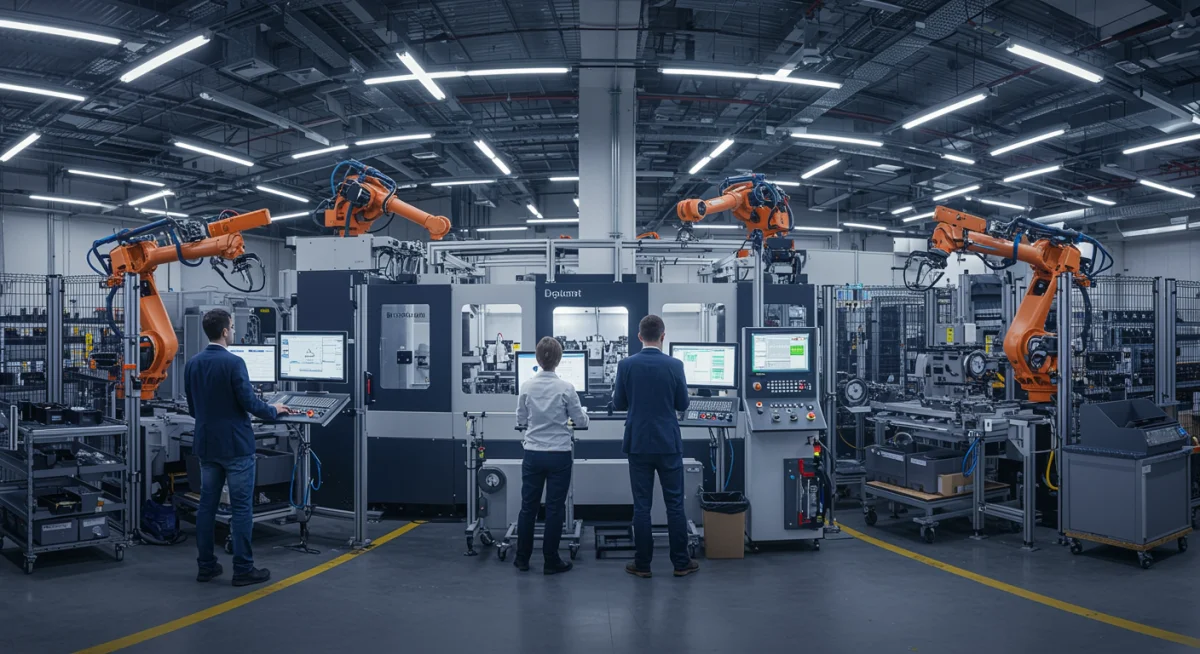
Manufacturing and logistics are also witnessing significant AI integration. Smart factories leverage AI for predictive maintenance, ensuring machinery operates at peak efficiency and preventing costly breakdowns. Robotics, guided by AI, handles repetitive and dangerous tasks, improving safety and precision. In logistics, AI optimizes routes, manages inventory, and predicts demand, leading to faster delivery times and reduced operational expenses. These efficiencies directly translate into increased output and reduced costs, boosting the GDP.
The widespread adoption of AI in these key sectors creates a ripple effect throughout the economy. As these industries become more productive and innovative, they generate demand for new products and services, create new job opportunities, and contribute to a more dynamic and resilient U.S. economy.
Investment and Innovation: Fueling the AI Revolution
The projected 0.5% annual boost to U.S. GDP by 2025 is not a spontaneous occurrence; it is the direct result of significant investment and a relentless pursuit of innovation in artificial intelligence. Both the private and public sectors are pouring resources into AI research, development, and deployment, recognizing its transformative potential.
Venture capital funding for AI startups has surged, indicating a strong belief in the future profitability and societal impact of these technologies. Established tech giants are also investing heavily, acquiring promising AI companies, and integrating AI capabilities into their core products and services. This competitive landscape drives rapid advancements and widespread adoption.
Government Initiatives and Research
The U.S. government plays a crucial role in fostering an environment conducive to AI innovation. Funding for basic AI research through agencies like the National Science Foundation (NSF) and the Defense Advanced Research Projects Agency (DARPA) provides the foundational knowledge upon which commercial applications are built. Additionally, initiatives aimed at developing ethical AI guidelines and promoting AI education ensure a robust and responsible AI ecosystem.
- Research Grants: Public funding supports academic and institutional research into advanced AI algorithms and applications.
- Talent Development: Government-backed programs encourage STEM education and AI-specific skill development.
- Regulatory Frameworks: Efforts to create clear and adaptive regulations foster trust and responsible AI deployment.
Beyond direct investment, the spirit of innovation within American businesses and academic institutions is a critical factor. Universities are establishing specialized AI research centers, attracting top talent, and collaborating with industry partners to push the boundaries of what AI can achieve. This synergy between academia, industry, and government creates a powerful engine for progress.
The focus on innovation extends beyond just developing new AI models; it also encompasses finding novel ways to apply existing AI technologies to solve real-world problems. This practical application of AI across diverse industries is what ultimately translates technological advancements into tangible economic gains. The continuous cycle of investment leading to innovation, which in turn attracts more investment, is a hallmark of the AI revolution and a key driver of its economic impact.
Challenges and Considerations for Sustained Growth
While the prospect of AI integration boosting U.S. GDP by an additional 0.5% annually by 2025 is exciting, it is not without its challenges. Addressing these considerations proactively is essential for ensuring sustained and equitable economic growth.
One of the primary concerns revolves around workforce displacement. As AI automates routine tasks, certain jobs may become obsolete, necessitating a significant shift in labor markets. This requires robust training and re-skilling programs to equip the workforce with the new skills demanded by an AI-driven economy. Investing in education and lifelong learning will be crucial to mitigate potential negative social impacts and ensure that the benefits of AI are broadly shared.
Ethical AI and Data Privacy
The ethical implications of AI are another critical area demanding careful consideration. Issues such as algorithmic bias, data privacy, and the responsible use of AI in sensitive applications must be addressed through thoughtful policy and technological safeguards. Building public trust in AI systems is paramount for their widespread acceptance and successful integration into society.
- Algorithmic Bias: Ensuring AI systems are fair and unbiased to prevent discrimination.
- Data Security: Protecting sensitive personal and corporate data used by AI models.
- Transparency: Developing explainable AI models so users understand how decisions are made.
Furthermore, the high cost of developing and deploying advanced AI systems can create a barrier for smaller businesses. Ensuring equitable access to AI technologies and expertise will be vital to prevent a widening gap between large corporations and small and medium-sized enterprises (SMEs). Government incentives, shared AI platforms, and affordable cloud-based AI services can help democratize access.
The cybersecurity risks associated with AI also present a significant challenge. As AI systems become more integrated into critical infrastructure and business operations, they become potential targets for malicious actors. Robust cybersecurity measures are necessary to protect AI systems from attacks that could disrupt economic activity or compromise sensitive information.
Navigating these challenges effectively will require a concerted effort from policymakers, industry leaders, educators, and the public. By addressing these issues head-on, the U.S. can harness the full potential of AI for economic growth while mitigating its risks, ensuring a prosperous and inclusive future.
Policy Frameworks for Maximizing AI’s Economic Impact
To fully realize the potential for AI GDP boost, strategic policy frameworks are indispensable. These policies must aim to foster innovation, ensure equitable access, and address the societal challenges that accompany rapid technological change. A proactive approach to governance can amplify the positive economic effects of AI while minimizing disruptions.
One crucial aspect of policy is investment in research and development. Government funding for fundamental AI research in universities and national labs creates the bedrock for future breakthroughs. Tax incentives for private sector AI innovation can also encourage businesses to invest more in developing and implementing AI solutions, accelerating their integration across industries.
Workforce Development and Education
Addressing the evolving job market requires comprehensive workforce development policies. This includes reforming educational curricula to emphasize STEM fields and AI literacy from an early age, as well as establishing robust adult retraining programs. These programs should focus on skills that complement AI, such as critical thinking, creativity, and complex problem-solving, ensuring a future-ready workforce.
- STEM Education: Prioritizing science, technology, engineering, and mathematics in schools.
- Vocational Training: Developing short-term, intensive courses for AI-specific skills.
- Lifelong Learning Initiatives: Supporting continuous skill development for all ages.
Moreover, policies that promote open data standards and facilitate data sharing while safeguarding privacy can unlock greater value from AI. Access to diverse and high-quality datasets is critical for training effective AI models. Striking the right balance between data accessibility and privacy protection is a delicate but necessary act for maximizing AI’s economic contribution.
Regulatory frameworks also need to be adaptable and forward-looking. Instead of stifling innovation with rigid rules, policies should be designed to be agile, allowing for experimentation while establishing clear ethical guidelines. This includes addressing intellectual property rights in the age of AI, ensuring fair competition, and preventing monopolistic practices that could hinder broad-based economic benefits.
Finally, international collaboration on AI standards and governance can help ensure that the U.S. remains at the forefront of AI development while contributing to a global framework for responsible AI. By strategically implementing these policy frameworks, the U.S. can create an environment where AI flourishes, driving significant economic growth and enhancing national competitiveness.
The Future Outlook: Beyond 2025
While the focus is currently on the projected 0.5% annual U.S. GDP boost by 2025 due to AI integration, it is critical to look beyond this immediate horizon. The trajectory of AI development suggests that its economic impact will not only continue but accelerate in the years following 2025, reshaping the global economic landscape in profound ways.
The initial phase of AI integration often involves automating existing processes and tasks. However, as AI capabilities mature, we can expect to see the emergence of entirely new industries, business models, and forms of employment that are difficult to even envision today. This creative destruction, where old structures give way to new, more efficient ones, is a hallmark of technological revolutions and a powerful driver of long-term economic growth.
Emerging AI Technologies and Their Future Impact
Advancements in areas such as quantum AI, explainable AI (XAI), and general artificial intelligence (AGI) could unlock unprecedented levels of productivity and innovation. Quantum AI, for example, promises to solve complex computational problems currently beyond the reach of classical computers, with implications for everything from materials science to financial modeling. XAI aims to make AI decisions more transparent, fostering greater trust and facilitating broader adoption in critical sectors.
- Quantum AI: Revolutionary computing power for complex problem-solving.
- Explainable AI (XAI): Increasing transparency and trust in AI decision-making.
- Artificial General Intelligence (AGI): Potential for human-level cognitive abilities, transforming all industries.
Furthermore, the synergistic effects of AI with other emerging technologies like biotechnology, advanced robotics, and the Internet of Things (IoT) will amplify its economic footprint. Imagine AI-driven smart cities that optimize resource consumption and traffic flow, or personalized healthcare systems that proactively manage individual well-being based on real-time data.
The long-term outlook for AI’s impact on the U.S. economy is overwhelmingly positive, provided that the challenges of workforce adaptation, ethical governance, and equitable access are continuously addressed. The U.S. is uniquely positioned to lead this technological revolution, with its robust innovation ecosystem, strong investment climate, and commitment to research. The period beyond 2025 will likely see AI becoming an even more integral and indispensable component of economic activity, driving sustained prosperity and societal advancement.
| Key Aspect | Brief Description |
|---|---|
| GDP Boost Projection | AI integration expected to add an additional 0.5% to U.S. GDP annually by 2025. |
| Key Economic Drivers | Increased productivity, innovation, and optimized decision-making across sectors. |
| Sectoral Impact | Significant transformation in healthcare, finance, manufacturing, and logistics. |
| Challenges Ahead | Workforce displacement, ethical concerns, data privacy, and cybersecurity risks. |
Frequently Asked Questions About AI’s Economic Impact
AI will boost U.S. GDP primarily through enhanced productivity across industries, automation of tasks, and fostering innovation. It enables more efficient resource allocation, smarter decision-making, and the creation of new high-value products and services, collectively driving economic expansion.
Sectors like healthcare, financial services, manufacturing, and logistics are poised for the most significant benefits. AI will optimize operations, improve diagnostics, enhance security, and streamline supply chains, leading to substantial gains in efficiency and profitability in these areas.
Key challenges include potential workforce displacement requiring re-skilling, addressing ethical concerns like algorithmic bias, ensuring data privacy and security, and bridging the access gap for smaller businesses to advanced AI technologies. Proactive policy and investment are essential.
The U.S. government supports AI growth through funding for basic research, promoting STEM education, developing ethical AI guidelines, and creating policy frameworks that encourage private sector investment and responsible AI deployment. These initiatives build a strong foundation for innovation.
Beyond 2025, AI’s economic impact is expected to accelerate, leading to the emergence of entirely new industries and business models. Continued advancements in areas like quantum AI and AGI, coupled with proper governance, will drive sustained prosperity and societal transformation.
Conclusion
The integration of artificial intelligence is set to be a defining characteristic of the U.S. economy in the coming years, with a projected additional 0.5% boost to GDP annually by 2025. This significant growth stems from AI’s capacity to revolutionize productivity, foster innovation, and optimize operations across diverse sectors. While challenges related to workforce adaptation, ethics, and data security remain, strategic investments, proactive policy frameworks, and a continued commitment to research and development are paving the way for a future where AI is a cornerstone of economic prosperity. The journey beyond 2025 promises even greater transformations, solidifying AI’s role as an indispensable driver of the nation’s economic future.