Gene-Editing Technologies: Disrupting US Healthcare by 2025
Gene-editing healthcare disruption is rapidly approaching, with three key technologies poised to revolutionize treatment, offering significant cost savings and improved patient outcomes across the United States by 2025.
The landscape of medicine is on the cusp of an extraordinary transformation, driven by unprecedented advancements in genetic engineering. By 2025, gene-editing healthcare disruption promises to redefine how we approach disease, offering not just symptomatic relief but fundamental cures. This pivotal shift is not merely theoretical; it’s being propelled by three specific gene-editing technologies that are rapidly moving from research labs to clinical applications, poised to save billions in the US healthcare system.
The Dawn of Gene Editing: A New Era in Medicine
Gene editing represents a monumental leap in medical science, allowing for precise modifications to an organism’s DNA. This precision means we can correct genetic errors responsible for countless diseases, offering hope where previously there was none. The implications for patient care, disease prevention, and healthcare economics are staggering.
The ability to directly edit the human genome opens doors to treating inherited disorders, certain cancers, and infectious diseases in ways previously unimaginable. This isn’t just about managing symptoms; it’s about addressing the root cause of illness at its most fundamental level.
Understanding the Core Concept
At its heart, gene editing involves molecular tools that act like ‘molecular scissors’ to cut DNA at specific points. Once cut, the cell’s natural repair mechanisms can be harnessed to either remove, add, or alter genetic material. This targeted approach minimizes off-target effects, a critical factor for therapeutic safety and efficacy.
- Precision Targeting: Gene-editing tools are designed to recognize and modify specific DNA sequences.
- Disease Correction: The primary goal is to correct disease-causing mutations or introduce beneficial genetic traits.
- Therapeutic Potential: Applications range from single-gene disorders to complex multifactorial diseases.
The rapid progression of these technologies underlines a future where genetic diseases are not just managed but potentially eradicated. This foundational understanding is crucial to appreciating the disruptive potential of the specific technologies we’ll explore.
CRISPR-Cas9: The Revolutionary Gene Editor
CRISPR-Cas9 stands as arguably the most celebrated and rapidly adopted gene-editing technology. Its simplicity, efficiency, and versatility have made it a cornerstone of modern genetic research and a leading candidate for clinical therapies. This bacterial defense mechanism, repurposed for human genome editing, is reshaping the biotech landscape.
The ease of use associated with CRISPR has democratized gene editing, allowing a broader range of researchers to explore its potential. This widespread adoption has accelerated discoveries and pushed the boundaries of what’s possible in genetic medicine.
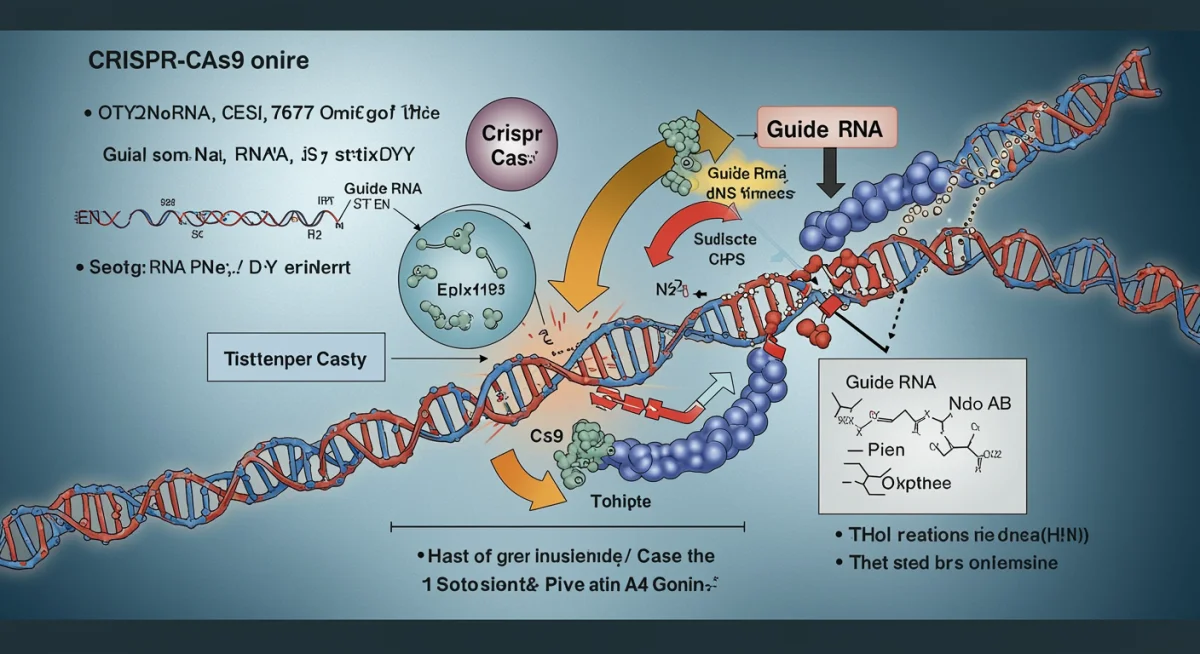
The mechanism involves a guide RNA molecule that directs the Cas9 enzyme to a specific DNA sequence. Once located, Cas9 acts as a molecular scissor, making a precise cut. This cut then triggers the cell’s own repair machinery, which can be manipulated to insert, delete, or modify genetic information.
Clinical Trials and Future Outlook
CRISPR-Cas9 is already making significant strides in clinical trials, particularly for blood disorders like sickle cell disease and beta-thalassemia. Early results have been highly promising, indicating the potential for durable cures for patients who previously had limited treatment options.
- Sickle Cell Disease: Clinical trials show patients achieving transfusion independence and symptom reduction.
- Cancer Immunotherapy: Enhancing T-cells to better target and destroy cancer cells.
- Blindness Treatment: In vivo gene editing to correct mutations causing inherited forms of blindness.
The ability of CRISPR to target and correct specific genetic defects offers a pathway to treating diseases at their source. Its scalability and relatively lower cost compared to previous gene therapies position it as a major force in the future of healthcare, driving down long-term treatment costs for chronic conditions.
TALENs: Precision Editing with Custom Modules
Transcription Activator-Like Effector Nucleases, or TALENs, represent another powerful gene-editing technology that predates the widespread recognition of CRISPR. While perhaps less widely discussed in popular media, TALENs offer unique advantages, particularly in applications requiring high specificity and minimal off-target activity.
TALENs are engineered proteins that can be designed to bind to virtually any DNA sequence. Their modular nature allows for highly customizable targeting, making them robust tools for gene modification in various cell types and organisms.
Mechanism and Applications
Each TALEN protein consists of a DNA-binding domain and a nuclease domain. The DNA-binding domain is composed of repeating modules, each recognizing a single DNA base pair. By assembling these modules, researchers can create TALENs that recognize specific DNA sequences. The nuclease domain then cuts the DNA, initiating the editing process.
- High Specificity: TALENs are known for their exceptional precision in DNA targeting, reducing unintended edits.
- Gene Knockout: Effectively used to silence genes by introducing disruptive mutations.
- Therapeutic Targets: Explored for treating HIV, various cancers, and some genetic disorders due to their specificity.
While often compared to CRISPR, TALENs sometimes offer superior specificity in certain contexts, making them a valuable tool for therapeutic development where off-target effects must be rigorously avoided. Their continued development contributes significantly to the diverse toolkit of gene-editing technologies.
Zinc Finger Nucleases: The Pioneering Gene Editors
Before CRISPR and TALENs, Zinc Finger Nucleases (ZFNs) paved the way for targeted gene editing. ZFNs were the first class of engineered nucleases to gain significant traction, demonstrating the feasibility of precise genome modification and laying the groundwork for subsequent technologies. Their legacy is foundational to the current gene-editing revolution.
ZFNs are synthetic proteins designed to cleave DNA at specific sites. They consist of a zinc finger DNA-binding domain fused to a nuclease domain. The zinc finger domain is engineered to recognize and bind to a unique sequence of DNA, while the nuclease domain (typically derived from FokI) introduces a double-strand break.
Advancements and Therapeutic Impact
Early clinical trials involving ZFNs for conditions like HIV have shown the technology’s potential to provide functional cures by modifying immune cells to resist viral infection. This pioneering work proved that targeted gene editing could be safely and effectively applied in humans.
- HIV Resistance: Modifying T-cells to make them resistant to HIV infection.
- Monogenic Disorders: Applications in early-stage trials for inherited metabolic disorders.
- Gene Therapy Precursor: Established the safety and efficacy framework for subsequent gene-editing tools.
Despite the emergence of newer technologies, ZFNs continue to be refined and utilized in specific applications where their established safety profile and targeting capabilities are advantageous. Their role in proving the concept of therapeutic gene editing cannot be overstated, contributing immensely to the current wave of biotech breakthroughs.
Economic Impact: Saving Billions in US Healthcare
The disruptive potential of these gene-editing technologies extends far beyond medical efficacy; it promises a profound economic impact on the US healthcare system. By addressing the root causes of chronic and genetic diseases, these therapies could significantly reduce the long-term costs associated with managing these conditions.
Consider the astronomical costs of lifelong treatments for diseases like sickle cell anemia, cystic fibrosis, or certain cancers. Gene-editing therapies, even with high upfront costs, offer the potential for one-time or few-time treatments that could eliminate or drastically reduce the need for ongoing medical interventions, hospitalizations, and specialized care.
Cost-Benefit Analysis
A shift from chronic symptom management to curative gene therapies would represent substantial savings. The economic models suggest that while initial investments in gene-editing research and development are high, the long-term benefits in terms of reduced healthcare expenditures and increased productivity are enormous.
- Reduced Hospitalizations: Fewer acute crises and hospital stays for chronic conditions.
- Decreased Medication Costs: Elimination or reduction of expensive, lifelong drug regimens.
- Increased Quality of Life: Improved patient health leading to enhanced workforce participation and societal benefits.
The ability to prevent or cure diseases before they manifest fully or become debilitating could transform healthcare from a reactive system to a proactive one. This paradigm shift will not only improve patient lives but also alleviate the immense financial burden on individuals, families, and the national healthcare budget.
Challenges and Ethical Considerations for Broader Adoption
While the promise of gene editing is immense, its widespread adoption is not without challenges. Technical hurdles, regulatory complexities, and significant ethical considerations must be carefully navigated to ensure these powerful tools are used responsibly and equitably. Public discourse and robust oversight are critical for successful integration.
Ensuring equitable access to these potentially life-saving therapies is paramount. The high development and production costs could lead to significant price tags, raising concerns about who will be able to afford these treatments and how they will be covered by insurance or public health systems.
Regulatory and Ethical Frameworks
The development of clear and comprehensive regulatory pathways is essential for bringing gene-edited therapies to market safely and efficiently. Agencies like the FDA are actively working to establish appropriate guidelines for these novel treatments, balancing innovation with patient safety.
- Off-Target Effects: Continuous research to minimize unintended genetic modifications.
- Germline Editing: Ethical debates surrounding edits that are heritable and passed down to future generations.
- Accessibility and Equity: Ensuring that these advanced therapies are available to all who need them, not just a privileged few.
Addressing these challenges requires a collaborative effort involving scientists, ethicists, policymakers, and the public. Open dialogue and transparent processes will be crucial in shaping a future where gene editing benefits humanity while upholding ethical standards and promoting social justice.
| Key Technology | Disruptive Impact |
|---|---|
| CRISPR-Cas9 | Revolutionizes genetic disease treatment with high efficiency and versatility, promising cures for inherited disorders. |
| TALENs | Offers precise gene editing with high specificity, useful in complex therapeutic applications requiring minimal off-target effects. |
| Zinc Finger Nucleases | Pioneering gene-editing tool that established feasibility for human applications, especially in areas like HIV resistance. |
| Economic Savings | Potential to save billions in US healthcare by shifting from chronic disease management to curative, one-time genetic interventions. |
Frequently asked questions about gene-editing healthcare disruption
The three primary gene-editing technologies poised to disrupt healthcare are CRISPR-Cas9, Transcription Activator-Like Effector Nucleases (TALENs), and Zinc Finger Nucleases (ZFNs). Each offers unique advantages in precision, efficiency, and application, driving forward the potential for curative treatments for various diseases.
Gene editing can save billions by transitioning from expensive, lifelong treatments for chronic and genetic diseases to potentially one-time curative therapies. This reduces costs associated with hospitalizations, ongoing medication, and long-term specialized care, significantly alleviating the financial burden on the healthcare system and patients.
Gene-editing therapies are currently targeting a range of diseases, including blood disorders like sickle cell disease and beta-thalassemia, certain cancers (through immunotherapy), inherited forms of blindness, and HIV. Ongoing research continues to expand the list of potential applications for these groundbreaking technologies.
Key ethical concerns include the potential for off-target edits, the implications of germline editing (heritable changes), equitable access to expensive therapies, and the possibility of unintended societal consequences. These issues necessitate careful regulatory oversight and public discussion to ensure responsible development and application.
CRISPR-Cas9 uses a guide RNA to direct the Cas9 enzyme for DNA cutting. TALENs employ modular protein domains to bind DNA and a nuclease for cutting. ZFNs combine zinc finger DNA-binding proteins with a nuclease to achieve targeted DNA cleavage. Each has distinct structural and targeting mechanisms.
Conclusion
The convergence of scientific innovation and clinical application positions gene-editing technologies as monumental forces set to redefine healthcare. CRISPR-Cas9, TALENs, and zinc finger nucleases are not just theoretical advancements; they are tangible tools actively reshaping treatment paradigms. By 2025, their impact on the US healthcare system will be undeniable, offering not only profound health benefits through curative therapies but also significant economic savings by mitigating the long-term costs of chronic disease management. While challenges remain, the trajectory of these biotech breakthroughs points toward a healthier, more cost-effective future.