Real Estate Reimagined: Top 3 Emerging Commercial Property Sectors in the U.S. for 2025
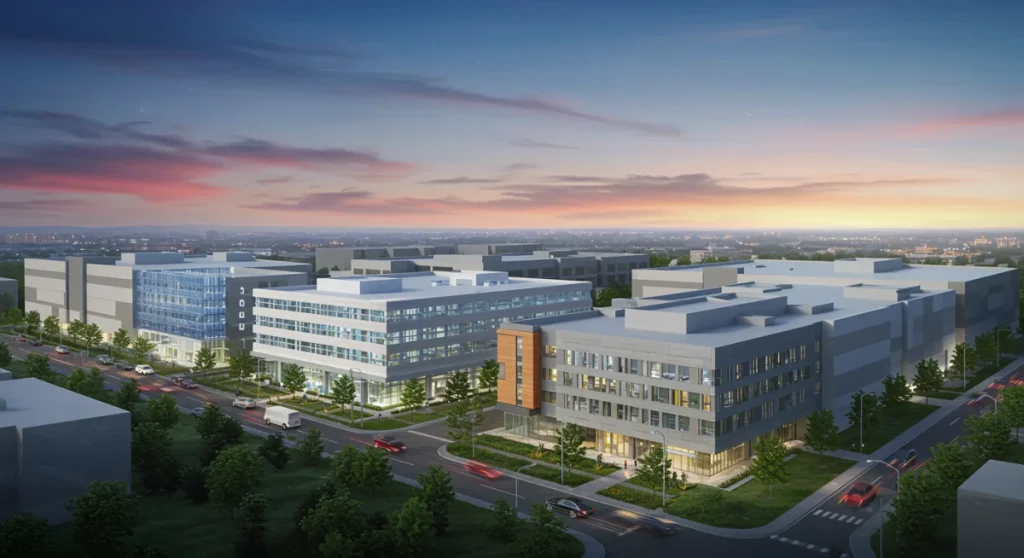
The U.S. commercial real estate market is rapidly evolving, with specific sectors poised for significant growth and investment in 2025. Understanding these shifts is crucial for strategic positioning and maximizing returns in a reimagined economic landscape.
As we approach 2025, the landscape of U.S. commercial real estate is undergoing a profound transformation. Investors and developers are keenly observing shifts in demand, driven by technological advancements, demographic changes, and evolving consumer behaviors. This article delves into how Real Estate Reimagined: Top 3 Emerging Commercial Property Sectors in the U.S. for 2025 are reshaping investment strategies, offering new avenues for growth and resilience in a dynamic market.
The Rise of Life Sciences and Biotech Facilities
The life sciences sector has emerged as a powerhouse within commercial real estate, driven by unprecedented innovation in biotechnology, pharmaceuticals, and medical research. This growth is not merely cyclical; it’s a structural shift fueled by increasing R&D spending, a global focus on health, and significant venture capital investment. The demand for specialized lab space, R&D facilities, and bio-manufacturing plants is skyrocketing across key U.S. hubs.
These facilities require unique infrastructure, including advanced ventilation systems, specialized plumbing, and stringent environmental controls, differentiating them significantly from traditional office spaces. This complexity often translates into higher rental rates and longer lease terms, providing attractive returns for property owners and investors.
Key Drivers of Life Sciences Real Estate Demand
- Increased Funding: Substantial government and private sector investment in biotech and pharmaceutical research.
- Technological Advancements: Rapid innovation in genomics, personalized medicine, and AI-driven drug discovery necessitates cutting-edge facilities.
- Demographic Shifts: An aging population and increased awareness of health and wellness drive demand for medical solutions.
Major clusters like Boston/Cambridge, San Francisco Bay Area, and San Diego continue to lead, but emerging markets such as Philadelphia, Raleigh-Durham, and Seattle are also experiencing significant expansion. These regions boast strong academic institutions, a skilled workforce, and supportive regulatory environments, making them ideal for continued growth.
The investment landscape for life sciences real estate is becoming increasingly competitive, attracting both institutional investors and specialized funds. The long-term stability and growth potential of this sector make it a compelling opportunity for those looking to diversify their commercial real estate portfolios.
Data Centers: The Digital Backbone of the Economy
In an increasingly digital world, data centers have become indispensable infrastructure, akin to utilities. The exponential growth of cloud computing, artificial intelligence, IoT devices, and 5G technology is creating insatiable demand for secure, high-capacity data storage and processing facilities. This sector is not just growing; it’s accelerating, making it a critical component of the emerging commercial real estate landscape.
Data centers are highly specialized properties that require significant capital investment in power infrastructure, cooling systems, and advanced security measures. Their strategic importance ensures consistent demand, often from tech giants, cloud providers, and large enterprises seeking reliable and scalable solutions for their digital operations.
Investment Considerations for Data Centers
- Power Availability: Proximity to robust and affordable power sources is paramount.
- Fiber Connectivity: Access to high-speed fiber optic networks is crucial for data transmission.
- Cooling Infrastructure: Efficient and scalable cooling solutions are necessary to manage heat generated by servers.
Major data center hubs include Northern Virginia (often called ‘Data Center Alley’), Dallas, Chicago, and Phoenix. However, secondary markets are also gaining traction as companies seek to diversify their digital footprints and enhance disaster recovery capabilities. The long-term leases, often with built-in rent escalators, offer attractive and stable income streams for investors.
Sustainability is also a growing concern in the data center sector, with increasing emphasis on renewable energy sources and energy-efficient designs. Investors are increasingly evaluating facilities based on their environmental impact and operational efficiency, aligning with broader ESG (Environmental, Social, and Governance) investment trends.
Specialized Logistics and E-commerce Fulfillment Centers
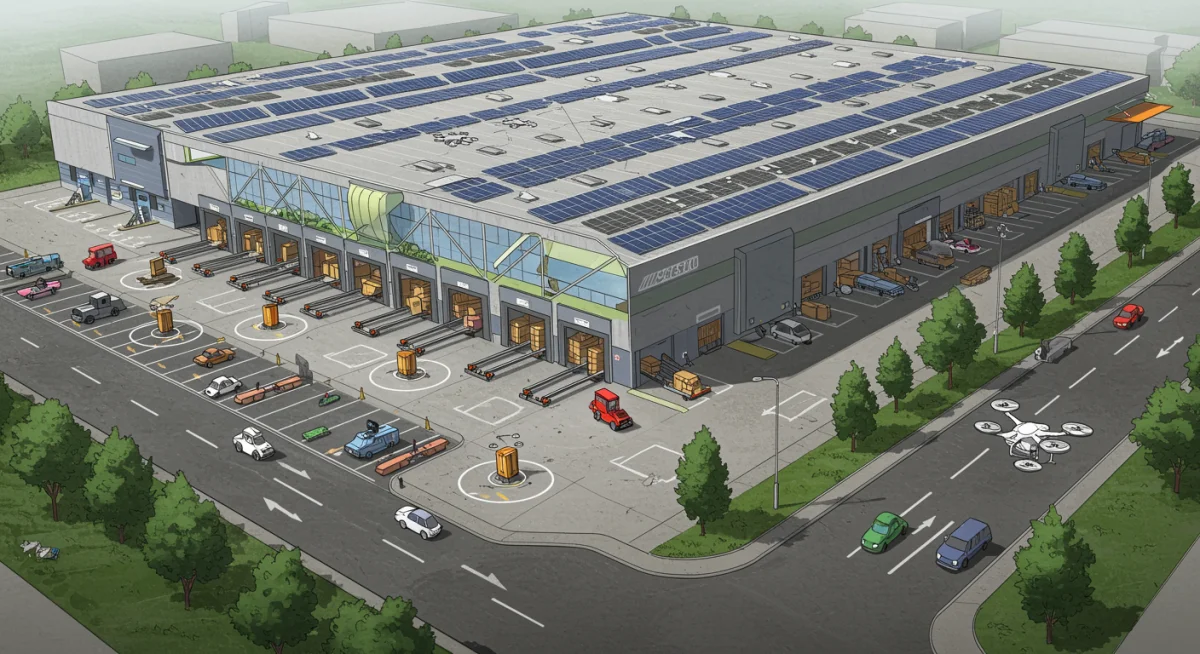
The explosion of e-commerce, accelerated by recent global events, has fundamentally reshaped the industrial real estate sector. Traditional warehouses are giving way to highly specialized logistics and fulfillment centers designed for rapid inventory turnover, last-mile delivery, and sophisticated automation. This transformation is driven by consumer expectations for faster delivery and the need for efficient supply chain management.
These facilities are often strategically located near major transportation arteries, urban centers, and population dense areas to minimize transit times. They incorporate advanced robotics, AI-driven inventory management systems, and specialized climate controls for a wide range of products, from fresh produce to high-value electronics.
Innovations in Logistics Real Estate
- Automated Warehousing: Integration of robotics and AI for picking, packing, and sorting.
- Multi-Story Facilities: Maximizing space in dense urban areas to facilitate last-mile delivery.
- Cold Storage: Growing demand for temperature-controlled facilities for groceries and pharmaceuticals.
Regions with strong population growth and robust transportation networks, such as the Inland Empire in California, Dallas-Fort Worth, Atlanta, and Eastern Pennsylvania, are experiencing massive demand for these properties. The competitive nature of e-commerce means that businesses are willing to pay a premium for optimally located and technologically advanced facilities.
The shift towards specialized logistics also includes the development of ‘dark stores’ and micro-fulfillment centers, which are smaller, highly automated facilities located within urban areas to serve immediate delivery needs. This diversification within the industrial sector presents numerous opportunities for developers and investors looking to capitalize on evolving consumer habits.
Navigating the Investment Landscape in 2025
Investing in these emerging commercial property sectors requires a nuanced understanding of market dynamics, technological requirements, and regulatory frameworks. While the potential for high returns is significant, so are the complexities involved in development and management. Due diligence is paramount, focusing on factors like tenant quality, lease structures, and the long-term viability of the underlying industry trends.
The capital markets are increasingly recognizing the value and stability offered by these specialized assets. Institutional investors, private equity firms, and even REITs are actively allocating capital to life sciences, data centers, and advanced logistics. This heightened interest suggests a maturing of these sectors, moving them from niche opportunities to mainstream investment categories.
Furthermore, the integration of ESG principles is becoming a critical factor in investment decisions. Sustainable design, energy efficiency, and community impact are not just ethical considerations but also contribute to long-term asset value and operational resilience. Properties that can demonstrate strong ESG credentials are likely to attract more capital and command higher valuations.
Challenges and Opportunities Ahead
While the outlook for these emerging sectors is overwhelmingly positive, challenges persist. High construction costs, labor shortages, and rising interest rates can impact development timelines and profitability. Additionally, the rapid pace of technological change means that facilities must be designed with flexibility and adaptability in mind to avoid obsolescence.
However, these challenges also present opportunities for innovative developers and investors. Those who can navigate complex permitting processes, secure strategic locations, and implement cutting-edge technologies will be well-positioned to capitalize on the sustained demand. The ability to form strategic partnerships with tenants, particularly in the life sciences and tech sectors, can also provide a competitive edge.
The demand for specialized talent in these fields also influences real estate decisions, with companies often prioritizing locations that offer access to a skilled workforce. This further reinforces the clustering effect seen in many of these sectors, where proximity to universities and research institutions is a significant advantage.
The Broader Impact on Urban and Suburban Development
The growth of these specialized commercial property sectors has significant implications for urban and suburban development patterns. Life sciences hubs often revitalize older industrial areas or drive the creation of new innovation districts. Data centers, while often located in more remote areas due to power and land requirements, can spur infrastructure development in their vicinity.
Specialized logistics centers are transforming industrial parks and creating new distribution corridors, impacting traffic patterns and local employment. This reimagining of commercial real estate extends beyond individual buildings to influence regional economic strategies and planning. Cities and regions that proactively support the growth of these sectors through zoning, incentives, and infrastructure investments stand to benefit significantly.
The interdependencies between these sectors are also noteworthy. For example, the massive amounts of data generated by life sciences research necessitate robust data center infrastructure. Similarly, the rapid delivery of biotech products relies on efficient logistics networks. This interconnectedness further solidifies their long-term growth prospects and their collective impact on the broader real estate ecosystem.
| Emerging Sector | Key Characteristics & Outlook |
|---|---|
| Life Sciences | High demand for specialized lab and R&D space. Driven by biotech innovation and funding. Strong rental growth. |
| Data Centers | Essential infrastructure for digital economy. Fueled by cloud, AI, and 5G. Requires significant power and cooling. |
| Specialized Logistics | E-commerce driven demand for automated fulfillment and last-mile delivery centers. Strategic urban locations. |
| Investment Outlook | Strong institutional interest, long-term leases, and emphasis on ESG principles for sustainable growth. |
Frequently Asked Questions about Emerging Commercial Real Estate
Growth in life sciences real estate is primarily driven by increased R&D spending, significant venture capital investment in biotech, and advancements in medical technology. Specialized lab and manufacturing facilities are crucial for innovation in pharmaceuticals and biotechnology, creating high demand for purpose-built properties.
Data centers are strong investments due to the exponential growth of cloud computing, AI, and 5G, which demand vast data storage and processing capabilities. They offer stable, long-term leases with tech giants and require highly specialized infrastructure, ensuring consistent demand and attractive returns for investors.
E-commerce has dramatically increased the demand for specialized logistics facilities by requiring faster delivery and efficient supply chain management. This has led to a need for automated warehouses, multi-story fulfillment centers, and strategically located properties near urban areas for last-mile delivery, transforming the industrial sector.
Key risks include high development costs, labor shortages, and rapidly evolving technological requirements that can lead to obsolescence if not properly managed. Additionally, the specialized nature of these properties means that demand can be tied to the health of specific industries, requiring thorough market analysis.
Leading regions include traditional hubs like Boston/Cambridge and San Francisco for life sciences, Northern Virginia for data centers, and the Inland Empire (California) for specialized logistics. Emerging markets like Raleigh-Durham, Phoenix, and Atlanta are also experiencing significant growth and attracting substantial investment.
Conclusion
The U.S. commercial real estate market is undergoing a profound evolution, with life sciences, data centers, and specialized logistics facilities emerging as the frontrunners for investment in 2025. These sectors, driven by innovation, digital transformation, and shifting consumer behaviors, offer compelling opportunities for growth and long-term stability. While requiring specialized knowledge and strategic planning, the high demand for these essential properties positions them as critical components of a reimagined real estate landscape. Investors who understand the unique demands and capitalize on the underlying megatrends will find significant value in these dynamic sectors.