Aerospace Innovation: 4 Key U.S. Technologies for Next 12 Months
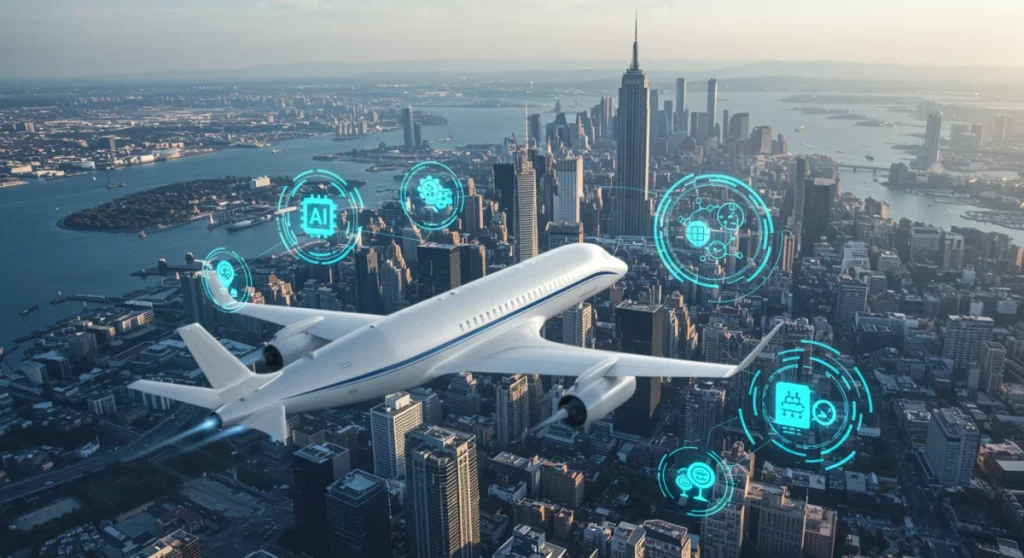
Over the next 12 months, U.S. aerospace innovation will be significantly shaped by four key technologies: artificial intelligence, sustainable aviation fuels, advanced propulsion systems, and sophisticated autonomous capabilities, driving transformative growth and efficiency across the sector.
The landscape of modern aviation and space exploration is undergoing a profound transformation, with the United States at the forefront of this technological revolution. Breakthroughs in U.S. Aerospace Innovation are not just incremental improvements, but fundamental shifts poised to redefine how we fly, travel, and explore. This article delves into the four pivotal technologies set to drive the U.S. aerospace sector’s development over the coming year.
The Rise of Artificial Intelligence in Aerospace
Artificial Intelligence (AI) is rapidly becoming an indispensable tool across the aerospace industry, offering unprecedented capabilities for optimization, safety, and operational efficiency. Its application spans from advanced manufacturing processes to real-time flight management and predictive maintenance, fundamentally altering how aircraft are designed, built, and operated.
AI’s ability to process vast amounts of data at speeds impossible for humans allows for more informed decision-making, reducing risks and enhancing performance. This technology is not merely about automation; it’s about creating intelligent systems that can learn, adapt, and even anticipate challenges, making aerospace operations safer and more robust.
AI in Flight Optimization and Air Traffic Management
One of the most immediate impacts of AI is its role in optimizing flight paths and managing air traffic. AI-powered algorithms can analyze weather patterns, air traffic density, and aircraft performance data to suggest the most efficient routes, saving fuel and reducing flight times. This translates into significant cost savings for airlines and a reduced environmental footprint.
- Dynamic Route Planning: AI systems continuously monitor conditions, adjusting flight paths in real time to avoid turbulence, adverse weather, or congested airspace.
- Predictive Air Traffic Control: AI assists air traffic controllers by predicting potential conflicts and suggesting solutions, enhancing safety and flow efficiency.
- Fuel Efficiency: Optimized flight profiles lead to substantial reductions in fuel consumption and, consequently, carbon emissions.
Predictive Maintenance and System Diagnostics
AI is also revolutionizing aircraft maintenance. Instead of scheduled maintenance based on fixed intervals, AI enables predictive maintenance, where components are serviced only when data indicates a potential issue. This approach minimizes downtime, extends component life, and prevents unexpected failures, significantly improving operational reliability.
Sensors embedded throughout aircraft collect data on performance, temperature, vibration, and other critical parameters. AI algorithms analyze this data to detect subtle anomalies that might indicate impending failure, allowing maintenance teams to address problems proactively before they escalate. This shift from reactive to proactive maintenance is a game-changer for the aerospace industry.
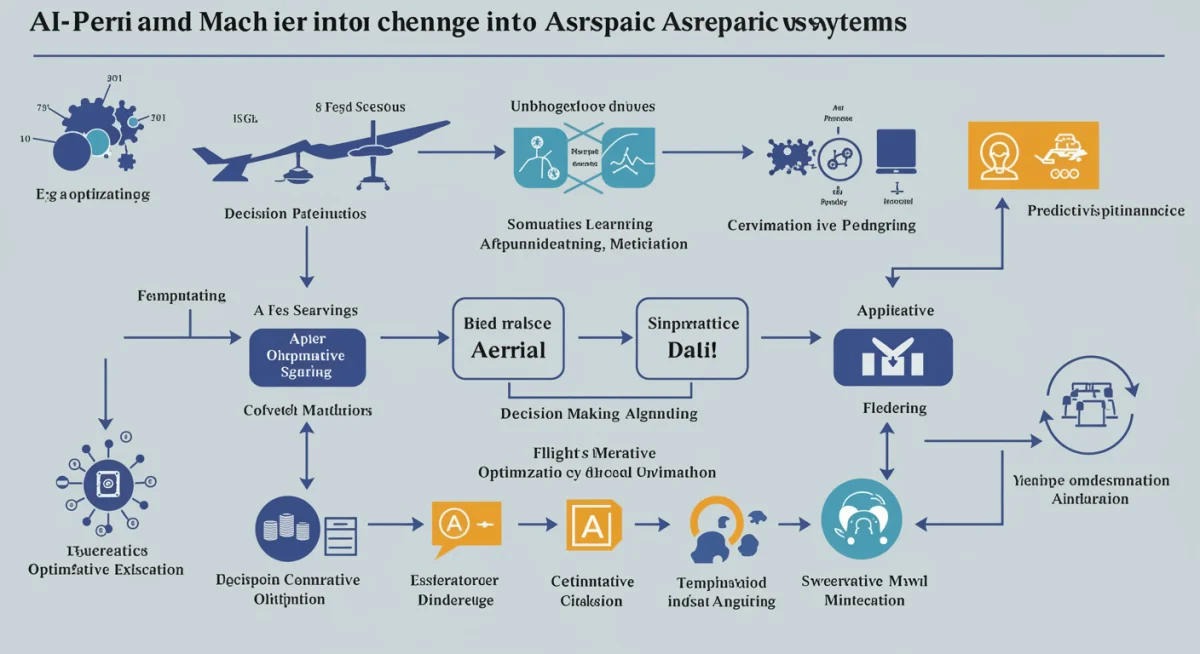
In conclusion, the integration of AI into aerospace is moving beyond theoretical concepts to practical, impactful applications. Over the next year, we anticipate seeing AI further embed itself into every aspect of aerospace, from the drawing board to the skies, driving efficiencies, enhancing safety, and paving the way for more autonomous operations.
The Imperative of Sustainable Aviation Fuels (SAFs)
As the global focus on climate change intensifies, the aerospace sector is under increasing pressure to reduce its carbon footprint. Sustainable Aviation Fuels (SAFs) represent a critical pathway to achieving this ambitious goal, offering a viable alternative to traditional jet fuel with significantly lower lifecycle greenhouse gas emissions. The U.S. is heavily investing in SAF research, development, and production, recognizing its pivotal role in the future of aviation.
SAFs are produced from a variety of sustainable feedstocks, including agricultural waste, algae, and dedicated energy crops, and can be blended with conventional jet fuel without requiring modifications to existing aircraft engines or infrastructure. This compatibility makes SAFs an attractive and immediate solution for decarbonizing air travel.
Diversifying SAF Feedstocks and Production Methods
The development of diverse SAF feedstocks is crucial for scaling up production and ensuring a sustainable supply chain. Researchers and companies in the U.S. are exploring various pathways, each with its own advantages and challenges. The aim is to create a robust and resilient SAF industry that can meet the growing demand from airlines.
- Bio-based Feedstocks: Utilizing agricultural residues, municipal solid waste, and forestry byproducts to produce advanced biofuels.
- Power-to-Liquid (PtL) Fuels: Producing synthetic fuels using renewable electricity, water, and captured carbon dioxide, offering a highly sustainable option.
- Algae-based Fuels: Cultivating microalgae for their high oil content, which can be converted into jet fuel, offering a promising, land-efficient solution.
Policy Support and Industry Adoption
Government policies and industry initiatives are playing a vital role in accelerating SAF adoption in the U.S. Incentives, grants, and mandates are encouraging airlines to commit to higher SAF blends and driving investment in production facilities. Collaborative efforts between fuel producers, airlines, and aircraft manufacturers are essential for creating a sustainable ecosystem.
Major U.S. airlines have set ambitious targets for SAF use, signaling a strong market demand that is spurring further innovation and investment. The next 12 months are expected to see significant progress in commercializing new SAF technologies and expanding production capacities, moving closer to widespread adoption.
In summary, SAFs are not just an environmental necessity but also an economic opportunity for the U.S. aerospace sector. The ongoing advancements in feedstock diversification and production methods, coupled with strong policy support, position SAFs as a cornerstone of sustainable aviation in the very near future.
Revolutionizing Flight with Advanced Propulsion Systems
The quest for faster, more efficient, and environmentally friendly air travel is driving intense innovation in propulsion systems. Beyond traditional jet engines, the U.S. aerospace industry is aggressively pursuing advanced concepts that promise to revolutionize flight. These include electric and hybrid-electric propulsion, hydrogen power, and even advanced nuclear concepts for space applications, each offering unique advantages for different mission profiles.
The development of these systems is complex, requiring breakthroughs in materials science, energy storage, and thermal management. However, the potential benefits—reduced emissions, lower operating costs, and enhanced performance—are too significant to ignore, making this area a focal point for investment and research.
Electric and Hybrid-Electric Aircraft
Electric and hybrid-electric propulsion systems are gaining traction, particularly for urban air mobility (UAM) and regional aircraft. These systems promise quieter operations, zero direct emissions, and reduced reliance on fossil fuels. The U.S. is a hub for startups and established aerospace giants alike, all vying to bring electric aircraft to market.
- Battery Technology: Advancements in battery energy density and charging speeds are critical for practical electric flight.
- Distributed Propulsion: Multiple electric motors can be strategically placed across an aircraft, offering enhanced control and efficiency.
- Hybrid Architectures: Combining electric motors with traditional jet engines to optimize performance for different flight segments, such as takeoff and cruise.
Hydrogen as an Aviation Fuel
Hydrogen, both in its liquid and gaseous forms, is emerging as a strong contender for future zero-emission aviation. When used in fuel cells or combusted directly, hydrogen produces only water vapor, making it an incredibly clean fuel source. While challenges remain in storage and infrastructure, U.S. companies are making significant strides in hydrogen-powered aircraft designs.
The next year will likely see continued investment in hydrogen fuel cell development for aviation, along with progress in designing aircraft capable of storing and utilizing liquid hydrogen efficiently. This technology has the potential to decarbonize even long-haul flights, offering a truly sustainable solution for the industry.
In conclusion, advanced propulsion systems are at the heart of aerospace innovation. The relentless pursuit of electric, hybrid, and hydrogen-powered solutions underscores the industry’s commitment to a more sustainable and efficient future. The next 12 months will be crucial for validating these technologies and moving them closer to commercial viability.
The Evolution of Autonomous Capabilities and UAVs
Autonomous capabilities and Unmanned Aerial Vehicles (UAVs), commonly known as drones, are no longer confined to military applications or niche hobbyist markets. They are rapidly expanding into commercial sectors, transforming logistics, surveillance, inspection, and even passenger transport. The U.S. is a global leader in developing and deploying these advanced systems, pushing the boundaries of what autonomous flight can achieve.
The evolution of UAVs is driven by advancements in sensor technology, artificial intelligence, and robust communication systems, enabling them to perform complex tasks with minimal human intervention. This shift towards greater autonomy promises increased efficiency, reduced operational costs, and the ability to operate in environments too dangerous or inaccessible for human pilots.
Expanded Commercial Applications of UAVs
The commercial applications of UAVs are diversifying at an astonishing pace. Beyond photography and mapping, drones are now integral to critical infrastructure inspection, precision agriculture, and emergency response. The next 12 months will see an even greater integration of these systems into various industries, creating new economic opportunities and improving operational workflows.
- Delivery Services: Autonomous drones are being tested for last-mile delivery, offering faster and more efficient transportation of goods.
- Infrastructure Inspection: Drones equipped with advanced sensors can inspect pipelines, bridges, and power lines more safely and efficiently than traditional methods.
- Environmental Monitoring: UAVs are used for monitoring wildlife, tracking pollution, and assessing natural disaster damage, providing invaluable data.
Towards Autonomous Passenger Flight
While fully autonomous passenger aircraft are still some years away from widespread commercial use, significant progress is being made in developing the underlying technologies. Autonomous urban air mobility (UAM) vehicles, often referred to as ‘flying taxis,’ are at the forefront of this development, promising to alleviate urban congestion and revolutionize personal transport.
The development of robust sense-and-avoid systems, redundant flight controls, and fail-safe mechanisms is paramount for ensuring the safety of autonomous passenger flight. Regulatory frameworks are also evolving to accommodate these new forms of air travel, with the U.S. actively working on certification processes and airspace integration strategies.
In conclusion, autonomous capabilities and UAVs are reshaping the aerospace landscape, offering solutions to complex challenges and opening up new frontiers for commercial and personal use. The continuous advancements in AI and sensor technology are paving the way for a future where autonomous flight is a safe, efficient, and integral part of daily life.
Advanced Materials and Manufacturing Techniques
The performance, safety, and cost-effectiveness of aerospace vehicles are fundamentally linked to the materials they are made from and the methods used to manufacture them. The U.S. aerospace sector is a hotbed of innovation in advanced materials science and manufacturing, constantly pushing the boundaries to create lighter, stronger, and more durable components. These advancements are critical for enabling the next generation of aircraft and spacecraft, from fuel-efficient airliners to reusable rockets.
The focus is on materials that offer superior strength-to-weight ratios, enhanced thermal resistance, and improved fatigue life. Coupled with this, revolutionary manufacturing techniques are allowing for the creation of complex geometries and integrated structures that were previously impossible, leading to more efficient designs and reduced waste.
Composite Materials and Nanotechnology
Composite materials, particularly carbon fiber reinforced polymers (CFRPs), have become ubiquitous in modern aerospace due to their exceptional strength and light weight. Continuous research in the U.S. is leading to new generations of composites with even better performance characteristics, including enhanced damage tolerance and reparability. Nanotechnology is also playing a role, with materials engineered at the atomic level to achieve unprecedented properties.
- Lighter Structures: Advanced composites significantly reduce aircraft weight, leading to substantial fuel savings and increased payload capacity.
- Improved Durability: New materials offer greater resistance to fatigue, corrosion, and extreme temperatures, extending the lifespan of aerospace components.
- Multifunctional Materials: Developing materials that can not only bear loads but also perform other functions, such as sensing or energy storage.
Additive Manufacturing (3D Printing)
Additive manufacturing, or 3D printing, has revolutionized how aerospace components are designed and produced. This technology allows for the creation of highly complex parts with intricate internal structures, often with fewer steps and less material waste compared to traditional manufacturing methods. The U.S. aerospace industry is leveraging 3D printing for everything from engine components to structural parts and tooling.
The ability to rapidly prototype and iterate designs, coupled with the production of custom-tailored parts, makes 3D printing an invaluable tool. It enables engineers to optimize components for specific performance requirements, leading to more efficient and reliable aerospace systems. The next 12 months will see further expansion of 3D printing applications, including larger and more critical components.
In conclusion, advanced materials and manufacturing techniques are foundational to the future of aerospace. By developing lighter, stronger, and more resilient components through innovations like advanced composites and additive manufacturing, the U.S. aerospace sector is building the very fabric of next-generation air and space vehicles.
Cybersecurity and Resilient Systems
As aerospace systems become increasingly interconnected and reliant on digital technologies, the threat of cyberattacks grows exponentially. Ensuring the cybersecurity and resilience of these critical systems is paramount for national security, public safety, and the integrity of commercial operations. The U.S. aerospace sector is heavily investing in robust cybersecurity measures and developing resilient architectures that can withstand and recover from sophisticated cyber threats.
Cybersecurity in aerospace extends beyond protecting data; it involves safeguarding flight control systems, air traffic management networks, satellite communications, and manufacturing processes. A breach in any of these areas could have catastrophic consequences, highlighting the urgent need for continuous innovation in defense strategies.
Protecting Critical Infrastructure and Data
The focus on protecting critical aerospace infrastructure involves a multi-layered approach, combining advanced encryption, intrusion detection systems, and secure communication protocols. The goal is to create an impenetrable shield around vital systems and sensitive data, preventing unauthorized access and malicious manipulation.
- Data Encryption: Implementing end-to-end encryption for all data transmissions, both on the ground and in the air.
- Network Segmentation: Isolating critical operational technology (OT) networks from information technology (IT) networks to limit the impact of a breach.
- Threat Intelligence: Continuously monitoring for new cyber threats and vulnerabilities, and developing proactive defenses.
Developing Cyber-Resilient Architectures
Beyond traditional cybersecurity, the concept of cyber resilience is gaining prominence. This involves designing systems that can not only resist attacks but also maintain essential functions even when under duress or after a successful breach. Redundancy, self-healing capabilities, and rapid recovery mechanisms are key components of resilient aerospace architectures.
The U.S. aerospace industry is exploring innovative solutions such as blockchain for secure data provenance and artificial intelligence for anomaly detection and automated response to cyber incidents. The next 12 months will see further integration of these advanced resilience strategies into the design and operation of aerospace systems, building a more secure future for air and space travel.
In conclusion, cybersecurity and resilient systems are non-negotiable for the future of aerospace. As technology advances, so do the threats, making continuous investment and innovation in defensive capabilities essential. The U.S. sector’s commitment to robust cyber defenses ensures the safety, reliability, and trustworthiness of its cutting-edge aerospace endeavors.
| Key Technology | Impact on U.S. Aerospace |
|---|---|
| Artificial Intelligence | Optimizes flight, enhances safety, and drives predictive maintenance. |
| Sustainable Aviation Fuels (SAFs) | Decarbonizes air travel, reducing environmental impact without infrastructure changes. |
| Advanced Propulsion Systems | Enables quieter, more efficient, and zero-emission flight options. |
| Autonomous Capabilities | Transforms logistics, surveillance, and future urban air mobility. |
Frequently Asked Questions About U.S. Aerospace Innovation
The primary goal is to enhance efficiency, safety, and sustainability across both aviation and space sectors. This involves integrating advanced technologies like AI and sustainable fuels to reduce environmental impact and improve operational performance.
AI will revolutionize flight operations by optimizing flight paths, improving air traffic management, and enabling highly accurate predictive maintenance. These advancements lead to significant fuel savings, reduced delays, and enhanced overall safety for passengers and cargo.
Yes, SAFs are a highly realistic and immediate solution for decarbonization. They can be blended with existing jet fuel without requiring aircraft modifications, significantly reducing lifecycle greenhouse gas emissions. U.S. investment aims to scale up their production and adoption.
Challenges for advanced propulsion systems include improving battery energy density for electric aircraft, developing efficient hydrogen storage solutions, and managing thermal aspects of new engine designs. Overcoming these is key to their widespread commercial viability.
Cybersecurity is evolving through multi-layered defenses, including advanced encryption, network segmentation, and AI-driven threat intelligence. The focus is on building cyber-resilient systems that can withstand and rapidly recover from sophisticated attacks to ensure operational integrity.
Conclusion
The U.S. aerospace sector stands on the cusp of a new era, defined by unprecedented technological advancements. The four key technologies—Artificial Intelligence, Sustainable Aviation Fuels, Advanced Propulsion Systems, and Autonomous Capabilities—are not merely buzzwords but foundational pillars driving significant progress. Over the next 12 months, we will witness these innovations mature, transforming everything from commercial air travel to defense and space exploration. These developments promise not only to enhance operational efficiency and safety but also to pave the way for a more sustainable and accessible future in the skies and beyond. The collaborative efforts across industry, academia, and government will be crucial in harnessing the full potential of these transformative technologies, ensuring the U.S. maintains its leadership in the global aerospace landscape.