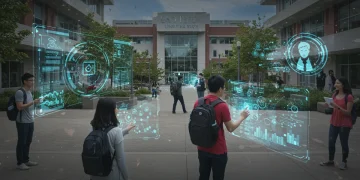
EdTech: 2 Major Shifts in U.S. Learning Platforms This Academic Year
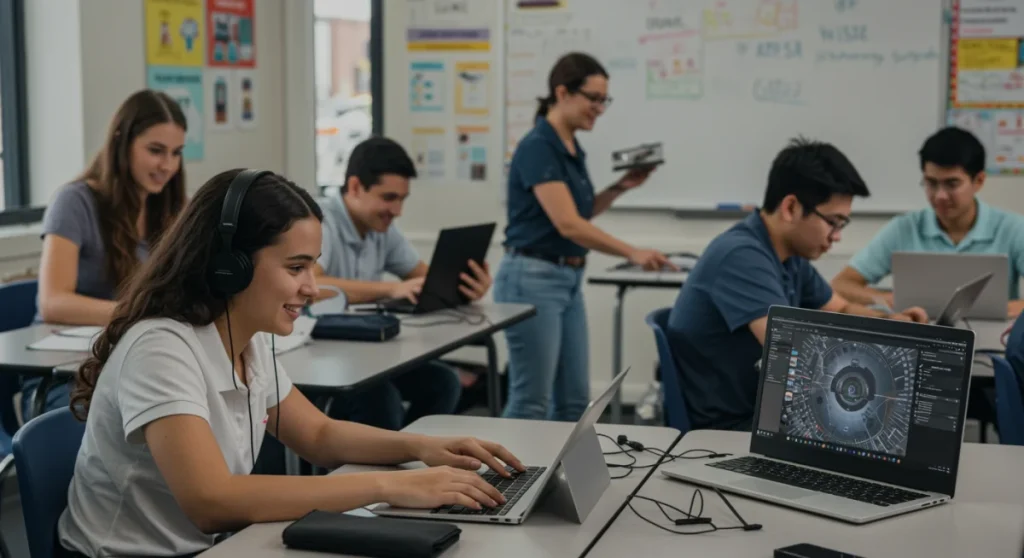
U.S. learning platforms are currently experiencing two profound shifts: the widespread integration of artificial intelligence for dynamic content delivery and the heightened emphasis on creating truly personalized learning pathways for every student.
The landscape of education in the United States is in constant flux, but the current academic year marks a particularly transformative period. We are witnessing two significant evolutions in U.S. learning platforms that are reshaping how students learn and educators teach. These shifts are not merely incremental updates but fundamental re-architectures of the digital learning experience, promising more engaging, effective, and equitable educational outcomes across the nation.
The Rise of AI-Powered Adaptive Learning Systems
Artificial Intelligence (AI) is no longer a futuristic concept in education; it’s a present reality actively transforming U.S. learning platforms. This academic year, we are seeing a substantial move towards AI-powered adaptive learning systems that dynamically adjust content and pace to individual student needs, offering a level of personalization previously unimaginable.
These systems leverage sophisticated algorithms to analyze student performance, identify knowledge gaps, and recommend tailored resources. The goal is to create a learning journey that is uniquely suited to each student’s strengths and weaknesses, fostering deeper understanding and improved retention.
Dynamic Content Delivery
One of the most immediate impacts of AI is in how content is delivered. Traditional learning platforms often offer a static curriculum, but AI enables a fluid, responsive approach. This means:
- Personalized Resource Curation: AI sifts through vast libraries of educational materials to present students with the most relevant videos, articles, and exercises based on their current progress and learning style.
- Adaptive Difficulty Adjustment: As students master concepts, the platform automatically introduces more challenging material. Conversely, if a student struggles, the system provides supplementary resources and revisits foundational topics.
- Real-time Feedback: AI-powered tools can offer instant feedback on assignments, helping students understand their mistakes immediately rather than waiting for a teacher’s review.
This dynamic content delivery ensures that students are consistently engaged with material that is neither too easy nor overwhelmingly difficult, optimizing their learning curve and maintaining motivation.
Intelligent Assessment and Progress Tracking
Beyond content, AI is revolutionizing how student progress is assessed and tracked. Instead of relying solely on traditional tests, adaptive systems continuously evaluate understanding through various interactions. This provides educators with a much richer, real-time dataset on student performance.
The insights generated by these intelligent assessments allow teachers to intervene more effectively, targeting specific areas where students need support. It also empowers students by giving them a clear picture of their learning journey and areas for improvement. The shift is from summative assessment (what a student knows at the end) to formative assessment (what a student is learning throughout the process), driven by AI’s analytical capabilities.
The integration of AI into U.S. learning platforms represents a monumental step towards truly individualized education, promising to unlock new potentials for both students and educators by making learning more efficient and effective.
The Evolution Towards Holistic Personalized Learning Pathways
Building on the capabilities of AI, the second major shift in U.S. learning platforms is the profound evolution towards holistic personalized learning pathways. This goes beyond simply adapting content; it involves creating comprehensive educational experiences that cater to each student’s unique cognitive, emotional, and social needs. The focus is on developing well-rounded individuals, not just academic performers.
This approach recognizes that learning is not a one-size-fits-all endeavor and seeks to empower students with agency over their educational journey. It’s about fostering curiosity, critical thinking, and self-directed learning, preparing them for a rapidly changing world.

Student-Centric Curriculum Design
Personalized learning pathways are inherently student-centric. This means curriculum design is shifting from a rigid, standardized model to one that is flexible and responsive to individual interests and goals. Platforms are now enabling:
- Choice and Agency: Students are given more options in what they learn and how they demonstrate their understanding, aligning education with their personal passions and future aspirations.
- Interdisciplinary Connections: Platforms facilitate connections between different subjects, helping students see the relevance of their learning in a broader context and encouraging a more integrated understanding of the world.
- Project-Based Learning: A greater emphasis is placed on projects that allow students to apply their knowledge in practical, real-world scenarios, fostering problem-solving skills and creativity.
This shift ensures that students are not just passive recipients of information but active participants in shaping their own educational experiences, leading to deeper engagement and motivation.
Emphasis on Social-Emotional Learning (SEL)
A critical component of holistic personalized learning is the integration of Social-Emotional Learning (SEL) into digital platforms. Recognizing that emotional well-being and social skills are crucial for academic success and life, platforms are incorporating tools and resources to support these areas.
This includes modules on self-awareness, self-management, responsible decision-making, relationship skills, and social awareness. By addressing these aspects, U.S. learning platforms are contributing to the development of resilient, empathetic, and socially competent individuals. The aim is to create environments where students feel safe, supported, and understood, fostering a positive learning culture.
The move towards holistic personalized learning pathways signifies a maturation of EdTech, where technology serves not just to deliver content, but to nurture every facet of a student’s development, ensuring a more meaningful and impactful educational experience.
Data-Driven Insights for Educators and Parents
The advancements in U.S. learning platforms are not only benefiting students but also providing invaluable data-driven insights for educators and parents. This academic year, platforms are offering more sophisticated analytics dashboards, transforming raw data into actionable information that can guide instructional strategies and parental support.
This enhanced transparency and detailed reporting allow all stakeholders to have a clearer understanding of student progress, challenges, and areas where additional support might be needed. It moves beyond simple grade reports to offer a comprehensive view of the learning process.
Empowering Teachers with Actionable Analytics
For educators, these platforms are becoming powerful diagnostic tools. Teachers can now:
- Identify Learning Gaps: Detailed reports pinpoint specific concepts or skills where a class or individual student is struggling, allowing for targeted intervention.
- Personalize Instruction: By understanding individual learning patterns and preferences, teachers can tailor their classroom instruction to better meet diverse needs, complementing the platform’s adaptive features.
- Optimize Curriculum: Analytics can reveal which learning materials are most effective and engaging, helping teachers refine their curriculum and resource selection.
This data-driven approach transforms teaching from a largely intuitive process into a more precise, evidence-based practice, enabling educators to maximize their impact and foster better student outcomes.
Involving Parents in the Learning Journey
Parents are also gaining unprecedented access to their child’s educational journey through these advanced platforms. Features often include:
- Real-time Progress Tracking: Parents can monitor their child’s assignments, scores, and overall progress in real-time.
- Detailed Performance Reports: Beyond grades, parents can see specific areas of strength and weakness, understanding where their child excels and where they might need additional support at home.
- Communication Channels: Integrated communication tools facilitate seamless interaction between parents and teachers, fostering a collaborative approach to student success.
By providing parents with these insights, platforms are strengthening the home-school connection, ensuring that learning is supported consistently both inside and outside the classroom. This collaborative environment is key to student flourishing in the modern educational landscape.
The enhanced data analytics offered by modern U.S. learning platforms are creating a more informed and collaborative educational ecosystem, ultimately leading to more effective support for every student.
Enhanced Collaboration and Community Building
Beyond individual learning, the latest iterations of U.S. learning platforms are placing a significant emphasis on fostering enhanced collaboration and community building. Recognizing that learning is often a social process, these platforms are integrating robust tools that facilitate interaction among students, teachers, and even external experts. This shift aims to replicate and enhance the collaborative aspects of traditional classrooms within a digital environment.
The goal is to create dynamic learning communities where knowledge is co-constructed, ideas are shared freely, and students develop essential teamwork and communication skills. It’s about moving from isolated learning to a connected educational experience.
Interactive Group Projects and Discussions
Modern platforms are equipped with features that make group work and discussions more seamless and effective. This includes:
- Collaborative Document Editing: Tools that allow multiple students to work simultaneously on projects, fostering real-time collaboration and shared ownership.
- Integrated Discussion Boards: Forums where students can pose questions, share insights, and engage in thoughtful debates, extending learning beyond synchronous class time.
- Virtual Breakout Rooms: For online learning, these features enable smaller group interactions, mimicking the dynamic of in-person group work.
These interactive elements ensure that students are not just consuming content but actively participating in their learning, developing crucial interpersonal skills alongside academic knowledge.
Teacher-Student and Peer-to-Peer Interaction
The platforms are also improving the quality and frequency of interaction between teachers and students, as well as among peers. Features like:
- Direct Messaging and Announcement Tools: Streamlined communication channels that make it easy for teachers to reach students and for students to ask questions privately or publicly.
- Annotation and Feedback Tools: Allowing teachers to provide rich, contextual feedback directly on student work, and for peers to review and offer constructive criticism.
- Student Portfolios: Digital spaces where students can showcase their work, receive comments, and reflect on their learning journey, fostering a sense of accomplishment and growth.
By strengthening these lines of communication and collaboration, U.S. learning platforms are building more cohesive and supportive educational communities, enriching the learning experience for all involved.
The focus on enhanced collaboration and community building within U.S. learning platforms is cultivating environments where students can thrive socially and academically, preparing them for collaborative workplaces and civic engagement.
Accessibility and Equity in Digital Learning
A critical aspect of the current shifts in U.S. learning platforms is the intensified focus on accessibility and equity. As digital learning becomes more pervasive, ensuring that all students, regardless of their background or abilities, have equal access to high-quality education is paramount. This academic year sees platforms making significant strides to address historical inequities and provide inclusive learning environments.
This commitment to accessibility goes beyond basic compliance; it involves proactive design choices and the integration of features that cater to a wide spectrum of needs, ensuring that no student is left behind in the digital transformation of education.
Universal Design for Learning (UDL) Principles
Many U.S. learning platforms are now explicitly incorporating Universal Design for Learning (UDL) principles into their core architecture. UDL aims to provide multiple means of engagement, representation, and action & expression, making learning flexible and adaptable to individual differences. Key features include:
- Customizable Display Options: Text size, color contrasts, and font choices can often be adjusted to suit visual preferences or impairments.
- Alternative Content Formats: Providing information through text, audio, video, and interactive simulations to cater to diverse learning styles and sensory needs.
- Assistive Technology Integration: Ensuring compatibility with screen readers, speech-to-text software, and other assistive devices that students may rely on.
By adhering to UDL principles, platforms are creating a more inclusive learning experience from the outset, reducing the need for costly and time-consuming adaptations later on.
Bridging the Digital Divide
While technological access remains a challenge, learning platforms are also playing a role in bridging the digital divide by offering solutions that are less dependent on high-speed internet or expensive hardware. This includes:
- Offline Access Capabilities: Allowing students to download content and work offline, synchronizing when an internet connection becomes available.
- Mobile-First Design: Optimizing platforms for smartphones and tablets, which are often more accessible to students in underserved communities.
- Low-Bandwidth Options: Developing simplified versions of platforms that function effectively with limited internet connectivity.
These efforts, combined with broader initiatives to improve infrastructure and provide devices, are crucial for ensuring that the benefits of advanced digital learning platforms are extended to all students, fostering true educational equity across the nation.
The heightened focus on accessibility and equity within U.S. learning platforms is a testament to the commitment to inclusive education, ensuring that digital tools serve as enablers rather than barriers for every student.
The Role of Cybersecurity and Data Privacy
As U.S. learning platforms become more integrated into the fabric of education, the paramount importance of cybersecurity and data privacy has become a central concern this academic year. With vast amounts of sensitive student data being collected and processed, ensuring the security and confidentiality of this information is not just a regulatory requirement but an ethical imperative. Platforms are investing heavily in robust security measures and transparent privacy policies.
This focus ensures that while technology enhances learning, it also protects the digital footprint of students and educators, building trust in the digital learning ecosystem.
Robust Security Protocols
Leading learning platforms are implementing enterprise-grade security protocols to safeguard against data breaches and unauthorized access. This includes:
- End-to-End Encryption: Protecting data both in transit and at rest, making it unreadable to unauthorized parties.
- Multi-Factor Authentication (MFA): Adding an extra layer of security to user accounts, significantly reducing the risk of unauthorized logins.
- Regular Security Audits: Conducting frequent assessments to identify and patch vulnerabilities before they can be exploited by malicious actors.
These stringent measures are crucial for maintaining the integrity of educational data and protecting students from potential cyber threats, ensuring a secure learning environment.
Transparent Data Privacy Policies
Beyond technical security, platforms are also prioritizing transparent and user-friendly data privacy policies. This involves:
- Clear Consent Mechanisms: Ensuring that parents and students understand what data is being collected, why it’s being collected, and how it will be used, with clear options for consent.
- Adherence to Regulations: Complying with relevant data protection laws such as FERPA (Family Educational Rights and Privacy Act) in the U.S., which protects student educational records.
- Limited Data Retention: Establishing clear policies on how long data is stored and ensuring that it is deleted when no longer necessary, minimizing the risk exposure.
By being transparent about data practices and adhering to strict privacy standards, U.S. learning platforms are building confidence among users and establishing themselves as trustworthy custodians of sensitive educational information.
The emphasis on cybersecurity and data privacy in U.S. learning platforms reflects a mature understanding of digital responsibility, ensuring that technological advancements in education are matched by equally strong protections for student data.
Future Outlook: Continuous Innovation and Integration
The two major shifts observed in U.S. learning platforms this academic year – the rise of AI-powered adaptive learning and the evolution towards holistic personalized learning pathways – are not endpoints but rather indicators of a trajectory of continuous innovation and deeper integration. The future of EdTech promises even more sophisticated tools and seamless experiences, further blurring the lines between traditional and digital learning environments.
This ongoing evolution will likely see platforms becoming even more intuitive, predictive, and interconnected, creating a truly dynamic and responsive educational ecosystem that anticipates and meets the evolving needs of learners and educators alike.
Augmented and Virtual Reality in Learning
Looking ahead, augmented reality (AR) and virtual reality (VR) are poised to become more mainstream in U.S. learning platforms. These immersive technologies can transform abstract concepts into tangible experiences, offering unparalleled opportunities for engagement and understanding. Imagine:
- Virtual Field Trips: Students exploring ancient civilizations or distant galaxies from their classrooms.
- Interactive Simulations: Performing complex scientific experiments or medical procedures in a safe, virtual environment.
- 3D Model Exploration: Dissecting virtual organs or examining architectural designs with unprecedented detail.
AR/VR can provide experiences that are otherwise impossible or impractical, making learning more vivid, memorable, and accessible, catering to diverse learning styles and enhancing retention.
Seamless Integration with Everyday Tools
Another key trend will be the even greater integration of learning platforms with other everyday tools and productivity suites. This means a more unified digital environment where educational content, communication, and administrative tasks flow effortlessly between different applications. This could involve:
- AI Tutors and Assistants: More sophisticated AI tools that act as personal tutors, providing on-demand support and guidance, or as administrative assistants, streamlining tasks for educators.
- Wearable Technology Integration: Leveraging data from wearable devices to understand student engagement and focus levels, offering insights for personalized adjustments.
- Open Educational Resources (OER) Integration: Platforms becoming even more adept at seamlessly incorporating and curating a vast array of high-quality, free educational resources, enriching the learning experience without increasing costs.
This seamless integration will create a more cohesive and less fragmented digital learning experience, maximizing efficiency for both students and educators. The future of U.S. learning platforms is one of exciting possibilities, driven by a commitment to innovation and continuous improvement.
| Key Shift | Brief Description |
|---|---|
| AI-Powered Adaptive Learning | Platforms use AI to tailor content, pace, and feedback to individual student needs, optimizing learning paths. |
| Holistic Personalized Learning | Focus on student-centric curriculum, choice, and integration of social-emotional learning for well-rounded development. |
| Data-Driven Insights | Enhanced analytics provide educators and parents with actionable data for targeted support and curriculum optimization. |
| Enhanced Collaboration & Community | Platforms foster interaction through group projects, discussion boards, and improved teacher-student/peer communication. |
Frequently Asked Questions About U.S. Learning Platforms
The two major shifts are the widespread integration of AI-powered adaptive learning systems and the evolution towards holistic personalized learning pathways. These changes are fundamentally reshaping how educational content is delivered and how student development is supported, aiming for more effective and equitable outcomes.
AI significantly enhances personalized learning by dynamically adjusting content difficulty, curating relevant resources, and providing real-time feedback. It analyzes student performance to identify gaps and tailor the educational journey, ensuring each student receives instruction best suited to their individual needs and pace.
Holistic personalized learning extends beyond academic content to include social-emotional development. It involves student-centric curriculum design, offering choice and agency, integrating interdisciplinary connections, and emphasizing project-based learning alongside social-emotional learning (SEL) modules to nurture well-rounded individuals.
Educators gain actionable data insights for targeted interventions and curriculum optimization, transforming teaching into an evidence-based practice. Parents receive real-time progress tracking and detailed performance reports, fostering stronger home-school collaboration and enabling more informed support for their children’s learning.
Cybersecurity is crucial for protecting sensitive student data. Modern platforms implement robust protocols like end-to-end encryption, multi-factor authentication, and regular audits. Transparent privacy policies and compliance with regulations like FERPA build trust and ensure ethical handling of personal educational information, securing the digital learning environment.
Conclusion
The current academic year is proving to be a watershed moment for U.S. learning platforms, driven by two profound shifts: the widespread adoption of AI-powered adaptive learning systems and a deeper commitment to holistic personalized learning pathways. These transformations are not just about integrating new technologies; they represent a fundamental rethinking of how education can be delivered to be more effective, engaging, and equitable for every student. As these platforms continue to evolve, integrating features like advanced analytics, enhanced collaboration tools, and robust cybersecurity measures, they are setting a new standard for digital education. The ongoing innovation promises to create a more responsive, inclusive, and impactful learning experience, preparing students for the complexities of the 21st century and empowering educators with unprecedented tools and insights.