Agriculture Tech: Boosting U.S. Yields by 10% in 2025
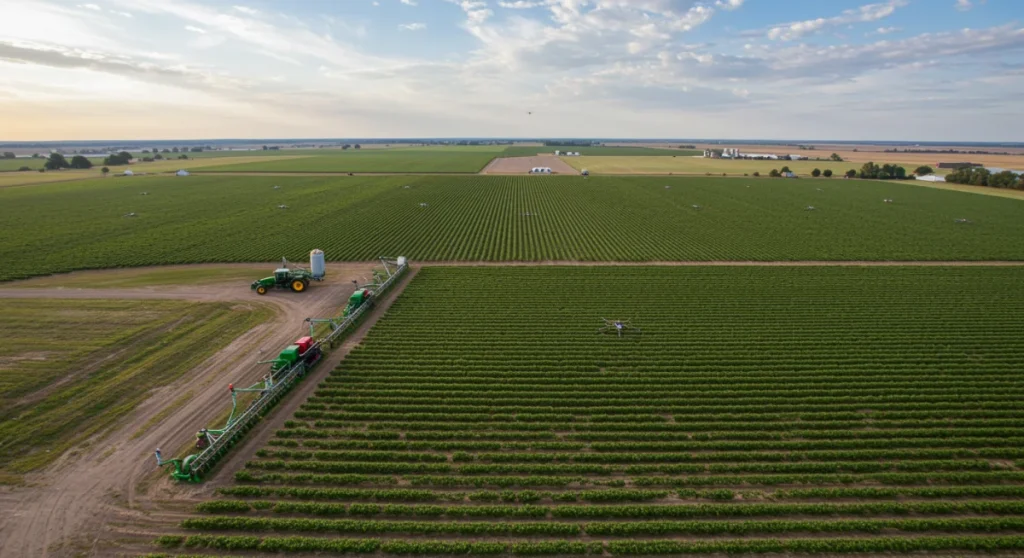
Three innovative smart farming solutions are driving a significant transformation in U.S. agriculture, with projections indicating a 10% increase in crop yields by 2025, enhancing both productivity and sustainability across the nation.
The agricultural landscape in the United States is on the cusp of a profound transformation. By 2025, the integration of advanced agriculture tech yield solutions is expected to deliver a remarkable 10% boost in U.S. crop yields, promising a more efficient and sustainable future for farmers nationwide.
The Dawn of Precision Agriculture: A New Era for Farming
Precision agriculture represents a paradigm shift in how farming operations are managed, moving away from generalized practices to highly localized and data-driven decisions. This approach optimizes resource use, minimizes waste, and ultimately enhances crop productivity.
The core philosophy behind precision agriculture is to treat each square foot of a field according to its specific needs. This involves collecting vast amounts of data on soil conditions, weather patterns, crop health, and even pest infestations. This data is then analyzed to make informed decisions about planting, fertilizing, irrigating, and harvesting.
Leveraging Data for Optimal Resource Allocation
Data collection is paramount in precision agriculture. Farmers are now equipped with an array of sensors and imaging technologies that provide granular insights into their fields. This allows for a much more targeted application of inputs, leading to significant savings and environmental benefits.
- Soil Sensors: These devices provide real-time data on moisture levels, nutrient content, and pH, allowing farmers to apply water and fertilizers precisely where and when needed.
- Satellite and Drone Imagery: High-resolution images help monitor crop health, identify areas of stress, and detect potential issues like disease outbreaks or pest infestations early.
- GPS-Guided Machinery: Tractors and other equipment can operate with centimeter-level accuracy, ensuring efficient planting, spraying, and harvesting, reducing overlap and waste.
The ability to precisely manage resources not only reduces operational costs but also lessens the environmental footprint of farming. By avoiding over-application of fertilizers and pesticides, farmers protect water quality and promote biodiversity.
In conclusion, precision agriculture is fundamentally changing the economics and environmental impact of farming. By embracing data-driven strategies and advanced technologies, U.S. farmers are setting the stage for substantial yield increases and a more sustainable agricultural future.
Autonomous Farm Equipment: Revolutionizing Labor and Efficiency
Autonomous farm equipment is rapidly moving from concept to reality, promising to address critical labor shortages and dramatically improve operational efficiency in agriculture. These machines can perform tasks with unparalleled precision and consistency, often around the clock.
The development of self-driving tractors, planters, and harvesters is poised to redefine farm management. These systems utilize GPS, AI, and sophisticated sensor arrays to navigate fields, detect obstacles, and execute complex tasks without direct human intervention.
The Rise of Robotic Farming Assistants
Robots are no longer confined to factories; they are increasingly becoming integral to farming operations. From planting delicate seedlings to harvesting ripe produce, these machines offer a level of precision and tireless dedication that human labor cannot always match.
- Autonomous Tractors: Capable of plowing, planting, and cultivating vast areas with minimal supervision, reducing labor costs and optimizing fuel consumption.
- Robotic Harvesters: Designed to selectively pick ripe fruits and vegetables, minimizing damage and increasing the speed of harvest, especially for labor-intensive crops.
- Weeding Robots: Utilize computer vision to identify and remove weeds, significantly reducing the need for chemical herbicides and promoting organic farming practices.
The integration of autonomous equipment extends beyond large-scale machinery. Smaller, agile robots are also being developed for tasks like individual plant monitoring, targeted pest control, and precise nutrient delivery, further enhancing the granularity of farm management.
The impact of autonomous farm equipment on the U.S. agriculture sector is expected to be profound. By mitigating labor challenges and boosting efficiency, these technologies will play a crucial role in achieving higher yields and ensuring the economic viability of farms.
Advanced Crop Genetics and Biotechnology: Enhancing Resilience and Output
The continuous innovation in advanced crop genetics and biotechnology is providing farmers with tools to cultivate more resilient and higher-yielding crops. These scientific advancements are fundamental to increasing food production while confronting environmental challenges.
Through genetic modification, gene editing, and marker-assisted breeding, scientists are developing crop varieties that can withstand pests, diseases, and adverse weather conditions, alongside improving their nutritional value and growth rates.
Engineering Crops for a Challenging Future
Biotechnology offers solutions to some of the most pressing issues in agriculture, from adapting to climate change to improving food security. These methods allow for precise changes to a plant’s DNA, leading to desirable traits that might take decades to achieve through traditional breeding.
- Drought-Resistant Crops: Genetically engineered crops that require less water, crucial for regions facing increasing water scarcity.
- Pest and Disease Resistance: Crops modified to naturally resist common pests and diseases, reducing the need for chemical treatments and crop losses.
- Enhanced Nutritional Value: Biofortified crops with increased vitamin and mineral content, addressing malnutrition and improving public health.
Beyond genetic modification, advancements in CRISPR gene-editing technology allow for even more precise and targeted modifications to plant genomes. This technology holds immense potential for rapidly developing new crop varieties with enhanced traits, without introducing foreign DNA.
The ongoing research and development in crop genetics and biotechnology are critical for the future of U.S. agriculture. By producing stronger, more productive crops, these innovations are directly contributing to the projected 10% increase in agriculture tech yield by 2025, ensuring a more stable and abundant food supply.
IoT and Sensor Networks: The Eyes and Ears of Modern Farms
The Internet of Things (IoT) combined with sophisticated sensor networks is transforming farms into highly interconnected and intelligent ecosystems. These technologies provide real-time, actionable insights that empower farmers to make more precise and timely decisions.
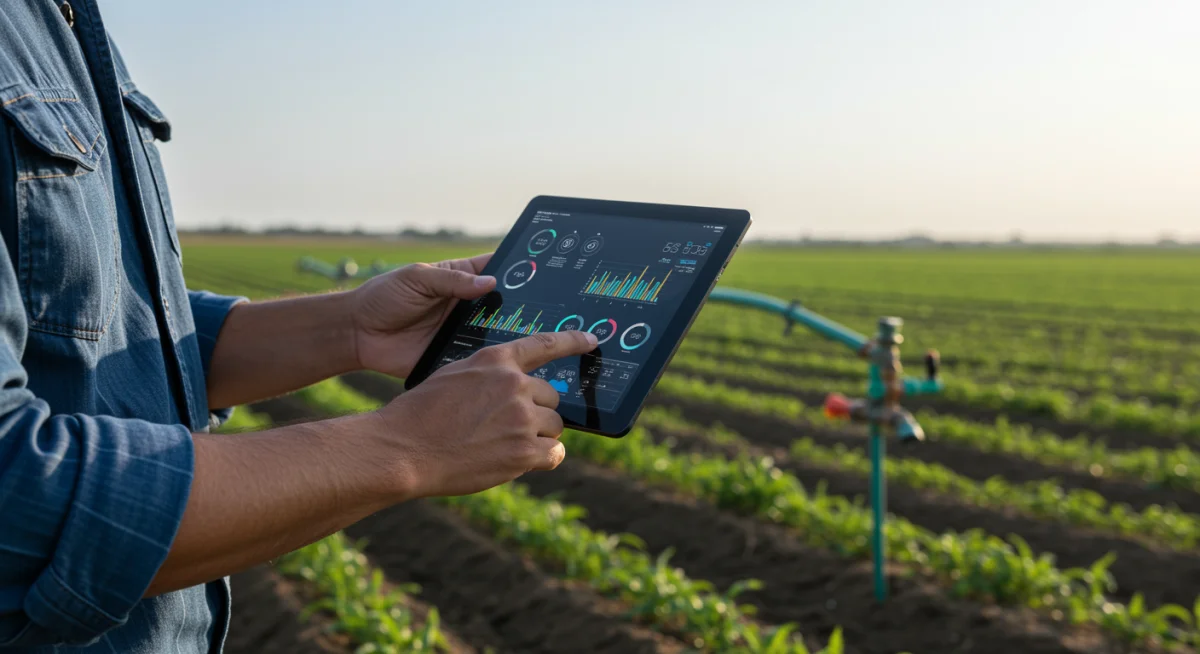
From monitoring soil conditions to tracking livestock health, IoT devices are collecting a continuous stream of data across various aspects of farm operations. This data is then transmitted, processed, and presented in user-friendly formats, often via mobile applications or desktop dashboards.
Real-time Monitoring for Proactive Management
The ability to monitor conditions remotely and in real-time allows farmers to be proactive rather than reactive. This leads to more efficient resource allocation, early detection of problems, and overall better management of crops and livestock.
- Environmental Sensors: Measure temperature, humidity, light intensity, and CO2 levels in greenhouses and open fields, optimizing growing conditions.
- Livestock Monitoring: Wearable sensors track animal health, activity levels, and reproductive cycles, enabling early intervention and improving animal welfare and productivity.
- Smart Irrigation Systems: Integrate weather forecasts, soil moisture data, and crop needs to deliver water precisely, minimizing waste and maximizing effectiveness.
The sheer volume of data generated by these networks requires robust analytics platforms. Artificial intelligence and machine learning algorithms are increasingly being used to interpret this data, identifying patterns and predicting potential issues before they escalate.
In essence, IoT and sensor networks are providing the critical intelligence needed to operate farms with unprecedented precision. This technological backbone is indispensable for achieving the ambitious yield increases anticipated for U.S. agriculture in the coming years.
AI and Machine Learning: Unlocking Deeper Agricultural Insights
Artificial Intelligence (AI) and Machine Learning (ML) are rapidly becoming indispensable tools in modern agriculture, moving beyond simple data collection to complex predictive analytics and automated decision-making. These technologies are capable of processing vast datasets to uncover insights that human analysis alone might miss.
By leveraging AI and ML, farmers can optimize everything from planting schedules to pest management strategies, leading to more efficient operations and higher yields. The ability to learn from historical data and adapt to new conditions makes these tools incredibly powerful.
Predictive Analytics for Smarter Farming
AI-driven predictive models can forecast weather patterns, predict crop yields, and even anticipate the spread of diseases, allowing farmers to prepare and respond effectively. This proactive approach significantly reduces risks and improves overall farm resilience.
- Precision Spraying: AI-powered cameras identify weeds or diseased plants, directing sprayers to target only affected areas, reducing chemical use by up to 90%.
- Yield Prediction: ML models analyze historical yield data, weather patterns, and soil conditions to provide accurate forecasts, aiding in market planning and resource allocation.
- Disease and Pest Detection: AI algorithms can analyze images from drones or sensors to detect early signs of plant diseases or pest infestations, enabling rapid intervention.
Beyond prediction, AI is also enhancing automation. Machine learning algorithms are used to train autonomous farm equipment, allowing them to navigate complex terrains, identify crops, and perform delicate tasks like selective harvesting with remarkable accuracy.
The integration of AI and ML is not just about efficiency; it’s about making farming smarter and more adaptable. These advanced analytical capabilities are a cornerstone in the drive to boost U.S. agricultural productivity and achieve significant yield increases by 2025.
Sustainable Farming Practices: Balancing Productivity with Environmental Stewardship
While the focus on increasing yields is paramount, modern agriculture tech solutions are also deeply intertwined with the development of sustainable farming practices. The goal is not just to produce more, but to do so in a way that preserves natural resources and minimizes environmental impact for future generations.
Sustainable agriculture encompasses a range of practices that promote ecological balance, conserve water and soil, and reduce reliance on synthetic inputs. Technology plays a crucial role in making these practices both feasible and economically viable for farmers.
Technology as a Catalyst for Green Agriculture
Many of the advanced technologies discussed, such as precision irrigation, targeted nutrient application, and robotic weeding, directly contribute to sustainability goals. By optimizing resource use, they reduce waste and pollution, making farming more environmentally friendly.
- Reduced Water Usage: Smart irrigation systems can cut water consumption by 30-50% compared to traditional methods, critical in drought-prone regions.
- Minimized Chemical Runoff: Precision application of fertilizers and pesticides prevents over-saturation, protecting water bodies and soil health.
- Improved Soil Health: Data-driven insights encourage practices like no-till farming and cover cropping, which enhance soil structure, carbon sequestration, and biodiversity.
Furthermore, technology aids in monitoring and reporting environmental impacts, allowing farmers to track their progress towards sustainability goals and comply with regulations. This transparency builds consumer trust and supports market demand for responsibly produced food.
Ultimately, the synergy between cutting-edge agriculture tech yield advancements and sustainable practices is key to ensuring the long-term viability of U.S. agriculture. Achieving higher yields in 2025 will go hand-in-hand with fostering a healthier planet.
| Key Solution | Impact on U.S. Yields |
|---|---|
| Precision Agriculture | Optimizes resource use, boosting efficiency and reducing waste. |
| Autonomous Equipment | Addresses labor shortages and enhances operational consistency. |
| Advanced Crop Genetics | Develops resilient, higher-yielding crops with improved traits. |
| IoT & AI | Provides real-time insights and predictive analytics for smarter decisions. |
Frequently Asked Questions About Agriculture Tech
The projected increase is primarily driven by the widespread adoption of smart farming solutions, including precision agriculture, autonomous equipment, advanced crop genetics, and the integration of IoT and AI, which optimize every stage of crop production.
Precision agriculture uses data from sensors and imagery to apply resources like water and fertilizer precisely where and when needed. This targeted approach minimizes waste, improves crop health, and maximizes growth potential, directly leading to higher yields.
While autonomous equipment reduces the need for manual labor for repetitive tasks, it is more likely to augment human workers, allowing them to focus on more complex management and strategic decision-making. It also addresses persistent labor shortages in the sector.
Advanced crop genetics develop varieties with enhanced resistance to pests, diseases, and environmental stresses like drought. These resilient crops not only survive challenging conditions but also offer higher inherent yield potential and improved nutritional value.
IoT sensors collect real-time environmental and crop data, while AI and machine learning analyze this data to provide predictive insights. This enables farmers to make proactive and informed decisions regarding irrigation, pest control, and harvesting, optimizing outcomes.
Conclusion
The trajectory of U.S. agriculture is undeniably set towards a future where technology is at its core. The confluence of precision agriculture, autonomous equipment, advanced crop genetics, and intelligent sensor networks represents a powerful toolkit for farmers. These innovations are not mere incremental improvements; they are foundational shifts poised to deliver a significant 10% increase in agricultural yields by 2025. Beyond mere productivity, these advancements are fostering a more sustainable, resilient, and economically viable farming sector, ensuring food security and environmental stewardship for generations to come.