API Economy: Unlocking $1 Trillion for US Enterprises by 2025

The API economy growth is set to unlock $1 trillion in new business value for US enterprises by 2025, propelled by the strategic adoption and integration of seven pivotal platforms that are redefining digital interaction and service delivery.
The digital landscape is rapidly evolving, and at its heart lies a transformative force: The API Economy: How 7 Platforms Are Unlocking $1 Trillion in New Business Value for US Enterprises by 2025. This monumental shift isn’t just about technical interfaces; it’s about reimagining business models, fostering unprecedented collaboration, and driving innovation at an accelerated pace. Understanding this paradigm and the platforms spearheading it is crucial for any enterprise aiming to thrive in the coming years.
Understanding the API Economy and Its Trillion-Dollar Impact
The API economy, at its core, refers to the commercial exchange of data and functionality through Application Programming Interfaces (APIs). These digital connectors allow different software systems to communicate and share capabilities, enabling businesses to build new applications and services faster and more efficiently. This interconnectedness is not merely a technical convenience; it’s a profound economic driver, creating new revenue streams, optimizing operations, and fostering innovative partnerships.
The projected $1 trillion in new business value for US enterprises by 2025 underscores the massive scale of this transformation. This value is generated through various mechanisms, including enhanced customer experiences, reduced operational costs, accelerated product development cycles, and the creation of entirely new digital products and services. Companies are leveraging APIs to extend their reach, integrate with partners, and tap into new markets, blurring traditional industry boundaries and fostering a dynamic ecosystem of digital services.
The foundational shift in business models
Traditionally, businesses operated in silos, with proprietary systems and limited external interaction. The API economy shatters this model, advocating for an open, interconnected approach where core functionalities can be exposed and consumed by external partners or even competitors. This shift allows enterprises to focus on their core competencies while leveraging specialized services from others.
- Accelerated innovation: APIs enable rapid prototyping and deployment of new features and services.
- Expanded ecosystems: Businesses can connect with a wider network of partners and developers.
- Enhanced customer experiences: Seamless integration of services leads to more cohesive user journeys.
- New revenue streams: Monetizing data and services through APIs opens up diverse income opportunities.
The implications of this shift are far-reaching, demanding a strategic re-evaluation of how businesses operate, innovate, and compete. Embracing the API economy is no longer optional; it’s a strategic imperative for sustained growth and market relevance.
In conclusion, the API economy represents a fundamental reordering of how digital value is created and exchanged. Its trillion-dollar promise is a testament to the power of open connectivity and collaboration, driving US enterprises towards a more agile, innovative, and interconnected future. Businesses that fail to recognize and adapt to this shift risk being left behind in a rapidly accelerating digital landscape.
Platform 1: Cloud-Native API Management Solutions
Cloud-native API management solutions are foundational to realizing the full potential of the API economy. These platforms provide the necessary infrastructure to design, deploy, secure, and monitor APIs at scale. Unlike traditional on-premise solutions, cloud-native offerings leverage the elasticity and global reach of cloud computing, enabling enterprises to manage complex API portfolios with greater agility and cost-effectiveness.
The ability to rapidly scale API infrastructure up or down based on demand is critical for modern enterprises. Cloud-native platforms offer this flexibility, ensuring that API services remain performant and available even during peak usage. Furthermore, they integrate seamlessly with other cloud services, creating a cohesive environment for digital transformation initiatives.
Key features driving adoption
Enterprises are increasingly turning to cloud-native API management for several compelling reasons. These platforms offer robust security features, including authentication, authorization, and threat protection, which are paramount in an environment where sensitive data is frequently exchanged. They also provide comprehensive analytics and monitoring tools, giving businesses deep insights into API usage, performance, and potential issues.
- Scalability: Effortless scaling to meet fluctuating demand without significant upfront investment.
- Security: Advanced security protocols and threat detection capabilities protect sensitive data.
- Developer portals: Tools for developers to easily discover, test, and integrate with APIs.
- Analytics: Real-time insights into API performance and usage patterns.
The adoption of these platforms is driven by the need for greater operational efficiency and enhanced developer experience. By streamlining API lifecycle management, businesses can accelerate their time to market for new digital products and services, directly contributing to the trillion-dollar growth projection.
Ultimately, cloud-native API management solutions are indispensable for enterprises navigating the complexities of the API economy. Their ability to provide scalable, secure, and manageable API infrastructure empowers businesses to innovate rapidly and unlock new value from their digital assets, solidifying their role as a market disruptor.
Platform 2: Integration Platform as a Service (iPaaS)
Integration Platform as a Service (iPaaS) is another critical component driving the API economy’s expansion. iPaaS solutions offer a suite of cloud-based tools and services that enable organizations to connect various applications, data sources, and APIs, both within their own infrastructure and with external partners. This capability is essential for breaking down data silos and creating a unified view of business operations.
The complexity of modern enterprise IT landscapes, often comprising a mix of legacy systems, cloud applications, and third-party services, makes robust integration a non-negotiable requirement. iPaaS simplifies this challenge by providing pre-built connectors, low-code/no-code development environments, and centralized management capabilities, significantly reducing the time and effort required for integration projects.
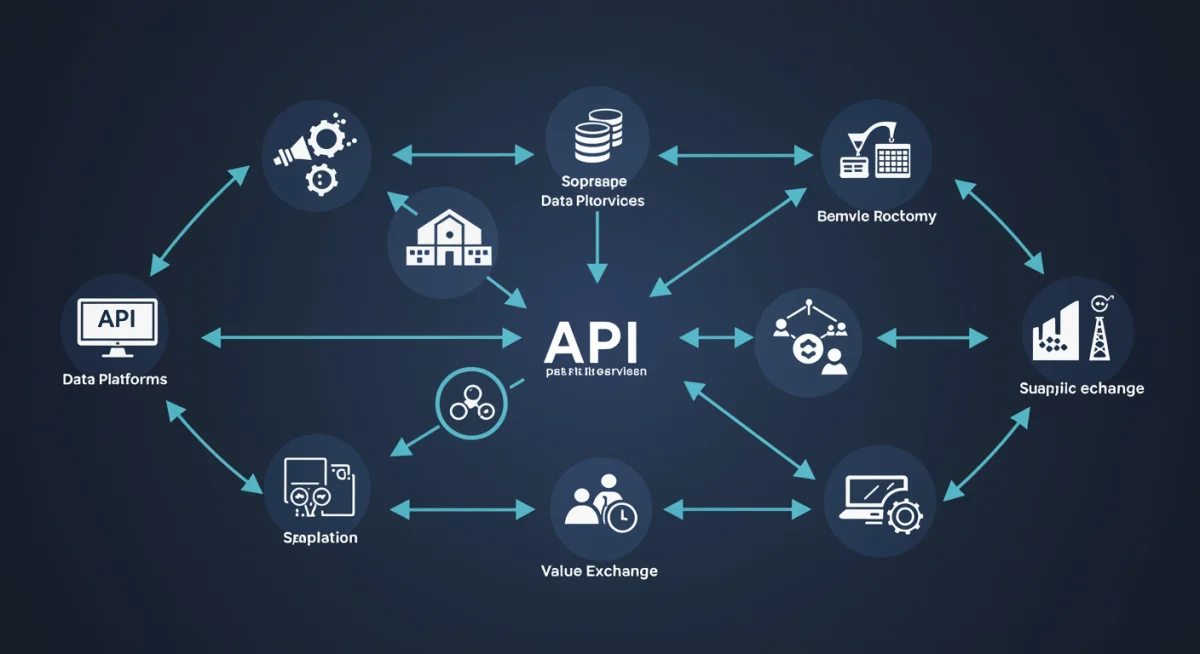
The agility offered by iPaaS platforms allows enterprises to respond quickly to market changes and customer demands. By enabling seamless data flow across disparate systems, iPaaS facilitates real-time decision-making and supports the creation of highly personalized customer experiences, which are key drivers of business value in the digital age.
Streamlining complex integrations
One of the primary benefits of iPaaS is its ability to streamline even the most complex integration scenarios. Enterprises can automate workflows, synchronize data across multiple platforms, and orchestrate business processes that span various applications. This reduces manual effort, minimizes errors, and frees up IT resources to focus on more strategic initiatives.
- Hybrid integration: Connects on-premise systems with cloud applications seamlessly.
- Data synchronization: Ensures consistent data across all connected systems.
- Workflow automation: Automates multi-step business processes involving various applications.
- API orchestration: Manages the sequence and interaction of multiple APIs for complex tasks.
The strategic deployment of iPaaS platforms is directly contributing to the $1 trillion value projection by enabling enterprises to unlock the full potential of their data and applications. By fostering a more integrated and agile operational environment, iPaaS empowers businesses to innovate faster and deliver superior digital services to their customers.
In essence, iPaaS acts as the central nervous system for the API economy within an enterprise. It ensures that all digital components can communicate effectively, transforming fragmented systems into a cohesive and powerful engine for value creation, ultimately accelerating the pace of digital transformation.
Platform 3: Microservices Architectures for Scalability
Microservices architectures are fundamentally reshaping how enterprises build and deploy applications, serving as a critical enabler for the API economy’s scalability. Instead of monolithic applications, microservices break down software into small, independent, and loosely coupled services, each performing a specific business function. These services communicate with each other primarily through APIs, creating a highly modular and flexible system.
This architectural style allows developers to work on individual services independently, using different programming languages and technologies if needed. The ability to deploy, update, and scale services independently significantly reduces development cycles and minimizes the risk associated with large-scale application changes. For US enterprises striving for agility and continuous innovation, microservices provide an unparalleled advantage.
Benefits in a dynamic market
The dynamic nature of today’s markets demands applications that can evolve rapidly. Microservices architectures provide this flexibility, allowing businesses to iterate quickly on features, experiment with new ideas, and respond to customer feedback in real-time. This agility is vital for staying competitive and capturing new market opportunities, directly contributing to the projected economic growth.
- Independent deployment: Services can be deployed and updated without affecting the entire application.
- Technology diversity: Teams can choose the best technology stack for each service.
- Fault isolation: Failure in one service does not bring down the entire application.
- Scalability: Specific services can be scaled independently based on demand.
The adoption of microservices also fosters a culture of innovation and continuous delivery, which are hallmarks of leading digital enterprises. By breaking down complex systems into manageable components, businesses can empower smaller, autonomous teams to deliver value more efficiently, accelerating their digital transformation journey.
In summary, microservices architectures, powered by robust API interactions, are essential for building scalable, resilient, and agile applications. Their role in enabling rapid innovation and efficient resource utilization positions them as a key platform unlocking significant new business value for US enterprises within the burgeoning API economy.
Platform 4: API Marketplaces and Developer Portals
API marketplaces and developer portals are vital ecosystems where the API economy truly flourishes, acting as catalysts for widespread API adoption and innovation. These platforms serve as centralized hubs where API providers can publish their APIs, and developers can discover, learn about, and integrate these APIs into their own applications and services. They significantly lower the barrier to entry for collaboration and foster a vibrant community around digital services.
For enterprises, a well-designed developer portal is an extension of their brand, offering comprehensive documentation, SDKs, tutorials, and support resources. This makes it easier for external developers, partners, and even internal teams to consume their APIs, accelerating the development of new applications and value-added services. The easier it is to use an API, the more it will be adopted, leading to greater ecosystem participation and value creation.
Fostering external innovation and collaboration
The true power of API marketplaces lies in their ability to foster external innovation. By exposing their core functionalities through APIs on these platforms, enterprises can tap into a vast pool of developer talent, leading to the creation of unforeseen applications and business models. This crowdsourced innovation can significantly extend a company’s reach and market impact beyond its internal capabilities.
- API discovery: Centralized location for developers to find relevant APIs.
- Streamlined onboarding: Easy access to documentation, keys, and testing environments.
- Community building: Forums and support channels for developer engagement.
- Monetization opportunities: Platforms for API providers to offer commercial APIs.
These platforms are not just about technical documentation; they are about building relationships and trust with the developer community. By providing a seamless experience, enterprises encourage greater adoption of their APIs, which in turn drives new business value through expanded partnerships, innovative product offerings, and broader market penetration.
Therefore, API marketplaces and developer portals are indispensable for US enterprises looking to capitalize on the collaborative and expansive nature of the API economy. They are the gateways through which innovation flows, connecting providers and consumers of digital services and accelerating the generation of new business value.
Platform 5: AI-Powered API Security and Governance
As the API economy expands, the complexity and volume of API traffic grow exponentially, making robust security and governance paramount. AI-powered API security and governance platforms are emerging as critical enablers, leveraging machine learning and artificial intelligence to detect and mitigate threats, enforce policies, and ensure compliance at a scale impossible with traditional methods. These platforms protect the valuable data and services exposed through APIs.
The sheer number of APIs, combined with their dynamic nature, presents a significant attack surface. AI-driven solutions can analyze vast amounts of API traffic in real-time, identify anomalous behavior, and predict potential vulnerabilities before they are exploited. This proactive approach to security is essential for maintaining trust and protecting sensitive enterprise assets in an interconnected digital landscape.
Automating threat detection and compliance
AI’s ability to learn from patterns and adapt to new threats makes it uniquely suited for API security. These platforms can automatically identify new attack vectors, prevent data breaches, and ensure that all API interactions comply with regulatory requirements and internal policies. This automation significantly reduces the burden on security teams and improves the overall security posture of an enterprise.
- Anomaly detection: Identifies unusual API call patterns indicative of attacks.
- Automated policy enforcement: Ensures APIs adhere to predefined security and usage policies.
- Behavioral analytics: Learns normal API behavior to quickly spot deviations.
- Compliance reporting: Generates reports to demonstrate adherence to regulatory standards.
Investing in AI-powered API security and governance is not just about risk mitigation; it’s about enabling innovation with confidence. By providing a secure foundation, these platforms empower enterprises to expose more services through APIs, fostering greater collaboration and accelerating the creation of new business value without compromising data integrity or customer trust.
In conclusion, AI-powered API security and governance platforms are indispensable for safeguarding the API economy. They provide the necessary intelligence and automation to protect digital assets, maintain compliance, and build trust, thereby allowing US enterprises to fully leverage the transformative potential of APIs while managing inherent risks effectively.
Platform 6: Data Virtualization & API Gateways
Data virtualization platforms, often working in conjunction with API gateways, are instrumental in unlocking the hidden value within enterprise data silos for the API economy. Data virtualization creates a unified, real-time view of disparate data sources without physically moving or replicating the data. This virtual layer can then be exposed as a set of easily consumable APIs via an API gateway, making complex data accessible to applications and services.
Many US enterprises struggle with fragmented data spread across legacy systems, cloud databases, and various applications. Data virtualization addresses this by abstracting the complexity of the underlying data infrastructure, presenting a simplified and consistent view to developers. This significantly accelerates the development of data-driven applications and services, as developers no longer need to understand the intricacies of each data source.
Accelerating data access and consumption
The combination of data virtualization and API gateways streamlines data access for the API economy. API gateways act as the entry point for all API calls, handling routing, security, and rate limiting. When integrated with data virtualization, they can expose virtualized data as high-performance APIs, enabling rapid consumption by internal and external applications. This accelerates decision-making and supports advanced analytics and AI initiatives.
- Unified data view: Presents a single, consistent interface to diverse data sources.
- Real-time data access: Provides up-to-the-minute data without replication.
- Simplified API creation: Easily exposes virtualized data as consumable APIs.
- Enhanced data governance: Centralized control over data access and security policies.
By making data more accessible and consumable through APIs, these platforms empower enterprises to create new data products, personalize customer experiences, and optimize operational processes. This direct impact on data utilization and monetization significantly contributes to the projected $1 trillion in new business value, solidifying their role in the API economy.
Therefore, data virtualization and API gateways are critical for transforming raw enterprise data into valuable, accessible, and secure digital assets. They are key enablers for enterprises seeking to extract maximum value from their information holdings, driving innovation and competitive advantage within the dynamic API economy.
Platform 7: Low-Code/No-Code API Development Platforms
Low-code/no-code (LCNC) API development platforms are democratizing API creation and consumption, accelerating the pace of digital transformation and value generation within the API economy. These platforms allow business users and citizen developers, not just professional programmers, to build, integrate, and manage APIs using visual interfaces and drag-and-drop functionalities, significantly reducing the need for extensive coding expertise.
The traditional software development lifecycle can be slow and resource-intensive. LCNC platforms address this by empowering a broader range of individuals within an organization to contribute to API development. This accelerates innovation, as ideas can be quickly prototyped and deployed, bringing new digital services to market faster and more cost-effectively. For US enterprises, this speed and agility are crucial for maintaining a competitive edge.
Empowering citizen developers and rapid prototyping
The rise of LCNC platforms is enabling a new wave of innovation by empowering citizen developers to create and connect applications using APIs. This reduces the dependency on overburdened IT departments and allows business units to build solutions tailored to their specific needs. Rapid prototyping becomes the norm, fostering an environment where experimentation and quick iteration are encouraged.
- Accelerated development: Build and deploy APIs significantly faster than traditional coding.
- Reduced technical debt: Standardized components and visual development minimize errors.
- Increased collaboration: Bridges the gap between business and IT teams.
- Cost efficiency: Lowers development costs by reducing reliance on specialized programming skills.
The strategic adoption of LCNC API development platforms is directly contributing to the $1 trillion value projection by enabling enterprises to unleash the creative potential of their entire workforce. By making API development accessible, these platforms facilitate widespread digital innovation, allowing businesses to explore new market opportunities and deliver value at an unprecedented pace.
In conclusion, low-code/no-code API development platforms are powerful tools driving the expansion of the API economy. They democratize access to API creation, accelerate innovation, and empower a wider range of stakeholders to contribute to an enterprise’s digital transformation, ultimately unlocking substantial new business value for US enterprises.
| Key Platform | Impact on API Economy |
|---|---|
| Cloud-Native API Management | Enables scalable, secure, and efficient API deployment and monitoring. |
| Integration Platform as a Service (iPaaS) | Connects disparate systems, streamlining data flow and business processes. |
| Microservices Architectures | Facilitates agile, scalable, and resilient application development. |
| API Marketplaces & Developer Portals | Fosters external innovation and broad API adoption through community engagement. |
Frequently Asked Questions About the API Economy
The API economy is the commercial exchange of data and functionality through APIs. It’s crucial for US enterprises as it drives digital transformation, enables new business models, fosters innovation, and unlocks significant revenue streams by allowing seamless integration and collaboration across systems and partners.
API management platforms provide the infrastructure to secure, deploy, and monitor APIs at scale. They enhance operational efficiency, accelerate product development, and ensure reliability, directly contributing to new business value by making digital assets easily consumable and manageable.
Microservices architectures break down applications into smaller, independent services that communicate via APIs. This approach enhances scalability, agility, and resilience, allowing enterprises to develop and deploy new features faster and adapt to market changes more efficiently, driving innovation.
These platforms act as hubs for API discovery and consumption, fostering external innovation and collaboration. They simplify the process for developers to integrate with APIs, expanding an enterprise’s ecosystem and generating new business opportunities through broader market reach and co-creation.
AI-powered platforms use machine learning to detect threats, enforce policies, and ensure compliance in real-time. They provide proactive protection against vulnerabilities and anomalies, safeguarding sensitive data and maintaining trust, which is crucial for the secure and sustainable growth of the API economy.
Conclusion
The journey towards unlocking $1 trillion in new business value for US enterprises by 2025 through the API economy is not merely a forecast; it’s a strategic roadmap being actively implemented by forward-thinking organizations. The seven platforms discussed—cloud-native API management, iPaaS, microservices, API marketplaces, AI-powered security, data virtualization, and low-code/no-code development—collectively form the backbone of this profound transformation. They empower businesses to be more agile, innovative, and interconnected, driving unprecedented growth and fostering a dynamic ecosystem of digital services. Enterprises that strategically embrace these technologies and the underlying philosophy of open, collaborative digital interaction will undoubtedly lead the charge in shaping the future of the American economy.