
Small Business Confidence Drop and 2025 Job Creation Forecast
The recent 3-point decline in the NFIB Small Business Optimism Index reflects growing concerns among entrepreneurs, potentially impacting job creation and the overall economic landscape in early 2025.
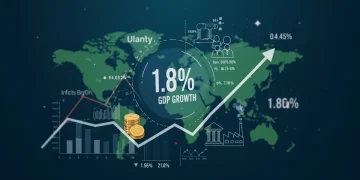
U.S. Economic Forecast 2025: 1.8% GDP Growth Amidst Inflation
The U.S. economy in 2025 is projected to achieve a 1.8% GDP growth, navigating persistent inflationary pressures and a dynamic labor market, influenced by the Federal Reserve's monetary policy.

Trade Deficit Analysis: $68B Gap & US Economic Stability 2025
The 2025 US trade deficit, projected at $68 billion, poses significant questions regarding American economic stability, influencing policy and market dynamics.
FY2025 Federal Budget: $6.8 Trillion Spending & Economic Stimulus
The projected $6.8 trillion federal budget for Fiscal Year 2025 outlines significant government spending across various sectors, aiming to stimulate economic growth and address national priorities.

Mortgage Rates 2025: Barrier or Opportunity for Economic Growth?
The current 6.5% mortgage rate presents a complex dynamic for the US housing market, acting as both a barrier for some homebuyers and an opportunity for economic recalibration and strategic investments in 2025.
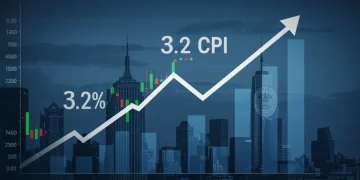
CPI Report: Decoding 3.2% Annual Increase & Future Monetary Policy
The recent CPI report, revealing a 3.2% annual increase, significantly shapes expectations for future monetary policy, influencing inflation trends and the broader economic landscape.
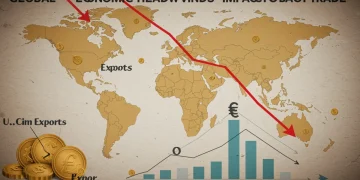
Global Economic Headwinds: U.S. Exports at Risk by 5% in 2025
Forecasting a potential 5% dampening of U.S. exports by 2025 due to global economic headwinds and slowdowns in key trading partners, this article examines the multifaceted challenges and strategic implications for the American economy.

Oil Futures: 15% Fluctuation & U.S. Business Costs in 2025
A projected 15% fluctuation in oil futures for 2025 stands to significantly reshape U.S. business costs, influencing everything from supply chains and manufacturing to consumer prices and overall economic stability.

Labor Market Resilience: 3.8% Unemployment & 2025 Wage Growth Outlook
The U.S. labor market, characterized by a resilient 3.8% unemployment rate, signals a complex interplay between robust job creation and evolving wage growth dynamics that will shape the 2025 economic landscape.
Fed Rate Hike Q1 2025: Business Investment Impact
The Federal Reserve's 25 basis point interest rate hike in Q1 2025 will significantly influence business investment decisions, particularly affecting borrowing costs, capital expenditure, and market sentiment across the United States.