EV Trends 2025: U.S. Automotive Sector Evolution
The U.S. automotive sector is undergoing a profound transformation, with five key electric vehicle trends expected to redefine the market by 2025, influencing technological advancements, consumer adoption, and infrastructure development.
The automotive landscape in the United States is experiencing an unprecedented shift, with electric vehicles (EVs) at the forefront of this revolution. By 2025, several pivotal developments will shape the market, impacting everything from manufacturing to consumer behavior. Understanding these Electric Vehicle Trends 2025 is crucial for businesses and consumers alike as we navigate this exciting new era of transportation.
Battery technology breakthroughs and range anxiety solutions
One of the most significant accelerators for electric vehicle adoption is the continuous advancement in battery technology. Consumers often express concerns about range and charging times, commonly known as ‘range anxiety.’ However, innovations are rapidly addressing these issues, making EVs more practical for everyday use and long-distance travel.
The pursuit of higher energy density, faster charging capabilities, and improved battery longevity is a top priority for manufacturers. These developments are not just incremental; they represent fundamental shifts in how EVs perform and are perceived by the public. As batteries become more efficient, the cost of production also tends to decrease, leading to more affordable electric vehicles.
Solid-state batteries: the next frontier
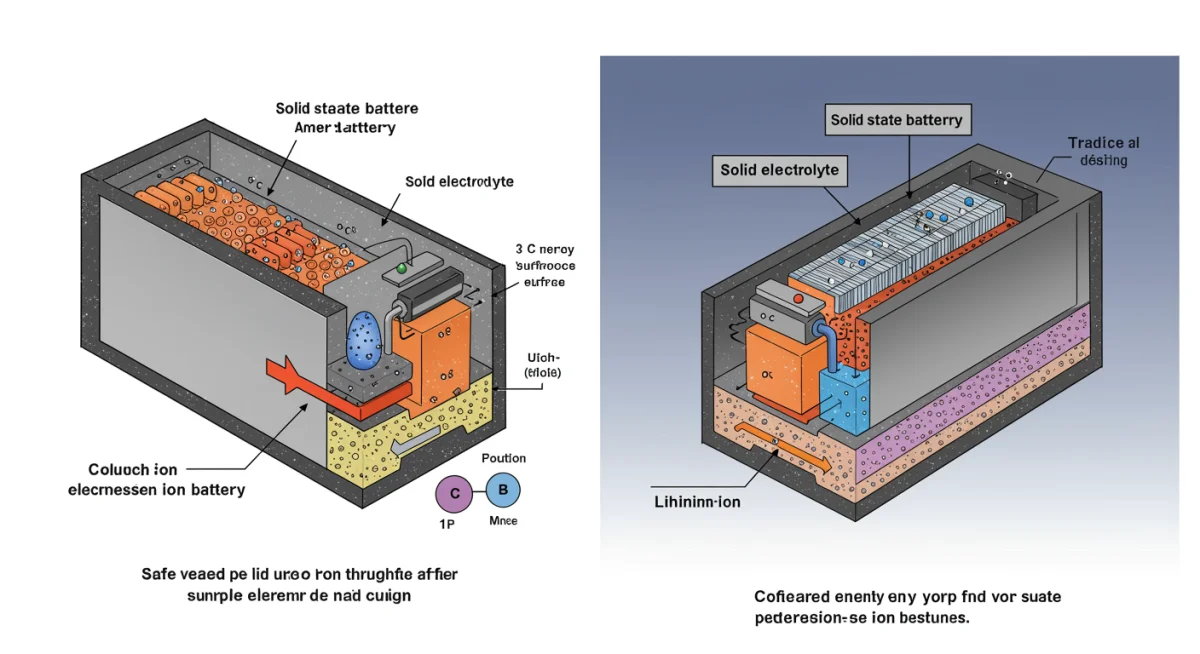
Solid-state batteries are widely regarded as the holy grail of EV battery technology. Unlike traditional lithium-ion batteries that use liquid electrolytes, solid-state batteries employ solid materials, offering several distinct advantages.
- Increased energy density: This translates to significantly longer driving ranges on a single charge.
- Enhanced safety: Eliminating flammable liquid electrolytes reduces the risk of thermal runaway and fires.
- Faster charging: Solid-state designs hold the potential for ultra-rapid charging times, comparable to refueling a gasoline car.
- Longer lifespan: These batteries are expected to endure more charge cycles, prolonging the vehicle’s overall life.
While still primarily in the research and development phase, several automotive giants and battery manufacturers are investing heavily in solid-state technology, with commercialization expected to begin rolling out by 2025 in select premium models. This will set a new benchmark for EV performance.
Improving charging infrastructure and speed
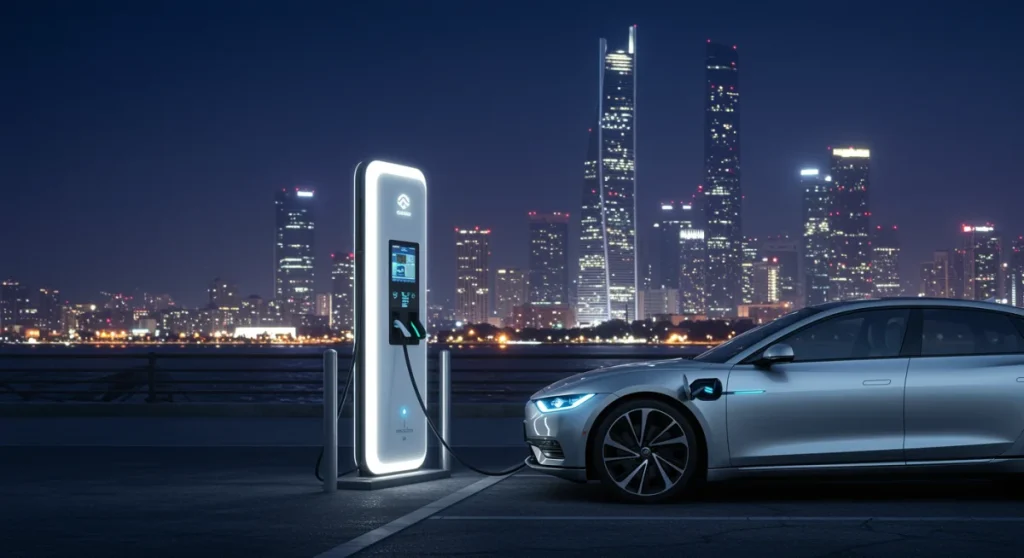
Beyond the battery itself, the availability and speed of charging infrastructure are equally vital. The U.S. is seeing a substantial expansion in public and private charging networks, with a focus on high-power DC fast chargers.
These fast chargers are designed to replenish a significant portion of an EV’s battery in a short period, often within 20-30 minutes, making long journeys more feasible. Government incentives and private investments are fueling this expansion, aiming to create a seamless charging experience across the nation. Furthermore, the integration of smart charging technologies allows for optimized energy consumption and grid management, paving the way for a more sustainable electric ecosystem.
In conclusion, breakthroughs in battery technology, particularly the promise of solid-state batteries, coupled with a rapidly expanding and improving charging infrastructure, are effectively dismantling the barriers of range anxiety and making electric vehicles a more compelling option for a broader consumer base. These advancements are fundamental to the widespread adoption of EVs in the U.S. by 2025.
Expansion of EV models and market segments
The initial wave of electric vehicles often focused on luxury sedans or niche eco-friendly cars. However, by 2025, the U.S. market will witness an explosion of EV models spanning every conceivable segment, from rugged pickup trucks and versatile SUVs to affordable compact cars and commercial vans. This diversification is critical for appealing to a wider audience and catering to diverse consumer needs and preferences.
Automakers are no longer treating EVs as experimental ventures but as core components of their future product strategies. Billions of dollars are being poured into developing dedicated EV platforms that allow for greater design flexibility, optimized performance, and efficient manufacturing processes. This strategic shift ensures that electric options will soon be available for nearly every type of driver.
Electric trucks and SUVs gain traction
Historically, the U.S. market has a strong preference for larger vehicles, particularly pickup trucks and SUVs. The introduction of compelling electric versions of these popular segments is a game-changer. Models like the Ford F-150 Lightning, Rivian R1T, and various electric SUVs from traditional and new manufacturers are proving that EVs can offer the utility, towing capacity, and ruggedness that American consumers demand.
The success of these larger electric vehicles is vital for accelerating the overall EV transition. They address a significant portion of the market that was previously underserved by electric options, demonstrating that electrification doesn’t mean compromising on utility or capability. Their presence also helps normalize EVs in mainstream culture.
Affordable EV options and urban mobility
While high-end EVs have captured headlines, the push for more affordable electric vehicles is equally important for mass adoption. Manufacturers are developing smaller, more efficient, and competitively priced EVs designed for urban commuting and budget-conscious buyers. These models aim to reduce the entry barrier to EV ownership, making them accessible to a broader demographic.
- Lower purchase price: Direct efforts to reduce manufacturing costs and leverage economies of scale.
- Reduced operating costs: Lower fuel and maintenance expenses compared to gasoline cars.
- Government incentives: Federal and state tax credits and rebates further reduce the effective cost of ownership.
The availability of a diverse range of electric vehicles, from powerful trucks to economical city cars, signifies a maturing market. This expansion ensures that as battery technology improves and charging infrastructure grows, there will be an EV option for nearly every lifestyle and budget, driving significant growth in the U.S. market by 2025.
Advancements in autonomous driving and connectivity
The evolution of electric vehicles is intrinsically linked with advancements in autonomous driving and vehicle connectivity. EVs, with their sophisticated electronic architectures and software-defined capabilities, are ideal platforms for integrating advanced driver-assistance systems (ADAS) and eventually, fully autonomous technologies. By 2025, we will see significant progress in these areas, enhancing safety, convenience, and the overall driving experience.
Automakers are investing heavily in sensors, artificial intelligence, and sophisticated algorithms to enable increasingly capable self-driving features. These systems are not only about removing the driver but also about providing an extra layer of safety and comfort, reducing driver fatigue, and potentially preventing accidents.
Level 2+ and Level 3 autonomy becoming standard
By 2025, Level 2+ autonomous features, such as advanced adaptive cruise control, lane-keeping assist, and automatic lane changes, will become more common, even in mid-range EVs. These systems offer significant driver assistance, making highway driving less strenuous and safer.
Furthermore, we anticipate the limited introduction of Level 3 autonomous driving capabilities in specific scenarios. Level 3 systems allow the vehicle to handle most driving tasks under certain conditions, but still require the driver to be ready to take over. This represents a crucial step towards fully autonomous vehicles, though regulatory frameworks and public acceptance will play a significant role in their widespread deployment.
Enhanced vehicle-to-everything (V2X) communication
Connectivity is another cornerstone of future EV development. Vehicle-to-Everything (V2X) communication technology allows vehicles to communicate with other vehicles (V2V), infrastructure (V2I), pedestrians (V2P), and the cloud (V2C). This interconnectedness opens up a world of possibilities for improving road safety, traffic flow, and overall efficiency.
- Improved safety: Vehicles can warn each other of hazards, reducing collision risks.
- Traffic optimization: Real-time data sharing can help manage traffic flow, reduce congestion, and optimize routes.
- Smart charging: V2X can facilitate communication with charging stations and the grid for optimized charging schedules.
- Enhanced infotainment: Seamless integration of navigation, entertainment, and work-related applications.
The convergence of advanced driver-assistance systems, increasing levels of autonomy, and robust V2X communication will redefine the driving experience in electric vehicles by 2025. These technologies promise not just cleaner transportation but also safer, more efficient, and more connected journeys, further solidifying the appeal of EVs.
Government policies and corporate sustainability initiatives
The rapid acceleration of EV adoption in the U.S. is not solely driven by technological advancements; it is also significantly influenced by supportive government policies and ambitious corporate sustainability initiatives. These external factors create a favorable environment for investment, innovation, and consumer uptake, pushing the automotive sector towards a greener future.
Both federal and state governments recognize the environmental and economic benefits of electric vehicles, implementing policies designed to incentivize their purchase and support the necessary infrastructure development. Simultaneously, major corporations are committing to ambitious sustainability goals, often involving fleet electrification and robust charging solutions for employees and customers.
Federal and state incentives for EV adoption
The U.S. federal government has implemented various programs to encourage EV purchases, most notably tax credits for eligible new and used electric vehicles. These incentives significantly reduce the upfront cost, making EVs more competitive with traditional gasoline cars.
- Federal tax credits: Up to $7,500 for qualifying new EVs, and up to $4,000 for used EVs, with specific criteria for manufacturing and battery components.
- State and local rebates: Many states offer additional incentives, such as rebates, reduced registration fees, or access to HOV lanes.
- Infrastructure funding: Billions of dollars are being allocated to expand the national EV charging network, ensuring greater accessibility.
These policies create a powerful financial incentive for consumers to switch to electric, directly impacting sales figures and accelerating market penetration.
Corporate commitments to fleet electrification
Beyond individual consumers, corporations are playing a crucial role in driving EV demand. Many large companies are setting aggressive targets for electrifying their vehicle fleets, from delivery vans to sales cars. This commitment is often driven by corporate social responsibility goals, a desire to reduce operational costs, and the need to meet stakeholder expectations for environmental stewardship.
The electrification of corporate fleets not only contributes to emissions reduction but also stimulates the development of commercial EV models and charging solutions, creating a robust ecosystem for the entire industry. These initiatives demonstrate a clear trend towards sustainability being integrated into core business strategies, further propelling the electric vehicle market forward by 2025.
The rise of electric vehicle subscription models and shared mobility
The traditional model of vehicle ownership is slowly evolving, and electric vehicles are at the forefront of this transformation. By 2025, we anticipate a significant increase in EV subscription models and integration into shared mobility services, offering consumers greater flexibility, lower commitment, and access to the latest electric technology without the burdens of full ownership.
These alternative ownership and access models cater to changing consumer preferences, particularly among younger generations who prioritize flexibility and convenience over long-term asset ownership. They also provide a compelling way for individuals to experience EVs without the upfront investment, potentially accelerating adoption.
Flexible EV subscription services
EV subscription models offer a comprehensive package that typically includes the vehicle, insurance, maintenance, and sometimes even charging costs, all for a single monthly fee. This model removes many of the complexities and hidden costs associated with traditional car ownership.
- No long-term commitment: Often month-to-month or short-term agreements, allowing subscribers to switch vehicles or cancel as needed.
- All-inclusive pricing: Predictable costs without unexpected repair bills or insurance headaches.
- Access to new models: Subscribers can frequently upgrade to the latest EV technology.
- Reduced depreciation risk: The burden of vehicle depreciation falls on the subscription provider, not the user.
As electric vehicles continue to evolve rapidly, subscription services offer an attractive way to stay current with technology without being tied to a depreciating asset. This flexibility is a key differentiator that will appeal to a growing segment of the market.
EVs in ride-sharing and car-sharing platforms
Electric vehicles are also becoming increasingly integrated into ride-sharing and car-sharing platforms. Companies like Uber and Lyft are actively incentivizing drivers to switch to EVs, recognizing the environmental benefits and lower operating costs. Car-sharing services are also adding more EVs to their fleets, providing convenient, short-term access to electric transportation in urban areas.
This integration not only makes EVs more visible and accessible to a wider public but also contributes to reducing urban pollution and congestion. For many, a ride in an electric shared vehicle might be their first experience with an EV, potentially converting them into future owners. The growth of these shared mobility solutions, powered by electricity, is a strong trend shaping the U.S. automotive market by 2025.
Supply chain resilience and domestic manufacturing
The global automotive industry has faced significant challenges in recent years, particularly concerning supply chain disruptions. For the electric vehicle sector in the U.S., building resilience and strengthening domestic manufacturing capabilities are paramount. By 2025, there will be an intensified focus on securing critical materials, localizing battery production, and establishing a robust North American EV supply chain to reduce reliance on foreign sources and enhance economic security.
This strategic shift is driven by geopolitical considerations, a desire to create domestic jobs, and the need to ensure a stable and predictable supply of components for the burgeoning EV market. It represents a long-term investment in the future of American manufacturing and technological independence.
Localizing battery production and raw material sourcing
The battery is the most expensive component of an electric vehicle, and historically, much of its production and raw material sourcing have been concentrated outside the U.S. However, a concerted effort is underway to localize these processes.
- Gigafactories in the U.S.: Numerous battery manufacturing plants are being built or expanded across the country, creating thousands of jobs and increasing domestic capacity.
- Critical mineral exploration: Investment in domestic mining and processing of critical minerals like lithium, nickel, and cobalt is increasing, reducing reliance on volatile international markets.
- Recycling initiatives: Developing robust battery recycling infrastructure to recover valuable materials, creating a circular economy and further reducing import dependence.
These initiatives are crucial for building a self-sufficient EV ecosystem within the U.S., ensuring that production can scale to meet demand without being hampered by global supply shocks.
Reshaping the broader EV supply chain
Beyond batteries, the entire EV supply chain is being re-evaluated and reconfigured for greater resilience. This includes everything from semiconductor chips and electric motors to power electronics and charging components. The goal is to create a more integrated and geographically diverse supply chain that can withstand disruptions.
Government policies, such as the Inflation Reduction Act, incentivize domestic content and manufacturing, encouraging automakers and their suppliers to invest in U.S.-based production facilities. This not only strengthens the domestic economy but also ensures that the growth of the electric vehicle market benefits American workers and industries. By 2025, a more localized and resilient EV supply chain will be a defining characteristic of the U.S. automotive landscape, underpinning the sector’s long-term growth and stability.
| Key Trend | Brief Description |
|---|---|
| Battery Advancements | Solid-state batteries, faster charging, and improved range are overcoming ‘range anxiety’. |
| Model Diversification | More EV trucks, SUVs, and affordable options are entering the market to broaden appeal. |
| Autonomous & Connectivity | Level 2+ autonomy and V2X communication enhance safety and driving experience. |
| Supply Chain Localization | Increased domestic battery production and raw material sourcing for resilience. |
Frequently asked questions about EV trends
By 2025, solid-state batteries are expected to be a major breakthrough, offering higher energy density, faster charging, and enhanced safety compared to current lithium-ion batteries. These innovations aim to significantly extend driving ranges and reduce charging times, making EVs more convenient.
The expansion of EV models into all segments, including popular trucks, SUVs, and affordable compact cars, will significantly broaden their appeal. This diversity caters to varied consumer needs and budgets, accelerating widespread adoption and driving market growth across the U.S.
By 2025, Level 2+ and limited Level 3 autonomous features will become more common in EVs, enhancing safety and convenience. Vehicle-to-Everything (V2X) communication will also improve traffic flow and reduce accidents, making electric vehicles smarter and more connected.
Yes, federal and state incentives, such as tax credits and rebates, significantly reduce the cost of EVs. Coupled with substantial infrastructure funding, these policies are creating a favorable environment for consumers and businesses to transition to electric transportation, stimulating market growth.
The U.S. is focusing on localizing battery production through gigafactories and increasing domestic sourcing of critical raw materials. This strategy aims to build a more resilient and independent EV supply chain, reducing reliance on foreign sources and supporting American manufacturing and job creation.
Conclusion
The U.S. automotive sector is on the cusp of a profound transformation, driven by the accelerating evolution of electric vehicles. By 2025, the convergence of advanced battery technologies, a vast array of EV models, increasingly sophisticated autonomous features, supportive government policies, and a more resilient domestic supply chain will redefine personal and commercial transportation. These trends indicate a future where electric vehicles are not just an alternative but the primary choice for a sustainable, efficient, and technologically advanced mobility landscape. Staying informed about these developments is essential for anyone involved in or impacted by the dynamic world of automotive innovation.