Monetary Policy Shifts: Fed QT & 2025 Economic Impact
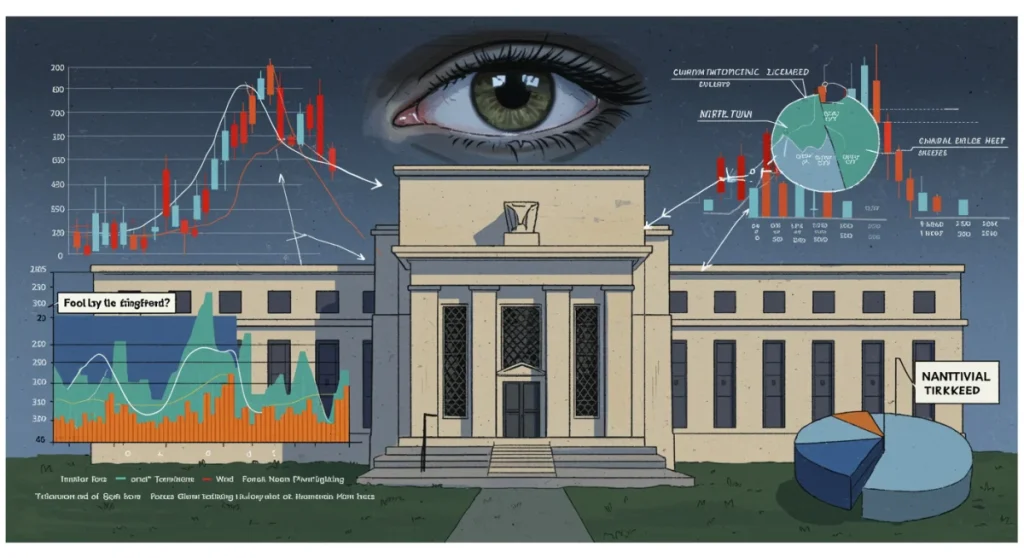
The Federal Reserve’s quantitative tightening (QT) strategy is set to significantly influence the US economy in 2025, impacting market liquidity, interest rates, and overall economic growth as it unwinds its balance sheet.
As we approach 2025, understanding the Federal Reserve’s strategy on Monetary Policy Shifts: The Federal Reserve’s Stance on Quantitative Tightening and Its 2025 Economic Impact becomes critically important for investors, businesses, and everyday citizens across the United States economy. This intricate dance of economic levers could reshape our financial landscape in profound ways, from the cost of borrowing to the stability of markets.
The mechanics of quantitative tightening
Quantitative tightening (QT) represents a significant shift in monetary policy, moving away from the expansive measures seen during periods of economic distress. Unlike raising interest rates, which directly affects the cost of borrowing, QT works by reducing the overall supply of money in the financial system. This process is complex, involving the Federal Reserve allowing its holdings of Treasury securities and mortgage-backed securities (MBS) to mature without reinvesting the principal payments.
The primary goal of QT is to shrink the Federal Reserve’s balance sheet, which expanded dramatically during quantitative easing (QE) to stabilize markets and stimulate economic activity. By not reinvesting maturing assets, the Fed effectively removes money from circulation, leading to a reduction in bank reserves and overall liquidity. This action indirectly pushes up long-term interest rates, as the government needs to find new buyers for its debt, often requiring higher yields to attract investment.
How QT impacts financial markets
- Reduced bank reserves: As the Fed’s balance sheet shrinks, the amount of reserves held by commercial banks at the Fed decreases, potentially tightening lending conditions.
- Higher long-term rates: The absence of the Fed as a major buyer of government bonds can lead to increased supply in the market, pushing down bond prices and increasing yields.
- Market volatility: Less liquidity and higher borrowing costs can contribute to increased market volatility, as investors adjust to new economic realities.
The transition from quantitative easing to quantitative tightening marks a critical phase in the economic cycle. It signifies a central bank’s confidence in the economy’s ability to stand on its own, without the extensive support provided during downturns. However, executing QT too aggressively or for too long can risk stifling economic growth, making the Fed’s calibration of this policy crucial for a soft landing.
Federal Reserve’s stance and projections for 2025
The Federal Reserve’s current stance on quantitative tightening (QT) is a carefully calibrated effort to normalize monetary policy without disrupting economic stability. Having begun the process, the Fed has signaled its intention to continue gradually reducing its balance sheet, with 2025 expected to be a pivotal year in this ongoing endeavor. Officials aim to find a balance where inflation is brought under control without triggering a sharp economic downturn.
Projections for 2025 suggest a continued, albeit potentially adjusted, pace of balance sheet reduction. The Fed closely monitors various economic indicators, including inflation rates, employment data, and overall economic growth, to determine the appropriate speed and duration of QT. Any significant deviation in these metrics could prompt a re-evaluation of the strategy, highlighting the adaptive nature of monetary policy.
The Fed’s communication strategy plays a vital role in managing market expectations. Forward guidance on the expected path of QT provides clarity to financial institutions and investors, allowing them to adjust their strategies accordingly. This transparency is crucial for minimizing market surprises and maintaining confidence in the central bank’s ability to manage the economy effectively.
Key considerations for the Fed in 2025
- Inflation trajectory: Whether inflation continues to moderate towards the Fed’s target will heavily influence QT decisions.
- Labor market strength: A resilient job market might allow for more aggressive tightening, while weakness could signal caution.
- Financial market stability: The Fed will monitor for signs of undue stress in financial markets that could necessitate a pause or slowdown in QT.
Ultimately, the Federal Reserve’s approach to QT in 2025 will be guided by its dual mandate of maximum employment and price stability. The delicate act of unwinding years of asset purchases requires precision and flexibility, with the goal of fostering a sustainable economic environment for the long term.
Impact on market liquidity and interest rates
One of the most direct and significant consequences of quantitative tightening is its effect on market liquidity and interest rates. As the Federal Reserve reduces its balance sheet, it essentially withdraws reserves from the banking system, which can have a ripple effect throughout the financial landscape. This reduction in available funds can make it more expensive for banks to lend, consequently pushing up both short-term and long-term interest rates.
The mechanism is straightforward: when the Fed allows its bonds to mature without reinvesting, the principal payments are not returned to the financial system. This leads to a decrease in the aggregate amount of reserves held by banks. With fewer reserves, banks may become more conservative in their lending practices, or they may demand higher rates for loans to compensate for the reduced liquidity. This tightening of credit conditions impacts everything from consumer loans to corporate borrowing.
For interest rates, the impact of QT is often felt most keenly in the long end of the yield curve. While the federal funds rate (a short-term rate) is primarily influenced by the Fed’s benchmark rate decisions, long-term rates are more responsive to the supply and demand dynamics in the bond market. With the Fed stepping back as a major buyer, the increased supply of bonds in the market can drive down their prices, which in turn elevates their yields. This phenomenon can lead to higher mortgage rates, auto loan rates, and corporate bond yields, affecting investment and consumption decisions.
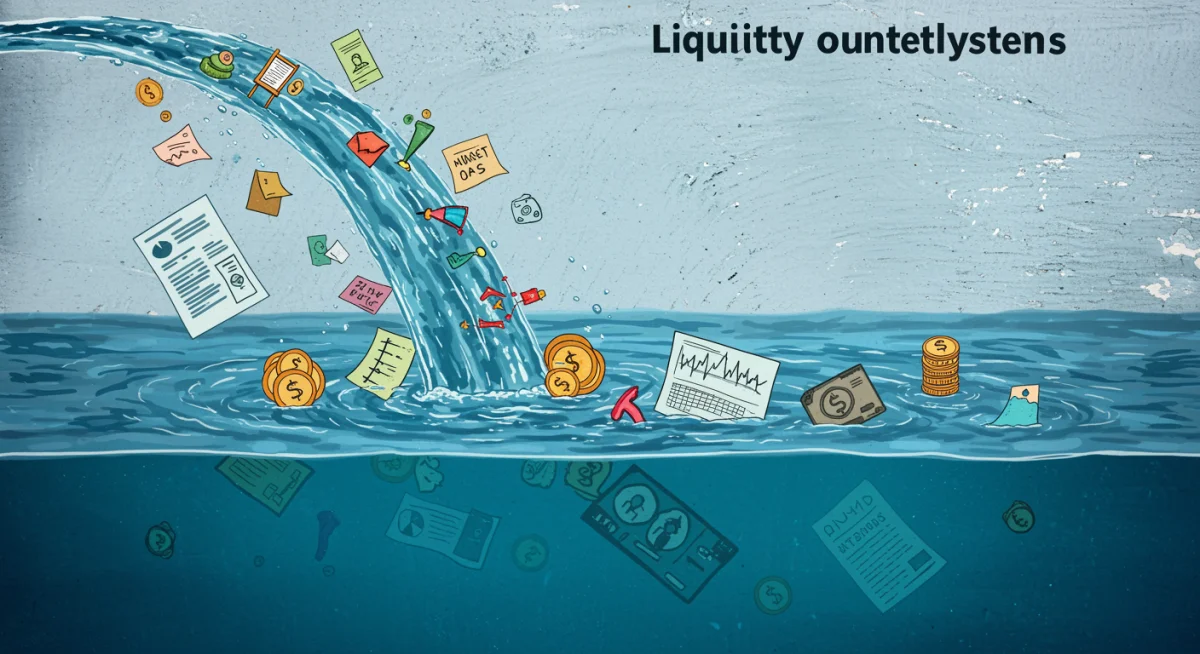
Key liquidity and rate effects
- Higher borrowing costs: Businesses and consumers will likely face elevated interest rates for various loans.
- Reduced bank lending: Banks might become more cautious, leading to stricter lending standards.
- Steeper yield curve: Long-term rates could rise more significantly than short-term rates, reflecting market expectations of future economic conditions and inflation.
The careful management of market liquidity during QT is paramount. An overly aggressive reduction could lead to liquidity crunches, potentially destabilizing financial markets. Therefore, the Fed monitors money market conditions closely, ready to adjust its approach if necessary to ensure smooth market functioning. The balance between reducing inflation and maintaining market stability is a constant challenge.
Economic growth and inflation forecasts for 2025
The interplay between quantitative tightening (QT) and broader economic indicators like growth and inflation will be a defining feature of the 2025 economic landscape. The Federal Reserve’s primary objective with QT is to bring inflation down to its target rate of 2% without unduly stifling economic expansion. This delicate balancing act involves carefully managing the money supply and interest rates to achieve a ‘soft landing’ for the economy.
Forecasts for economic growth in 2025 are somewhat mixed, reflecting the uncertainty surrounding the full impact of sustained QT. On one hand, reduced liquidity and higher interest rates could temper aggregate demand, leading to slower economic growth. Businesses might scale back investment due to higher borrowing costs, and consumers could pull back on spending as credit becomes more expensive. This scenario could result in a moderate slowdown, potentially avoiding a recession.
Conversely, if the economy proves more resilient than anticipated, or if global economic conditions improve, the impact of QT on growth might be less severe. Innovation, productivity gains, and strong labor market fundamentals could provide a buffer against the tightening financial conditions. The housing market, in particular, will be a key sector to watch, as it is highly sensitive to changes in interest rates and credit availability.
Inflation outlook under QT
Regarding inflation, the expectation is that QT will contribute to a continued deceleration of price increases. By reducing the money supply and increasing the cost of capital, QT works in conjunction with interest rate hikes to cool an overheated economy. This process aims to bring supply and demand into better balance, thereby alleviating inflationary pressures. However, the path to 2% inflation is rarely linear, and unforeseen supply shocks or shifts in consumer behavior could still present challenges.
- Disinflationary pressures: QT is expected to reinforce the disinflationary trend, moving inflation closer to the Fed’s target.
- Wage growth moderation: A cooling labor market might lead to slower wage growth, further easing inflationary pressures.
- Global factors: Geopolitical events and global supply chain dynamics will continue to influence domestic inflation, regardless of monetary policy.
The Fed’s success in navigating these challenges will largely determine the economic trajectory for 2025. Achieving price stability while maintaining healthy employment and growth remains the ultimate goal, requiring vigilance and adaptability in the face of evolving economic data.
Sector-specific impacts and investment implications
The broad strokes of quantitative tightening (QT) will undoubtedly affect the entire United States economy, but its impact will not be uniform. Certain sectors are inherently more sensitive to changes in interest rates and liquidity, making them particularly vulnerable or, conversely, potentially resilient during a period of sustained QT in 2025. Understanding these sector-specific nuances is crucial for investors and businesses alike.
The housing sector, for instance, is highly susceptible to rising interest rates. Higher mortgage rates can cool demand for homes, leading to slower sales and potentially softer price appreciation. Construction companies and real estate developers may face increased financing costs and reduced buyer interest, impacting their profitability and growth prospects. Similarly, industries reliant on consumer credit, such as automotive and durable goods, could see a slowdown as borrowing becomes more expensive for consumers.
Conversely, sectors that are less dependent on debt financing or that benefit from a stronger dollar (a potential outcome of QT) might fare better. Technology companies with strong cash flows and less reliance on external funding might be more insulated. Financial institutions, particularly those with diversified revenue streams and robust balance sheets, could see mixed effects. While loan demand might soften, higher net interest margins could provide some offset.
Investment strategies in a QT environment
- Fixed income adjustments: Investors might favor shorter-duration bonds to mitigate interest rate risk, or seek higher yields in corporate bonds with strong credit ratings.
- Equity sector rotation: Shifting investments towards defensive sectors like utilities or consumer staples, or companies with strong free cash flow, could be prudent.
- Real estate re-evaluation: A more cautious approach to real estate investment, focusing on properties with stable income streams or in less rate-sensitive segments, might be advisable.
The investment landscape in 2025 will demand careful consideration of risk and reward. Companies with strong balance sheets, efficient operations, and a clear competitive advantage are likely to be better positioned to navigate the challenges posed by tighter monetary policy. Investors should focus on fundamental analysis and diversification to build resilient portfolios in this evolving economic climate.
Potential risks and challenges for 2025
While the Federal Reserve aims for a smooth unwinding of its balance sheet through quantitative tightening (QT), several potential risks and challenges could emerge in 2025. These factors could complicate the Fed’s efforts to achieve its dual mandate and introduce volatility into financial markets. Anticipating these challenges is key for policymakers and market participants to prepare effectively.
One significant risk is the possibility of an unforeseen liquidity shock. As bank reserves shrink, there’s a delicate balance to maintain. If the financial system suddenly faces increased demand for liquidity, or if interbank lending markets seize up, it could lead to a rapid tightening of financial conditions beyond the Fed’s intended pace. Such a scenario could necessitate a quick pivot in policy, potentially even a return to some form of liquidity provision, which could signal economic distress.
Another challenge lies in the global economic landscape. Geopolitical tensions, commodity price volatility, or a slowdown in major trading partners could transmit negative shocks to the U.S. economy. These external factors can complicate the Fed’s domestic policy objectives, making it harder to control inflation or maintain economic growth. For instance, a renewed surge in energy prices, driven by international conflict, could reignite inflationary pressures, forcing the Fed to choose between fighting inflation and supporting growth.
Navigating the economic headwinds
- Unexpected economic slowdown: QT could inadvertently trigger a recession if the economy is more fragile than current data suggests.
- Financial market instability: Reduced liquidity could exacerbate market downturns or lead to increased volatility in asset prices.
- Policy missteps: The challenge of accurately assessing economic conditions and calibrating QT at the right pace is immense, and missteps could have significant consequences.
Furthermore, the long and variable lags of monetary policy mean that the full effects of QT might not be immediately apparent. Decisions made today could have their most profound impact months or even years down the line, making it difficult to assess the real-time effectiveness of the policy. The Fed will need to remain highly adaptable and data-dependent, ready to adjust its course as new information becomes available and as the economic environment evolves.
Strategies for businesses and consumers
In anticipation of the Federal Reserve’s sustained quantitative tightening (QT) and its projected economic impact in 2025, both businesses and consumers should proactively adapt their financial strategies. The landscape of higher interest rates and potentially reduced liquidity demands a more cautious and strategic approach to managing finances, investments, and debt.
For businesses, the focus should be on strengthening balance sheets and optimizing cash flow. With borrowing costs expected to remain elevated, reducing reliance on external debt and exploring internal financing options become paramount. Companies should review their capital expenditure plans, prioritizing investments with clear and immediate returns. Furthermore, managing inventory levels efficiently and diversifying supply chains can mitigate risks associated with potential economic slowdowns and geopolitical uncertainties. Maintaining strong relationships with lenders and having access to diverse funding sources will also be crucial.
Consumers, on the other hand, should prioritize debt reduction, especially high-interest consumer debt. Building an emergency fund becomes even more critical in an environment where job security or income stability could be less certain. Reviewing personal budgets, cutting unnecessary expenses, and focusing on savings can provide a financial buffer against economic headwinds. For those considering major purchases like homes or cars, understanding the implications of higher interest rates on monthly payments and long-term costs is essential. Exploring fixed-rate options where available might offer greater predictability.
Key strategies for adaptation
- Businesses: Focus on cash flow optimization, debt reduction, and strategic capital allocation.
- Consumers: Prioritize debt repayment, build emergency savings, and make informed borrowing decisions.
- Investment: Diversify portfolios, consider value-oriented investments, and consult financial advisors.
Both businesses and consumers should also stay informed about economic developments and the Federal Reserve’s communications. Understanding the rationale behind policy decisions can help in making more informed financial choices. Proactive planning and adaptability will be key to navigating the economic environment shaped by quantitative tightening in 2025, fostering resilience and promoting long-term financial health.
| Key Point | Brief Description |
|---|---|
| Quantitative Tightening (QT) | The Fed reduces its balance sheet by not reinvesting maturing assets, withdrawing liquidity from the system. |
| Market Liquidity Impact | QT decreases bank reserves and overall market liquidity, potentially tightening credit conditions. |
| Interest Rate Effects | Long-term interest rates are likely to rise as the Fed steps back from bond markets. |
| Economic Outlook 2025 | Expect slower growth and continued disinflation as the economy adjusts to tighter monetary policy. |
Frequently asked questions about Fed QT and 2025 impact
Quantitative tightening is a monetary policy where the Federal Reserve reduces its balance sheet by allowing maturing assets to roll off without reinvestment. The Fed implements QT to shrink the money supply, reduce inflation, and normalize financial conditions after periods of expansive monetary policy.
QT is expected to contribute to higher long-term interest rates in 2025. By reducing its presence as a major buyer of government bonds, the Fed increases the supply of bonds in the market, pushing yields up and making borrowing more expensive across the economy for consumers and businesses.
The anticipated impact of QT on US economic growth in 2025 is generally a moderation. Higher borrowing costs and reduced liquidity can temper aggregate demand, potentially leading to slower GDP growth as the economy adjusts to tighter financial conditions and aims for a soft landing.
Sectors highly sensitive to interest rates and consumer credit, such as housing, automotive, and durable goods, are likely to be most affected by QT. Businesses reliant on debt financing for growth may also face increased challenges due to higher borrowing costs and tighter lending standards.
Businesses should focus on strengthening balance sheets and optimizing cash flow, while consumers should prioritize debt reduction and building emergency savings. Both should stay informed about economic trends and consider consulting financial advisors to adapt their strategies effectively to the evolving economic environment.
Conclusion
The Federal Reserve’s commitment to quantitative tightening represents a significant pivot in monetary policy, with profound implications for the U.S. economy in 2025. As the Fed continues to shrink its balance sheet, we can anticipate a landscape characterized by reduced market liquidity, higher interest rates, and a moderation in both economic growth and inflation. While the path ahead is fraught with potential risks, including unforeseen liquidity shocks and global economic headwinds, proactive adaptation by businesses and consumers will be crucial. Navigating this period successfully will require a keen understanding of these monetary policy shifts, strategic financial planning, and a vigilant eye on evolving economic indicators.