FY2025 Federal Budget: $6.8 Trillion Spending & Economic Stimulus
The projected FY2025 Federal Budget of $6.8 trillion represents a comprehensive plan for government spending, aiming to address national priorities and provide economic stimulus.
The United States government’s financial blueprint for Fiscal Year 2025, a colossal $6.8 trillion federal budget, is more than just a ledger of numbers; it’s a strategic document reflecting national priorities and a significant attempt at economic stimulus. What does this massive spending plan entail, and how might it shape the economic landscape for millions of Americans?
Understanding the $6.8 Trillion Federal Budget for FY2025
The proposed $6.8 trillion federal budget for Fiscal Year 2025 represents a substantial commitment of resources by the United States government. This figure encompasses a vast array of expenditures, from mandatory spending programs like Social Security and Medicare to discretionary allocations for defense, education, infrastructure, and research. Understanding the sheer scale and complexity of this budget is crucial for grasping its potential impact on the nation’s economy and its citizens.
Each year, the federal budget process involves intricate negotiations and projections, attempting to balance competing interests and address pressing national needs. The 2025 budget is no exception, formulated amidst ongoing economic challenges and evolving global dynamics. Its size alone signals a proactive stance on fiscal policy, aiming to steer the economy in a desired direction.
Key components of federal spending
- Mandatory Spending: This category includes entitlement programs such as Social Security, Medicare, and Medicaid, which are legally obligated payments. These programs constitute the largest portion of the federal budget.
- Discretionary Spending: Funds allocated through annual appropriations acts, covering areas like national defense, education, scientific research, environmental protection, and various government agencies.
- Net Interest: Payments on the national debt, a growing component of federal expenditures due to accumulated deficits over time.
The allocation of this immense sum directly influences various sectors of the economy. For instance, increased spending in research and development can spur innovation, while investments in infrastructure can create jobs and improve productivity. Conversely, shifts in spending priorities or revenue projections can lead to significant economic ripple effects. The 2025 budget is thus a critical instrument of fiscal policy, designed not only to fund government operations but also to serve as a powerful tool for economic management and stimulus.
Strategic Allocations and Economic Stimulus Measures
The FY2025 federal budget is meticulously crafted with strategic allocations aimed at fostering economic growth and stability. Beyond merely covering operational costs, a significant portion of this $6.8 trillion is earmarked for initiatives designed to provide direct and indirect economic stimulus. These measures are intended to boost demand, create jobs, and enhance the nation’s long-term productive capacity.
Understanding where these funds are directed provides insight into the administration’s economic priorities. From investments in emerging technologies to support for small businesses and families, the budget seeks to address various facets of the economy, ensuring a broad-based recovery and sustained prosperity.
Focus areas for economic growth
- Infrastructure Development: Significant investments in roads, bridges, public transit, broadband internet, and clean energy projects are expected to create jobs, improve logistical efficiency, and modernize national infrastructure.
- Clean Energy and Climate Initiatives: Funding for renewable energy research, development, and deployment, alongside climate resilience programs, aims to accelerate the transition to a greener economy and mitigate environmental risks.
- Healthcare and Social Programs: Continued and expanded funding for healthcare services, affordable care initiatives, and social safety nets are designed to reduce financial burdens on individuals and improve overall public well-being, indirectly stimulating consumer spending.
These strategic allocations are not merely about spending money; they are about investing in the future of the American economy. By channeling funds into areas with high growth potential and significant societal benefits, the government aims to generate a multiplier effect, where each dollar spent generates additional economic activity. The economic stimulus embedded within the 2025 budget is therefore a multifaceted approach, targeting both immediate relief and long-term structural improvements.
Expected Impact on Key Economic Sectors
The immense scale of the $6.8 trillion federal budget for Fiscal Year 2025 inevitably translates into significant impacts across various economic sectors. Each dollar allocated, whether for defense, education, or infrastructure, creates a ripple effect that can either bolster growth, introduce new challenges, or shift market dynamics. Businesses, industries, and consumers alike will feel the repercussions of these governmental decisions.
Analyzing these sectoral impacts helps in anticipating market trends and understanding the broader economic consequences. For example, increased spending in science and technology can create new industries, while bolstered social programs can enhance consumer purchasing power.
Sector-specific projections
Defense spending, a consistently large component of the federal budget, typically provides a stable demand for the aerospace, manufacturing, and technology sectors. Companies involved in defense contracting often see sustained revenue streams, impacting regional economies where these businesses are concentrated. The 2025 budget is expected to maintain robust defense allocations, ensuring continued activity in these areas.
Similarly, the focus on infrastructure development is set to invigorate the construction industry, along with related sectors like engineering, materials supply, and logistics. This often leads to job creation, both directly on project sites and indirectly through supporting industries. The push for clean energy initiatives will also significantly benefit renewable energy companies, driving innovation and investment in sustainable technologies.
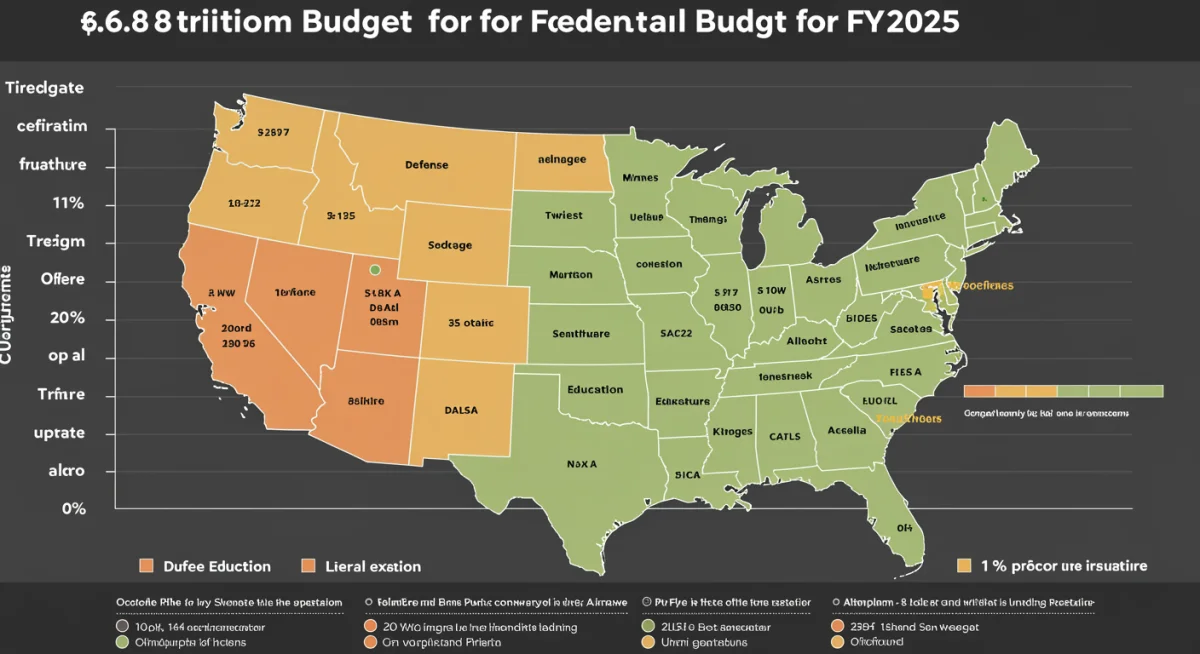
Healthcare and social programs, while primarily aimed at public welfare, also have substantial economic footprints. Increased funding for these areas can boost demand for healthcare services, pharmaceuticals, and medical equipment, while also providing a safety net that allows individuals to allocate more of their income to other goods and services, thus stimulating retail and other consumer-facing sectors. The overall effect is a complex interplay of direct investment and induced demand, shaping the economic landscape.
Challenges and Criticisms of the Budget Proposal
While the FY2025 federal budget aims to stimulate the economy and address national priorities, it is not without its challenges and criticisms. A budget of this magnitude invariably sparks debate regarding fiscal responsibility, potential inflationary pressures, and the long-term sustainability of government spending. Understanding these concerns is crucial for a balanced perspective on the budget’s overall implications.
Critics often point to the national debt and deficit spending as primary concerns. Adding trillions to the national debt can raise questions about future generations’ financial burdens and the country’s economic resilience. These debates are central to the political discourse surrounding any large federal budget.
Potential economic drawbacks
- Inflationary Pressures: Large-scale government spending can, under certain economic conditions, lead to increased demand that outstrips supply, potentially contributing to inflation and eroding purchasing power.
- National Debt Concerns: Continued deficit spending adds to the national debt, which can lead to higher interest payments, crowding out other essential investments, and potentially impacting the nation’s credit rating.
- Efficiency and Waste: Concerns are frequently raised about the efficiency of government spending, with critics arguing that some allocations may not yield the intended economic benefits or could be subject to waste and mismanagement.
Furthermore, debates often arise concerning the specific allocation of funds. Different political factions and interest groups advocate for varying priorities, leading to intense scrutiny over which programs receive funding and which are cut or reduced. The balance between stimulating the economy and maintaining fiscal prudence is a constant tightrope walk for policymakers. These challenges highlight the complex trade-offs inherent in crafting and implementing a federal budget of this scale, emphasizing the need for careful oversight and continuous evaluation.
The Role of Government Spending in Economic Stabilization
Government spending, particularly a budget as substantial as the $6.8 trillion federal budget for Fiscal Year 2025, plays a critical role in economic stabilization. In times of economic downturn or uncertainty, increased government expenditure can act as a crucial counter-cyclical force, bolstering demand and preventing deeper recessions. This concept is rooted in Keynesian economics, which posits that government intervention can smooth out economic cycles.
Beyond immediate stabilization, strategic spending can also lay the groundwork for long-term growth by investing in public goods and services that the private sector might under-provide. These investments can enhance productivity, improve human capital, and foster innovation, contributing to a more robust and resilient economy over time.
Mechanisms of stabilization
During periods of low private sector investment and consumer spending, government expenditures can fill the gap, directly injecting money into the economy. This direct injection stimulates demand for goods and services, which in turn encourages businesses to produce more, hire more workers, and invest in expansion. Programs like unemployment benefits, food assistance, and direct payments also serve as automatic stabilizers, providing a safety net that maintains a baseline level of consumption during economic shocks.
Moreover, investments in infrastructure, research, and education are not just about immediate job creation; they are about enhancing the economy’s productive capacity. Improved infrastructure reduces transportation costs, advanced research leads to new technologies, and a better-educated workforce is more adaptable and innovative. These long-term benefits contribute significantly to economic stability and growth potential, making the 2025 budget’s allocations in these areas particularly impactful for future economic health. The government’s ability to act as a major economic actor provides a powerful lever for both short-term stabilization and long-term prosperity.
Long-Term Economic Implications and Future Outlook
The sheer magnitude of the $6.8 trillion federal budget for Fiscal Year 2025 extends its influence far beyond the immediate fiscal year, carrying significant long-term economic implications. The decisions made today regarding spending priorities and revenue generation will shape the nation’s economic trajectory for years to come. Understanding these potential long-term effects is vital for policymakers, businesses, and individuals alike.
These implications range from changes in national debt levels and interest rates to shifts in industry competitiveness and the overall standard of living. Evaluating the budget through a long-term lens helps in assessing its true sustainability and effectiveness.
Forecasting future economic trends
- Debt Sustainability: The accumulation of national debt from substantial budgets can lead to higher interest payments, potentially diverting funds from other critical programs and impacting future fiscal flexibility.
- Productivity Growth: Investments in areas like technology, education, and infrastructure are expected to enhance productivity, which is a key driver of long-term economic growth and higher living standards.
- Sectoral Transformation: Continued funding for clean energy and digital infrastructure can accelerate the transformation of traditional industries, fostering new markets and job opportunities in emerging sectors.
The choices embedded within the 2025 budget will also influence the nation’s global economic standing. Investments in research and development, for example, can maintain or enhance the United States’ competitive edge in critical industries. Conversely, unchecked deficit spending could potentially lead to a weakening dollar or increased reliance on foreign capital. The economic stimulus provided by this budget is not just a short-term boost; it is a strategic investment that, if managed effectively, could yield substantial dividends in terms of sustained growth, innovation, and improved quality of life for future generations. The long-term outlook remains a subject of ongoing analysis and adaptation as economic conditions evolve.
| Key Point | Brief Description |
|---|---|
| Total Budget Size | Projected $6.8 trillion for Fiscal Year 2025, signaling large-scale government intervention. |
| Economic Stimulus | Allocations target job creation, demand boost, and long-term productive capacity through strategic investments. |
| Key Spending Areas | Infrastructure, clean energy, healthcare, defense, and social programs are primary beneficiaries. |
| Challenges | Concerns include national debt, potential inflation, and efficiency of government spending. |
Frequently Asked Questions About the FY2025 Federal Budget
The primary goal is to address national priorities through strategic government spending while providing significant economic stimulus. It aims to foster growth, create jobs, and ensure economic stability through investments in key sectors and social programs.
Large-scale government spending can potentially contribute to inflationary pressures if demand outpaces supply. However, the budget’s specific allocations and overall economic conditions will determine the actual impact on inflation rates.
Sectors such as infrastructure, clean energy, technology, healthcare, and defense are expected to see significant benefits due to increased direct investment and programmatic funding outlined in the budget.
Critics often raise concerns about the national debt’s growth, potential inflationary risks, and the efficiency of government spending. Debates also center on the prioritization of different spending areas and fiscal sustainability.
Beyond short-term stimulus, strategic government spending in areas like education, research, and infrastructure can enhance productivity, foster innovation, and improve human capital, laying the foundation for sustained long-term economic growth.
Conclusion
The projected $6.8 trillion federal budget for Fiscal Year 2025 stands as a monumental financial commitment, reflecting a comprehensive strategy to manage the nation’s economy and address its most pressing challenges. From bolstering critical infrastructure and advancing clean energy initiatives to strengthening social safety nets, the budget’s allocations are designed to provide both immediate economic stimulus and foster long-term growth. While facing scrutiny regarding fiscal responsibility and potential inflationary impacts, its role in economic stabilization and shaping future economic trends remains undeniable. The continued evolution of this budget and its subsequent effects will be a key determinant of the economic landscape for the United States in the coming years.