Manufacturing Reshoring: 4 Critical U.S. Industry Sectors Poised for Expansion
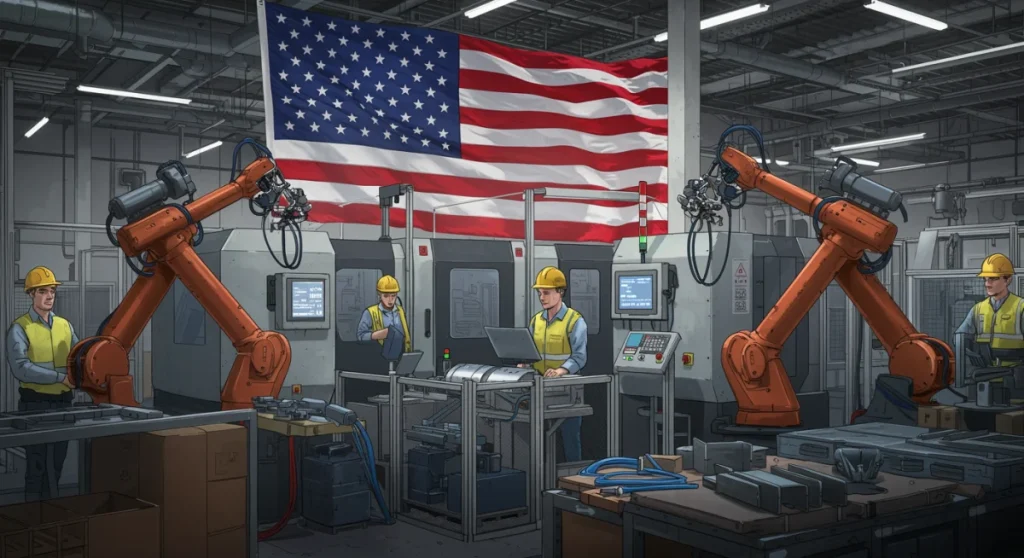
Manufacturing reshoring in the U.S. is gaining momentum, driven by geopolitical shifts and supply chain vulnerabilities, with four critical industry sectors positioned for significant domestic expansion.
The landscape of global manufacturing is undergoing a profound transformation, with a notable shift towards domestic production. This phenomenon, known as manufacturing reshoring sectors, is reshaping economic strategies and supply chain resilience across the United States. As companies re-evaluate their international dependencies, certain industries are emerging as prime candidates for significant U.S. expansion, promising a revitalization of the domestic industrial base.
The Resurgence of U.S. Manufacturing: A New Era
The concept of reshoring, bringing manufacturing operations back to the United States, has moved from a theoretical discussion to a tangible economic movement. This shift is fueled by a confluence of factors, including escalating geopolitical tensions, the imperative for supply chain security, rising overseas labor costs, and a renewed emphasis on national economic self-sufficiency. For decades, the allure of lower production costs abroad led to a significant exodus of manufacturing jobs and capabilities from the U.S. However, recent global events have starkly exposed the vulnerabilities inherent in extended, complex supply chains.
The COVID-19 pandemic served as a critical wake-up call, demonstrating how disruptions in one region could cripple industries worldwide. This experience, coupled with ongoing trade disputes and a growing demand for faster, more flexible production, has compelled businesses to reconsider their global footprints. The economic advantages of offshore manufacturing are now often outweighed by the risks of delays, quality control issues, and intellectual property theft. Consequently, companies are increasingly prioritizing resilience, control, and proximity to their end markets, making the U.S. an attractive destination for new investments in manufacturing.
This resurgence is not merely a return to old ways but an evolution. Modern reshoring initiatives often involve advanced manufacturing techniques, automation, and a highly skilled workforce, aiming for efficiency and innovation rather than just cost reduction. This strategic pivot promises not only to create jobs but also to foster technological advancements and enhance national security by ensuring critical goods are produced domestically. The long-term implications for the U.S. economy are substantial, potentially leading to a more robust, diversified, and resilient industrial base.
Semiconductors and Advanced Electronics: Powering the Digital Future
The semiconductor industry stands at the forefront of the reshoring movement, driven by an acute awareness of its strategic importance and the inherent risks of concentrated global production. Semiconductors are the foundational components of virtually all modern technologies, from smartphones and cars to defense systems and critical infrastructure. The overwhelming reliance on a few overseas manufacturing hubs, particularly in Asia, has exposed the U.S. to significant supply chain vulnerabilities and national security concerns.
Strategic Imperatives for Domestic Chip Production
The U.S. government has recognized the urgency of rebuilding domestic chip manufacturing capabilities. Initiatives like the CHIPS and Science Act represent a monumental investment aimed at incentivizing companies to establish and expand semiconductor fabrication plants (fabs) within the country. This legislation provides billions in subsidies, tax credits, and research funding to accelerate the development of a robust domestic ecosystem for chip production.
- National Security: Ensuring a reliable supply of advanced chips for military and critical infrastructure applications.
- Economic Competitiveness: Regaining global leadership in a vital, high-growth industry.
- Supply Chain Resilience: Reducing dependence on foreign production to mitigate future disruptions.
- Job Creation: Generating high-paying, skilled jobs in manufacturing and related sectors.
Major players in the semiconductor industry, including Intel, Samsung, and TSMC, have already announced multibillion-dollar investments in new U.S. fabs, with construction underway in states like Arizona, Ohio, and Texas. These projects are not only about producing chips but also about fostering an entire ecosystem of suppliers, researchers, and trained professionals. The long-term vision is to create a self-sufficient domestic supply chain capable of producing the most advanced semiconductors, ensuring the U.S. remains at the cutting edge of technological innovation and national defense.
Pharmaceuticals and Medical Devices: Health Security at Home
The pharmaceutical and medical device sectors are another critical area where reshoring is gaining significant traction, largely spurred by the lessons learned during the COVID-19 pandemic. The global health crisis highlighted the precariousness of relying on overseas production for essential medicines, vaccines, and medical equipment. Shortages of personal protective equipment (PPE), active pharmaceutical ingredients (APIs), and critical medical devices underscored the need for a more resilient domestic supply chain in healthcare.
Building a Robust Domestic Health Supply Chain
The U.S. historically had a strong pharmaceutical manufacturing base, but over decades, much of this production shifted offshore to countries with lower labor and regulatory costs. This outsourcing led to a dangerous dependence on foreign suppliers for crucial healthcare products. The current drive for reshoring aims to reverse this trend, ensuring that the nation can independently meet its healthcare needs, especially during emergencies.
- Drug Shortage Mitigation: Reducing the risk of critical drug shortages by diversifying and localizing production.
- Quality Control: Enhancing oversight and ensuring the highest quality standards for medicines and devices.
- Rapid Response: Improving the ability to quickly scale up production of vaccines and treatments during pandemics.
- Biosecurity: Strengthening national biodefense capabilities through domestic manufacturing of essential biomedical products.
Government incentives, such as those provided by the CARES Act and other initiatives, are encouraging pharmaceutical companies to invest in U.S.-based manufacturing facilities. This includes not only the final formulation of drugs but also the production of APIs, which are often the most vulnerable link in the supply chain. Similarly, medical device manufacturers are exploring ways to bring production back to the U.S. to ensure a consistent supply of everything from surgical instruments to advanced diagnostic equipment. The goal is to create a healthcare supply chain that is not only efficient but also secure and resilient, capable of protecting public health under any circumstances.
Electric Vehicles and Battery Production: Driving Sustainable Growth
The burgeoning electric vehicle (EV) market and the critical need for advanced battery production represent another significant frontier for U.S. manufacturing reshoring. As the world transitions towards a greener economy, the demand for EVs and energy storage solutions is skyrocketing. However, the current supply chain for EV components, particularly batteries, is heavily concentrated in East Asia, posing economic and strategic challenges for the U.S.
Accelerating Domestic EV and Battery Ecosystems
The U.S. government has made EV adoption a cornerstone of its climate and industrial policies, offering substantial incentives for consumers and manufacturers alike. This includes tax credits for EV purchases and significant investments in charging infrastructure. Crucially, policies are also designed to encourage the domestic production of EVs and their components, especially batteries, to ensure the U.S. plays a leading role in this transformative industry.
- Energy Independence: Reducing reliance on fossil fuels and foreign energy sources.
- Technological Leadership: Fostering innovation in battery chemistry, manufacturing processes, and EV design.
- Economic Development: Creating new industrial clusters and high-tech jobs in battery gigafactories and EV assembly plants.
- Environmental Sustainability: Building a domestic supply chain that adheres to higher environmental and labor standards.
Automakers like Ford, General Motors, and Stellantis, in partnership with battery manufacturers such as LG Energy Solution and SK On, are investing billions in new EV and battery production facilities across the U.S. These investments are concentrated in states like Michigan, Tennessee, and Georgia, creating thousands of jobs and establishing critical new manufacturing hubs. The aim is to create a fully integrated domestic EV supply chain, from raw material processing to battery cell production and vehicle assembly, thereby securing the U.S.’s position in the global green economy and enhancing its energy security.
Critical Minerals and Materials Processing: Foundation for Industry
The often-overlooked but utterly foundational sector of critical minerals and materials processing is also experiencing a renewed focus for reshoring efforts. These materials, including rare earth elements, lithium, cobalt, and graphite, are indispensable for advanced technologies across all critical industries, from electronics and defense to EVs and renewable energy. Currently, the U.S. relies heavily on a few foreign nations, primarily China, for the processing and supply of these essential materials, creating a significant vulnerability.
Securing the Raw Materials of the Future
The geopolitical implications of this dependence are profound, as control over critical minerals can be leveraged for economic and strategic advantage. Reshoring in this sector involves not just mining but, more importantly, the complex and often environmentally intensive processes of refining, purifying, and preparing these materials for industrial use. The U.S. is striving to build out its domestic capabilities across the entire value chain.
- Supply Chain Security: Diversifying sources and reducing reliance on single-country suppliers for vital materials.
- National Security: Ensuring access to materials essential for defense technologies and strategic industries.
- Environmental Responsibility: Developing sustainable and environmentally sound mining and processing techniques domestically.
- Economic Resilience: Creating a robust domestic supply base that supports other critical manufacturing sectors.
Government initiatives and private sector investments are targeting the establishment of new mining operations, as well as advanced processing and recycling facilities for critical minerals within the U.S. This involves significant R&D into more efficient and environmentally friendly extraction and processing methods. Companies are exploring innovative techniques to recover valuable materials from waste streams and develop new alloys and composites that reduce reliance on extremely rare elements. The goal is to create a resilient, domestic supply of critical materials that can underpin the nation’s technological and industrial future, reducing external dependencies and fostering long-term economic stability.
Challenges and Opportunities in Reshoring Initiatives
While the momentum for manufacturing reshoring sectors is strong, the path is not without its challenges. The U.S. confronts hurdles such as a shortage of skilled labor, particularly in advanced manufacturing, and the significant capital investment required to build new facilities or retool existing ones. Regulatory complexities and environmental considerations also play a role, demanding careful navigation to ensure sustainable growth. However, these challenges are often accompanied by substantial opportunities for innovation and economic development.
Addressing Key Obstacles and Leveraging Advantages
To successfully implement reshoring initiatives, a multi-faceted approach is essential. This includes robust government policies that provide consistent incentives, investments in workforce development programs, and a commitment to streamlining regulatory processes without compromising safety or environmental standards. The private sector also has a crucial role, investing in automation, advanced technologies, and sustainable practices to make domestic manufacturing competitive.
- Workforce Development: Investing in STEM education and vocational training to cultivate a skilled labor force.
- Infrastructure Upgrades: Modernizing transportation, energy grids, and digital infrastructure to support new industrial growth.
- Innovation Ecosystems: Fostering collaboration between industry, academia, and government to drive technological advancements.
- Sustainable Practices: Adopting green manufacturing processes and circular economy principles to ensure long-term viability.
The opportunities presented by reshoring extend beyond direct manufacturing. It stimulates growth in supporting industries, from logistics and construction to research and development. It also fosters a stronger sense of national economic security and reduces the environmental footprint associated with long-distance shipping. By strategically overcoming the challenges, the U.S. can solidify its position as a global manufacturing leader, creating a more resilient and prosperous future for its citizens.
The Economic Impact of Reshoring: A Broader Perspective
The economic ramifications of widespread manufacturing reshoring sectors are far-reaching, promising a revitalization of the U.S. industrial base and a ripple effect across various segments of the economy. Beyond the direct creation of manufacturing jobs, reshoring stimulates growth in ancillary industries, fosters innovation, and strengthens national economic resilience. The shift from globalized, cost-driven supply chains to more localized, resilience-focused models is poised to redefine economic landscapes.
Reshoring efforts contribute significantly to the Gross Domestic Product (GDP) through increased domestic production and investment. Each manufacturing job created often supports several additional jobs in related sectors, including logistics, construction, engineering, and service industries. This multiplier effect can lead to substantial regional economic development, particularly in areas that have experienced industrial decline. Furthermore, domestic manufacturing can reduce trade deficits by decreasing reliance on imported goods, thereby strengthening the national currency and improving the balance of payments.
Moreover, the emphasis on advanced manufacturing techniques, such as automation, artificial intelligence, and sustainable production methods, drives technological innovation. This not only enhances productivity and competitiveness but also positions the U.S. at the forefront of future industrial advancements. The intellectual capital developed through reshoring initiatives can lead to new patents, products, and processes, creating a virtuous cycle of growth and innovation. The enhanced supply chain security resulting from reshoring also provides a stable foundation for businesses, reducing risks associated with geopolitical instability and natural disasters, and ultimately fostering a more predictable and robust economic environment.
| Key Sector | Reshoring Impact |
|---|---|
| Semiconductors | Boosts national security and economic competitiveness through domestic chip production. |
| Pharmaceuticals | Enhances health security and mitigates drug shortages by localizing production. |
| Electric Vehicles & Batteries | Drives sustainable growth and energy independence through domestic EV component manufacturing. |
| Critical Minerals | Secures foundational materials for advanced industries, reducing foreign dependency. |
Frequently Asked Questions About Manufacturing Reshoring
Manufacturing reshoring is the process of bringing production operations, which were previously outsourced to other countries, back to the home country. This trend is driven by factors like supply chain disruptions, rising overseas costs, and a desire for greater control over manufacturing processes.
Reshoring strengthens the U.S. economy by creating jobs, boosting domestic production, and enhancing supply chain resilience. It reduces dependency on foreign suppliers, mitigates risks from geopolitical instability, and fosters innovation in advanced manufacturing technologies, leading to long-term economic stability.
Key industries significantly impacted include semiconductors and advanced electronics, pharmaceuticals and medical devices, electric vehicles and battery production, and critical minerals and materials processing. These sectors are crucial for national security and economic competitiveness.
Challenges include a shortage of skilled labor, high capital investment requirements, and navigating complex regulatory environments. Addressing these requires strategic government incentives, workforce development programs, and private sector investment in automation and sustainable practices.
Reshoring can lead to a rebalancing of global trade flows, potentially reducing reliance on single-country suppliers and fostering more regionalized supply chains. While it might decrease some international trade volumes, it can also create new opportunities for specialized trade and technological partnerships.
Conclusion
The strategic imperative to strengthen domestic production through manufacturing reshoring sectors is not merely a transient trend but a fundamental recalibration of global supply chains. The U.S. is proactively rebuilding its industrial capacity in critical sectors like semiconductors, pharmaceuticals, electric vehicles, and critical minerals. This movement promises not only to create jobs and foster economic growth but also to bolster national security and ensure greater resilience against future disruptions. While challenges remain, the commitment from both government and industry signifies a robust path towards a more self-reliant and technologically advanced American manufacturing landscape.