
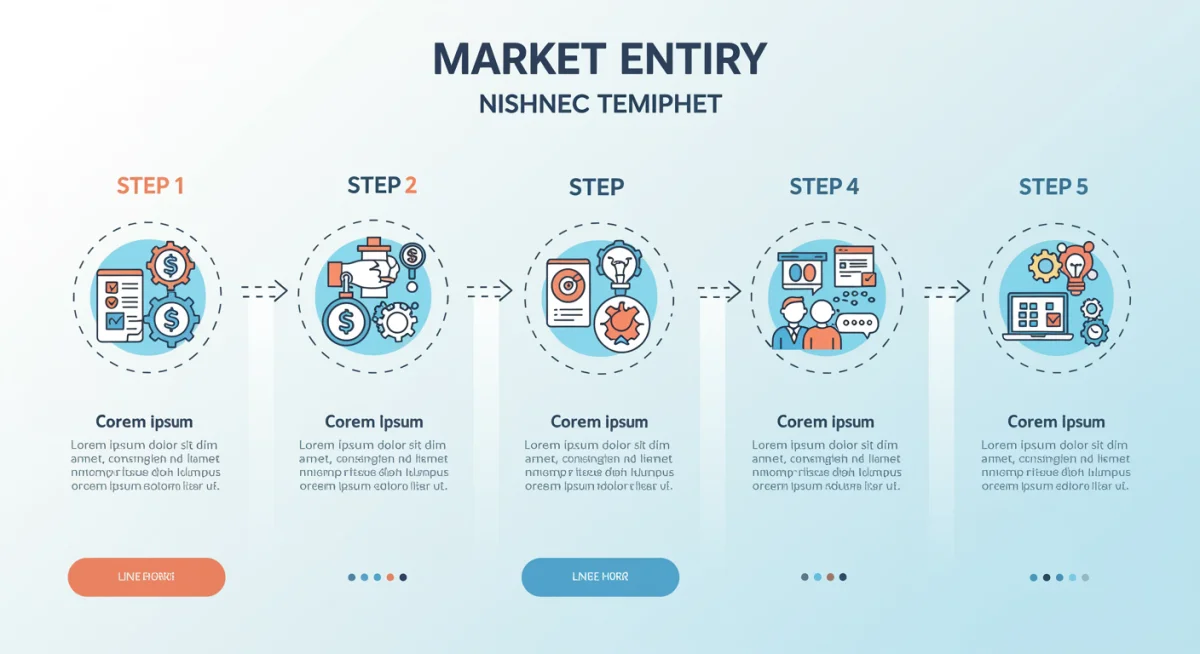
To achieve 10% market share within the first year of US market entry by 2025, businesses must implement a strategic 5-step playbook encompassing thorough market research, robust financial planning, agile operational setup, targeted marketing, and continuous performance monitoring.
Embarking on a journey into the US market in 2025 presents both immense opportunities and significant challenges. This comprehensive US market entry playbook outlines a strategic, five-step approach designed to help businesses not only navigate this complex landscape but also to achieve an ambitious 10% market share within their inaugural year. This guide offers practical solutions and insights into the financial impact of each critical phase, ensuring a well-informed and successful expansion.
Understanding the US Market Landscape in 2025
Before any significant move, a deep dive into the unique characteristics of the 2025 US market is paramount. The United States offers a vast and diverse consumer base, but it also presents a highly competitive environment with specific regulatory nuances. Understanding these elements is the bedrock of a successful entry strategy.
The US economy in 2025 is projected to be influenced by evolving consumer behaviors, technological advancements, and a dynamic regulatory framework. Businesses must analyze demographic shifts, purchasing power variations across states, and the prevailing digital adoption rates. This initial research phase is not merely about identifying a target audience but about understanding the intricate web of factors that will shape your product or service’s reception.
Key Market Dynamics and Consumer Behavior
Consumer behavior in the US is increasingly driven by digital convenience, sustainability concerns, and personalized experiences. Companies entering the market must acknowledge these trends and tailor their offerings accordingly. Ignoring these shifts can lead to misaligned strategies and wasted resources.
- Digital-first engagement: Consumers expect seamless online interactions and e-commerce capabilities.
- Sustainability focus: Growing demand for eco-friendly products and ethical business practices.
- Personalization: Preferences for customized products, services, and marketing messages.
- Brand loyalty: Building trust and fostering long-term relationships is crucial in a crowded market.
Regulatory and Legal Considerations
Navigating the US regulatory environment requires meticulous attention. Federal, state, and local laws can significantly impact operations, from product standards to employment practices. Early engagement with legal counsel specializing in US business law is not just recommended, it’s essential for compliance and risk mitigation.
Understanding intellectual property rights, data privacy laws like CCPA, and industry-specific regulations is vital. Non-compliance can result in substantial fines and reputational damage, making this a critical area for thorough preparation. The financial impact of legal oversights can quickly erode initial investments and hinder market penetration.
In conclusion, a comprehensive understanding of the 2025 US market landscape, including its economic drivers, consumer psychology, and regulatory complexities, is the foundational first step. This knowledge empowers businesses to make informed decisions and build a resilient market entry plan that accounts for both opportunities and potential pitfalls.
Step 1: Comprehensive Market Research and Niche Identification
The first critical step in our US market entry playbook is an exhaustive market research phase, culminating in the precise identification of your niche. Entering a market as vast as the US without a clear focus is akin to sailing without a compass. This stage demands more than just demographic analysis; it requires deep competitive intelligence and an understanding of unmet consumer needs.
Effective market research involves a blend of quantitative and qualitative methods. Quantitative data provides insights into market size, growth rates, and purchasing patterns, while qualitative research uncovers the ‘why’ behind consumer choices and preferences. Combining these approaches paints a complete picture, revealing opportunities that might otherwise remain hidden.
Defining Your Ideal Customer Profile (ICP)
Pinpointing your ideal customer profile (ICP) is crucial. This goes beyond basic demographics to include psychographics, behaviors, pain points, and aspirations. A well-defined ICP allows for highly targeted marketing efforts, ensuring that your message resonates with those most likely to become loyal customers.
- Demographics: Age, income, location, education.
- Psychographics: Values, interests, lifestyle, personality traits.
- Behavioral: Purchasing habits, brand interactions, technology adoption.
- Pain points: Problems your product or service solves for them.
Competitive Analysis and Differentiation Strategy
A thorough competitive analysis involves identifying direct and indirect competitors, evaluating their strengths and weaknesses, and understanding their market positioning. This analysis helps in formulating a robust differentiation strategy that highlights your unique value proposition.
Your differentiation could stem from superior product quality, innovative technology, a unique business model, exceptional customer service, or a more compelling brand narrative. The goal is to carve out a distinct space in the market where your offering stands out and captures attention. This avoids direct price wars and allows for sustainable growth.
The financial impact of a well-executed market research phase is significant. It minimizes the risk of launching an ill-suited product, reduces customer acquisition costs by targeting effectively, and optimizes resource allocation. Conversely, neglecting this step can lead to costly repositioning efforts or even market failure. By identifying a viable niche and understanding how to differentiate, businesses lay a strong foundation for their 10% market share objective.
In summary, comprehensive market research and precise niche identification are non-negotiable for successful US market entry. This foundational step informs every subsequent decision, from product development to marketing and sales, ensuring resources are deployed strategically and effectively.
Step 2: Robust Financial Planning and Resource Allocation
Achieving 10% market share in the US within the first year is an ambitious goal that requires meticulously planned financial strategies and optimal resource allocation. This step of the US market entry playbook focuses on developing a detailed financial model, securing adequate funding, and budgeting for every operational aspect to ensure sustained growth and profitability.
Financial planning for US market entry extends beyond initial capital; it encompasses forecasting revenue, managing operational expenses, and understanding cash flow cycles. A robust financial plan acts as a roadmap, guiding investment decisions and setting realistic performance benchmarks. Without a clear financial blueprint, even the most innovative products can falter.
Developing a Detailed Financial Model
Your financial model should project revenues, costs, and profits for at least the first three to five years, with a granular focus on the first 12-18 months. This includes sales forecasts based on your identified niche, pricing strategies, and projected market share growth. It also requires a thorough analysis of all fixed and variable costs associated with operations in the US.
- Revenue projections: Based on market research, pricing, and sales volume estimates.
- Cost structure: Detailed breakdown of operational, marketing, administrative, and legal expenses.
- Cash flow analysis: Ensuring sufficient liquidity to cover expenses during the initial growth phase.
- Break-even analysis: Identifying the sales volume required to cover all costs.
Securing Funding and Managing Capital
Depending on your business structure and scale, securing appropriate funding is crucial. This could involve venture capital, angel investors, bank loans, or self-funding. Presenting a compelling financial plan that demonstrates potential for high returns and a clear path to profitability is key to attracting investors.
Effective capital management involves carefully allocating funds to critical areas such as product localization, marketing campaigns, talent acquisition, and infrastructure setup. Avoiding overspending in non-essential areas while ensuring adequate investment in growth drivers is a delicate balance that directly impacts your ability to capture market share.
The financial impact of a well-constructed financial plan is profound. It provides a clear picture of investment requirements, potential returns, and risk factors, enabling proactive decision-making. It also serves as a critical tool for measuring performance against established goals. By carefully planning and managing resources, businesses can confidently pursue their 10% market share objective, understanding the financial implications every step of the way.
To summarize, robust financial planning and strategic resource allocation are indispensable for any business aiming for significant market penetration in the US. This involves thorough forecasting, securing necessary capital, and prudent management of funds to fuel growth and ensure long-term viability.
Step 3: Agile Operational Setup and Localized Infrastructure
Establishing an agile operational setup and localized infrastructure is the third pivotal step in the US market entry playbook. This phase moves beyond planning into execution, focusing on how your business will physically and digitally operate within the US. The goal is to build a scalable and adaptable framework that supports rapid growth and responds effectively to local market demands.
Operational agility means being able to quickly adjust to unforeseen challenges and opportunities, whether they relate to supply chain disruptions, changing consumer preferences, or new competitive pressures. Localization isn’t just about language; it encompasses adapting your product, services, and processes to align with US cultural norms, legislative requirements, and logistical realities.
Building a Scalable Supply Chain and Distribution Network
For businesses dealing with physical products, establishing an efficient and scalable supply chain is paramount. This includes sourcing, manufacturing (if applicable), warehousing, and last-mile delivery. Partnering with local logistics providers can significantly reduce costs and improve delivery times, enhancing customer satisfaction.
- Local warehousing: Reduces shipping costs and speeds up delivery.
- Reliable logistics partners: Ensures efficient transportation and inventory management.
- Supply chain resilience: Diversifying suppliers to mitigate risks.
- Returns management: A streamlined process for customer returns, crucial for e-commerce.
Talent Acquisition and Local Compliance
Recruiting local talent is essential not only for operational execution but also for gaining cultural insights and building local credibility. Understanding US labor laws, immigration policies, and standard employment practices is critical to avoid legal complications and foster a productive work environment.
Whether establishing a local office or operating remotely with a US-based team, ensuring compliance with federal and state employment regulations, including payroll, benefits, and workplace safety, is non-negotiable. The financial impact of non-compliance can be severe, leading to fines and legal battles that detract from market entry efforts.
The financial implications of an agile operational setup and localized infrastructure are directly tied to efficiency and customer satisfaction. Optimized logistics reduce operational costs, while a well-supported local team drives productivity and innovation. Conversely, inefficient operations can lead to increased expenditures and a diminished customer experience, hindering the achievement of the 10% market share target.
In conclusion, a thoughtfully designed operational setup, emphasizing agility and localization, is fundamental for successful US market entry. This ensures that your business can efficiently deliver its offerings, comply with local regulations, and adapt to the dynamic US business environment.
Step 4: Targeted Marketing and Sales Strategy for Rapid Penetration
The fourth step in our US market entry playbook focuses on developing and executing a highly targeted marketing and sales strategy designed for rapid market penetration. With a clear understanding of your niche and a robust operational foundation, the next challenge is to effectively communicate your value proposition to your ideal US customers and convert them into loyal patrons. Achieving 10% market share demands an aggressive yet precise approach.
A ‘spray and pray’ marketing approach will waste resources and yield minimal results in the competitive US market. Instead, strategies must be data-driven, leveraging insights from your market research to craft compelling messages delivered through the most effective channels. This involves a mix of digital and traditional marketing, tailored to your ICP and geographical targets.
Digital Marketing Dominance and Local SEO
In today’s digital landscape, a strong online presence is non-negotiable. This includes search engine optimization (SEO), pay-per-click (PPC) advertising, social media marketing, and content marketing. Local SEO is particularly crucial if your product or service has a geographical component, ensuring you appear in local search results.
- SEO: Optimizing your website for relevant US search terms.
- PPC: Targeted advertising campaigns on Google Ads and social media platforms.
- Social media: Engaging with US audiences on platforms relevant to your ICP.
- Content marketing: Creating valuable content that addresses customer pain points and establishes thought leadership.
Building a High-Performing Sales Team and Channel Strategy
Whether you opt for an in-house sales team, external sales agents, or a channel partner strategy, ensuring they are well-trained and aligned with your US market objectives is critical. Sales processes should be adapted to US business etiquette and consumer expectations. For channel partners, a clear incentive structure and strong relationship management are vital.
Consider the financial impact of your marketing and sales investments. While marketing can be a significant expenditure, well-planned campaigns offer a high return on investment (ROI) by driving customer acquisition and brand awareness. Track key performance indicators (KPIs) such as customer acquisition cost (CAC), customer lifetime value (CLTV), and conversion rates to continuously optimize your spending.
The financial impact of an effective marketing and sales strategy is directly linked to revenue generation and market share growth. By efficiently reaching and converting your target audience, you accelerate your path to profitability and cement your position in the market. Conversely, ineffective marketing can lead to slow adoption and a failure to meet market share targets.
In conclusion, a precisely targeted marketing and sales strategy, blending digital prowess with effective sales execution, is essential for rapid market penetration in the US. This strategic approach ensures your value reaches the right customers, driving conversions and contributing directly to your 10% market share goal.
Step 5: Performance Monitoring and Iterative Optimization
The final, yet continuous, step in the US market entry playbook is relentless performance monitoring and iterative optimization. Achieving 10% market share within the first year is not a static goal but a dynamic process that demands constant evaluation and adaptation. This step ensures that your strategies remain effective and responsive to the ever-changing US market environment.
Monitoring involves tracking key metrics across all aspects of your business, from marketing campaign performance to sales figures, operational efficiency, and customer feedback. Iterative optimization means using these insights to make informed adjustments, refining your approach to maximize impact and overcome challenges.
Establishing Key Performance Indicators (KPIs)
Define clear and measurable KPIs that align with your 10% market share objective. These should cover various areas of your business, providing a holistic view of performance. Regular review of these KPIs allows for early identification of trends and deviations from your strategic plan.
- Market share percentage: Directly tracks progress towards your primary goal.
- Customer acquisition cost (CAC): Measures the efficiency of your marketing and sales spend.
- Customer lifetime value (CLTV): Assesses the long-term profitability of your customer base.
- Sales conversion rates: Indicates the effectiveness of your sales processes.
- Operational efficiency metrics: Such as delivery times, inventory turnover, and production costs.
Leveraging Feedback for Continuous Improvement
Actively solicit and analyze customer feedback through surveys, reviews, and direct interactions. This qualitative data is invaluable for identifying areas for product improvement, enhancing customer service, and refining your market messaging. Similarly, internal feedback from your US-based team can highlight operational bottlenecks and cultural nuances that need addressing.
The financial impact of continuous monitoring and optimization is substantial. By identifying underperforming areas early, you can reallocate resources more effectively, prevent costly mistakes, and capitalize on new opportunities. This agile approach minimizes financial waste and maximizes the return on your market entry investment, directly supporting the achievement of your market share goals.
In conclusion, performance monitoring and iterative optimization are not merely post-launch activities; they are integral to sustaining growth and adapting to market realities. This continuous feedback loop ensures your business remains competitive, efficient, and on track to secure and expand its 10% market share in the US market.
| Key Point | Brief Description |
|---|---|
| Market Research | Thorough analysis of US market dynamics, consumer behavior, and competitive landscape to identify a viable niche. |
| Financial Planning | Developing a detailed financial model, securing funding, and managing capital for sustainable growth. |
| Operational Setup | Establishing agile operations, localized infrastructure, and compliant talent acquisition for efficiency. |
| Targeted Marketing | Implementing data-driven marketing and sales strategies for rapid penetration and customer acquisition. |
Frequently Asked Questions About US Market Entry
The most critical first step is comprehensive market research and niche identification. Understanding the US market’s unique dynamics, consumer behavior, and competitive landscape allows businesses to pinpoint a viable niche, ensuring a targeted and effective entry strategy rather than a broad, unfocused approach.
Achieving 10% market share requires a highly focused strategy on a specific niche. Small businesses should leverage differentiation, exceptional customer service, and targeted digital marketing to dominate a smaller segment, rather than competing broadly. Agile operations and continuous optimization are also key to scaling efficiently.
Significant financial challenges include securing adequate initial funding, managing high customer acquisition costs, navigating complex tax and regulatory compliance, and unforeseen operational expenses. Robust financial planning, detailed forecasting, and prudent capital allocation are essential to mitigate these risks effectively and ensure liquidity.
Localization extends beyond language to include adapting products, services, and marketing to US cultural norms, consumer preferences, and legal frameworks. This ensures relevance and resonance with the target audience, builds trust, and helps navigate diverse regional expectations, which is crucial for successful market integration and brand acceptance.
Continuous monitoring allows businesses to track KPIs, identify underperforming areas, and quickly adapt strategies. This iterative optimization process ensures resources are efficiently allocated, marketing efforts are refined, and customer feedback is incorporated, leading to sustained improvement, competitive advantage, and accelerated market share growth.
Conclusion
Successfully navigating US market entry in 2025 and achieving an ambitious 10% market share within the first year is a challenging yet attainable goal with a strategic approach. By meticulously executing each step of this 5-step playbook—from comprehensive market research and robust financial planning to agile operational setup, targeted marketing, and continuous performance monitoring—businesses can build a resilient foundation for growth. The emphasis on practical solutions and understanding financial impacts at every stage ensures that decisions are data-driven and aligned with long-term success. Embracing this disciplined framework will not only facilitate entry but also foster sustainable expansion in one of the world’s most dynamic economies.