E-commerce Evolution: US Retailers Counter Amazon’s Dominance
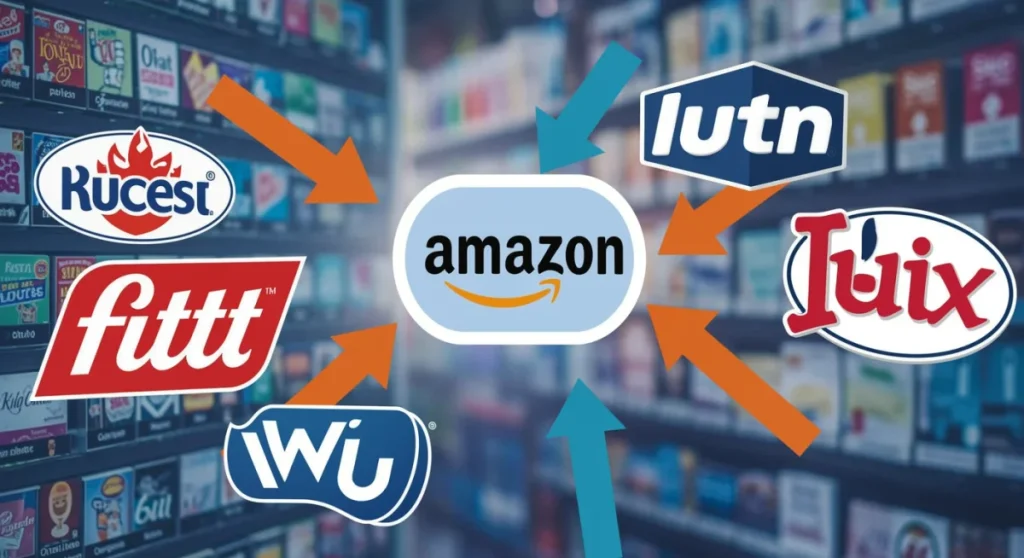
US retailers are actively deploying five key strategies to effectively counter Amazon’s market dominance, aiming to achieve a significant 10% shift in e-commerce market share by leveraging unique strengths and innovative approaches.
The landscape of online retail is in constant flux, with Amazon long holding a commanding lead. However, a significant shift is underway as US retailers implement innovative strategies to challenge this dominance. This article delves into the E-commerce Evolution: 5 Strategies US Retailers Are Using to Counter Amazon’s Dominance for a 10% Market Share Shift, exploring how businesses are carving out their own niches and reclaiming valuable market territory.
The rise of direct-to-consumer (DTC) models
The direct-to-consumer (DTC) model has emerged as a powerful force in the e-commerce landscape, allowing US retailers to bypass traditional intermediaries and establish direct relationships with their customers. This approach offers unparalleled control over branding, pricing, and the overall customer experience, which is crucial in a competitive market.
By eliminating third-party platforms, retailers can cultivate a more intimate connection with their audience, gathering valuable first-party data that informs product development and marketing efforts. This direct engagement fosters brand loyalty and enables a more personalized shopping journey, setting them apart from larger, more impersonal marketplaces.
Building brand identity and customer loyalty
A core advantage of the DTC model lies in its ability to build a strong, distinct brand identity. Retailers can meticulously craft their narrative, values, and aesthetic, resonating deeply with specific consumer segments. This authenticity is a powerful magnet for customers seeking more than just a transaction.
- Authentic Storytelling: DTC brands often excel at sharing their origin stories, manufacturing processes, and commitment to quality, creating an emotional connection with consumers.
- Community Building: Many DTC brands foster online communities around their products, encouraging user-generated content and direct feedback, which further strengthens loyalty.
- Exclusive Products: Offering unique or limited-edition products only available through their own channels creates a sense of exclusivity and urgency for consumers.
Optimizing the customer journey
Controlling the entire customer journey, from initial discovery to post-purchase support, allows DTC brands to fine-tune every touchpoint. This holistic approach ensures a seamless and satisfying experience, reducing friction and increasing conversion rates. Personalization plays a key role here, as data-driven insights enable tailored recommendations and communications.
The focus on direct feedback loops empowers retailers to rapidly iterate on their offerings and services, responding to customer needs with agility. This continuous improvement cycle is a significant differentiator, allowing them to stay ahead of evolving consumer expectations.
In conclusion, the DTC model provides US retailers with a robust framework to differentiate themselves from Amazon. By prioritizing brand building, customer relationships, and an optimized buying experience, they are successfully capturing a growing share of the e-commerce market.
Hyper-personalization and data-driven experiences
In the quest to counter Amazon’s vast selection and convenience, US retailers are increasingly turning to hyper-personalization, leveraging data to create highly tailored shopping experiences. This strategy moves beyond basic recommendations, aiming to anticipate customer needs and preferences with remarkable accuracy.
The intelligent use of customer data allows retailers to present relevant products, offers, and content at every stage of the buying journey. This not only enhances the shopping experience but also significantly boosts engagement and conversion rates, making customers feel understood and valued.
Leveraging AI and machine learning for insights
Artificial intelligence (AI) and machine learning (ML) are at the heart of effective hyper-personalization. These technologies analyze vast amounts of customer data, including browsing history, purchase patterns, demographic information, and even real-time behavior, to generate predictive insights.
These insights enable retailers to create dynamic customer profiles, allowing for truly individualized interactions. From personalized product assortments on the homepage to tailored marketing emails and even customized pricing, AI-powered personalization is transforming how consumers interact with brands.
- Dynamic Product Recommendations: AI algorithms suggest products based on individual preferences, often predicting what a customer might want before they even search for it.
- Personalized Content Delivery: Websites and apps adapt content, banners, and promotions to match the user’s interests, making the experience more relevant.
- Customer Service Automation: AI-powered chatbots provide instant, personalized support, answering queries and guiding customers through their shopping journey efficiently.
Creating unique and memorable interactions
Beyond product recommendations, hyper-personalization extends to creating unique and memorable interactions that foster emotional connections. This could involve personalized thank-you notes, birthday discounts, or early access to new products based on past purchases.
The goal is to make each customer feel like an individual, not just another data point. This human-centric approach, driven by data, builds stronger relationships and cultivates loyalty that is difficult for mass-market platforms to replicate. It’s about crafting an experience that resonates on a deeper level.
Ultimately, hyper-personalization and data-driven experiences are proving to be powerful tools for US retailers. By understanding and anticipating customer needs through advanced analytics, they are delivering engaging and highly effective shopping journeys that rival Amazon’s convenience.
Focusing on niche markets and specialized offerings
One potent strategy for US retailers to compete with Amazon’s broad appeal is to narrow their focus and excel within specific niche markets. While Amazon aims to be the everything store, specialized retailers can become the go-to experts for particular products or consumer segments. This approach allows for deeper product knowledge, curated selections, and a more dedicated customer base.
By catering to a well-defined audience with unique needs, these retailers can build a reputation for expertise and quality that mass-market platforms struggle to match. This specialization fosters trust and positions them as authorities in their respective fields.
Curated product assortments
Niche retailers often distinguish themselves through highly curated product assortments. Instead of offering thousands of similar items, they carefully select products that meet specific criteria, whether it’s sustainability, craftsmanship, unique design, or a particular lifestyle focus. This curation simplifies the purchasing decision for consumers who value quality and relevance over sheer volume.
This approach also allows for stronger relationships with suppliers, often smaller, independent brands that align with the retailer’s values. The storytelling around these unique products becomes a key part of the brand’s appeal, drawing in customers who seek something beyond the mainstream.

Expert advice and community engagement
Specialized retailers can offer a level of expert advice and customer service that is difficult for larger platforms to replicate. Their staff often possess deep knowledge about their products and the needs of their target audience, providing invaluable guidance to shoppers.
- Personalized Consultations: Offering one-on-one advice or virtual consultations helps customers make informed decisions about complex or high-value products.
- Educational Content: Providing blog posts, guides, or video tutorials related to their niche builds authority and helps customers get the most out of their purchases.
- Community Forums: Creating online spaces where customers can connect, share experiences, and seek advice further solidifies the brand’s position as a community hub.
In essence, by becoming specialists rather than generalists, US retailers can effectively compete against Amazon. Their ability to offer highly curated products, expert advice, and foster strong community ties creates a compelling value proposition for discerning consumers.
Enhanced fulfillment and localized delivery options
While Amazon is renowned for its rapid delivery, US retailers are innovating their fulfillment strategies to offer competitive, and often more localized, delivery options. This includes investing in regional distribution centers, leveraging local store networks, and partnering with third-party logistics providers to optimize the last-mile experience.
The goal is not just speed, but also flexibility and convenience, catering to diverse customer preferences such as same-day pickup, scheduled deliveries, and eco-friendly shipping options. This focus on localized and efficient fulfillment is a direct response to consumer demands for greater control over their delivery experience.
Leveraging brick-and-mortar stores for fulfillment
Traditional retailers with physical store locations have a unique advantage: their existing footprint can be transformed into micro-fulfillment centers. This ‘ship-from-store’ or ‘buy online, pick up in-store’ (BOPIS) model offers significant benefits.
- Faster Delivery: Products can often be picked up or shipped from a nearby store, drastically reducing delivery times compared to distant warehouses.
- Reduced Shipping Costs: Utilizing existing store inventory and local staff can lower logistics expenses.
- Increased Foot Traffic: BOPIS encourages customers to visit physical stores, potentially leading to additional impulse purchases.
Sustainable and flexible delivery solutions
Beyond speed, consumers are increasingly prioritizing sustainable and flexible delivery options. Retailers are responding by exploring electric vehicle fleets for local deliveries, optimizing delivery routes to reduce carbon footprint, and offering consolidated shipping for multiple items.
Providing options like specific delivery windows or even alternative pickup locations (e.g., lockers, partner stores) empowers customers, giving them greater control and convenience. This focus on customer-centric fulfillment builds loyalty and differentiates retailers from providers with less adaptable delivery networks.
In summary, enhanced fulfillment and localized delivery are critical battlegrounds in the e-commerce arena. By optimizing their logistics, particularly by leveraging existing store infrastructure and offering flexible, sustainable options, US retailers are successfully competing with Amazon on the delivery front.
Building ethical and sustainable supply chains
In an era of increasing consumer awareness, US retailers are finding a powerful differentiator in building ethical and sustainable supply chains. This strategy resonates deeply with consumers who are willing to support brands that align with their values, prioritizing environmental responsibility and fair labor practices over sheer convenience.
By transparently showcasing their commitment to ethical sourcing, sustainable manufacturing, and responsible waste management, retailers can build a strong reputation and attract a loyal customer base. This approach moves beyond product features to encompass the entire lifecycle of a product.
Transparency and traceability
Consumers want to know where their products come from and how they are made. Retailers are responding by implementing robust traceability systems that allow them to track products from raw materials to the final consumer. This transparency builds trust and assures customers of the product’s ethical credentials.
Communicating these efforts through clear labeling, detailed product pages, and engaging content helps educate consumers and reinforces the brand’s commitment. Blockchain technology is even being explored to provide immutable records of a product’s journey.
- Source Verification: Providing information about the origin of materials and components, including certifications for fair trade or organic production.
- Manufacturing Practices: Detailing labor conditions, wages, and environmental standards in factories.
- Carbon Footprint: Sharing data on the ecological impact of production and transportation, along with efforts to reduce it.
Supporting local and fair trade initiatives
Many US retailers are actively choosing to support local producers and fair trade initiatives. This not only bolsters local economies but also ensures that workers involved in the supply chain receive fair wages and work in safe conditions. This commitment often translates into higher quality products and a more authentic brand story.
By investing in these practices, retailers differentiate themselves from mass-produced alternatives and appeal to a growing segment of conscious consumers. This ethical stance is becoming a non-negotiable expectation for many shoppers, providing a unique competitive edge.
Ultimately, by prioritizing ethical and sustainable supply chains, US retailers are not just doing good; they are also doing good business. This approach attracts value-aligned customers, builds brand integrity, and represents a significant strategy in countering the broad, often less transparent, operations of larger e-commerce players.
Innovative payment solutions and financial services
In the dynamic world of e-commerce, US retailers are increasingly differentiating themselves by offering innovative payment solutions and integrated financial services. Moving beyond traditional credit card processing, these retailers are adopting technologies that enhance convenience, improve accessibility, and provide greater financial flexibility for their customers.
This includes embracing digital wallets, buy now, pay later (BNPL) options, and even proprietary loyalty-linked payment systems. By streamlining the checkout process and offering diverse financial tools, retailers can reduce cart abandonment and attract a broader customer base, particularly those seeking alternative financing solutions.
Embracing BNPL and digital wallets
The rise of Buy Now, Pay Later (BNPL) services has been a game-changer, offering consumers the flexibility to spread payments over time without interest, often for smaller purchases. Retailers integrating BNPL options are seeing increased conversion rates and average order values, as it makes higher-priced items more accessible.
Digital wallets like Apple Pay, Google Pay, and PayPal also contribute to a seamless checkout experience. They reduce the need to manually enter payment details, minimizing friction and speeding up transactions, which is crucial for mobile shoppers.
- Increased Accessibility: BNPL opens up purchasing power to consumers who might not have traditional credit or prefer not to use it.
- Faster Checkout: Digital wallets significantly accelerate the payment process, leading to a smoother customer journey.
- Enhanced Security: These modern payment methods often come with advanced security features, giving customers greater peace of mind.
Proprietary loyalty and credit programs
Some US retailers are taking financial innovation a step further by developing their own proprietary loyalty programs that integrate payment functionalities or offer branded credit cards. These programs not only incentivize repeat purchases but also provide valuable data on customer spending habits.
These integrated financial services can offer exclusive discounts, cashback rewards, or special financing terms, creating a compelling ecosystem that encourages customers to remain within the retailer’s brand. This deep integration fosters loyalty and provides additional revenue streams.
In conclusion, innovative payment solutions and financial services are becoming a key battleground for US retailers seeking to counter Amazon’s dominance. By offering flexible, convenient, and secure payment options, they are enhancing the customer experience and building stronger, more enduring relationships with their clientele.
| Key Strategy | Brief Description |
|---|---|
| Direct-to-Consumer (DTC) | Retailers bypass intermediaries to build direct customer relationships and strong brand identities. |
| Hyper-personalization | Leveraging AI and data to create highly tailored shopping experiences and recommendations. |
| Niche Market Focus | Specializing in specific product categories or customer segments with curated offerings. |
| Ethical Supply Chains | Building trust through transparency, sustainability, and fair labor practices in sourcing. |
Frequently asked questions about e-commerce competition
DTC brands gain market share by building strong brand identities, owning the customer experience, and leveraging first-party data. This allows for personalized interactions and products that resonate deeply with specific consumer niches, fostering loyalty.
Hyper-personalization, driven by AI and machine learning, creates highly tailored shopping experiences. This strategy helps US retailers anticipate customer needs, deliver relevant content, and build deeper connections that Amazon’s broad platform often struggles to match.
Yes, localized delivery can compete effectively by leveraging brick-and-mortar stores for fulfillment (BOPIS, ship-from-store) and offering flexible, scheduled, or sustainable options. This caters to consumer demand for convenience and environmental responsibility.
Ethical supply chains are crucial because modern consumers increasingly value transparency, sustainability, and fair labor practices. Retailers demonstrating these commitments build trust and attract a loyal customer base, differentiating themselves from less transparent competitors.
Innovative payment solutions like BNPL and digital wallets enhance convenience and accessibility. They reduce cart abandonment, attract a broader customer base, and can be integrated with loyalty programs to foster repeat business and stronger brand engagement.
Conclusion
The e-commerce landscape is undergoing a significant transformation, with US retailers actively implementing sophisticated strategies to challenge Amazon’s long-standing dominance. By focusing on direct-to-consumer models, hyper-personalization, niche market specialization, enhanced fulfillment, and ethical supply chains, these businesses are not merely surviving but thriving. This strategic evolution is enabling a tangible shift in market share, proving that innovation and customer-centricity remain powerful tools in the competitive world of online retail. As consumers increasingly seek authenticity, value, and convenience, these proactive approaches position US retailers for sustained growth and a more balanced e-commerce future.